
Before Memmo my notes were scattered across PDFs. Now a workspace pulls everything into one place — I see exactly what's still left to study.
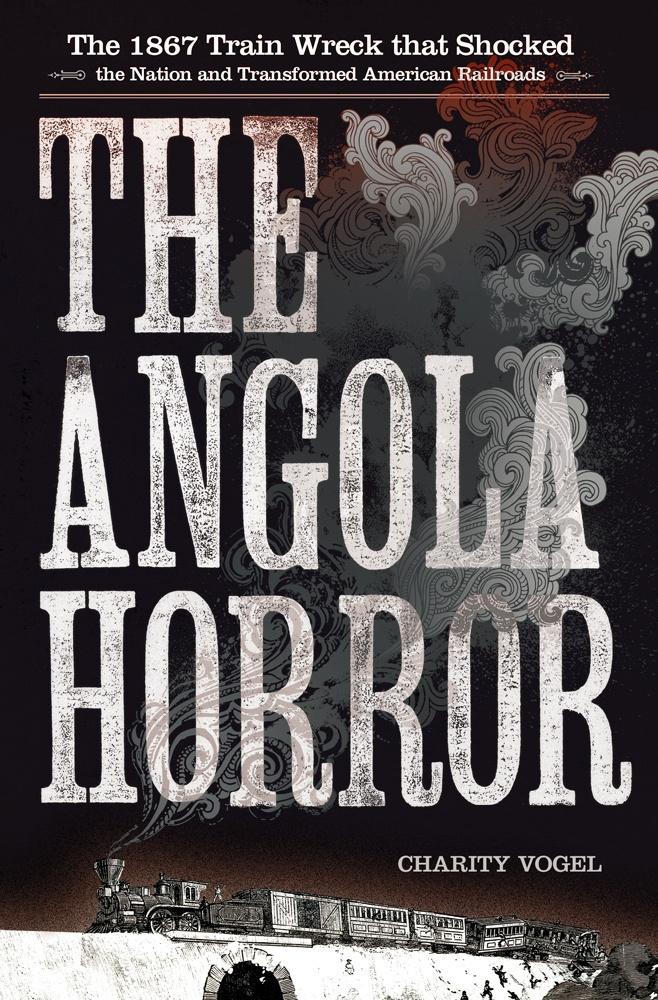
On December 18, 1867, the Buffalo and Erie Railroad's eastbound New York Express derailed as it approached the high truss bridge over Big Sister Creek, just east of the small settlement of Angola, New York, on the shores of Lake Erie. The last two cars of the express train were pitched completely off the tracks and plummeted into the creek bed below. When they struck bottom, one of the wrecked cars was immediately engulfed in flames as the heating stoves in the coach spilled out coals and ignited its wooden timbers. The other car was badly smashed. About fifty people died at the bottom of the gorge or shortly thereafter, and dozens more were injured. Rescuers from the small rural community responded with haste, but there was almost nothing they could do but listen to the cries of the dying—and carry away the dead and injured thrown clear of the fiery wreck. The next day and in the weeks that followed, newspapers across the country carried news of the "Angola Horror," one of the deadliest railway accidents to that point in U.S. history.
In a dramatic historical narrative, Charity Vogel tells the gripping, true-to-life story of the wreck and the characters involved in the tragic accident. Her tale weaves together the stories of the people—some unknown; others soon to be famous—caught up in the disaster, the facts of the New York Express's fateful run, the fiery scenes in the creek ravine, and the subsequent legal, legislative, and journalistic search for answers to the question: what had happened at Angola, and why? The Angola Horror is a classic story of disaster and its aftermath, in which events coincide to produce horrific consequences and people are forced to respond to experiences that test the limits of their endurance. Vogel sets the Angola Horror against a broader context of the developing technology of railroads, the culture of the nation's print media, the public policy legislation of the post–Civil War era, and, finally, the culture of death and mourning in the Victorian period. The Angola Horror sheds light on the psyche of the American nation. The fatal wreck of an express train nine years later, during a similar bridge crossing in Ashtabula, Ohio, serves as a chilling coda to the story.
Before Memmo my notes were scattered across PDFs. Now a workspace pulls everything into one place — I see exactly what's still left to study.
Memmo's summaries are gold before exams. I don't have to re-read 800 pages two weeks before — just the important parts.
The AI chat has saved me the night before an exam more than once. I just keep asking until I get it — no waiting on a study group to reply.
The quizzes hit exactly what I need to know. Memmo tracks what I get stuck on — so I only practice what's worth it.
Flashcards with spaced repetition are magic. Memmo knows when I'm about to forget something and brings it back.
The AI podcasts are my favorite. I listen on my way to school and get a recap without sitting at a computer.

Handbok i kvalitativa metoder
281 kr

Hållbar utveckling: en introduktion för ingenjörer och andra problemlösare
334 kr

Brymans Samhällsvetenskapliga metoder
390 kr

Projektledning
491 kr

Den orättvisa hälsan: om socioekonomiska skillnader i hälsa och livslängd
326 kr

Organizational Leadership
429 kr

Vetenskapsteori för nybörjare
196 kr

På väg mot läraryrket
172 kr

Det sociala livet i skolan: Socialpsykologiska perspektiv
253 kr

Betygsättningens didaktik
151 kr

Personality
402 kr

Studying Leadership
404 kr

Managing Innovation
477 kr

Introduktion till samhällsvetenskaplig metod
347 kr

The Psychology of Sex and Gender
698 kr

Evidens och kunskap för socialt arbete
207 kr

Introduction to Leadership
605 kr