
Before Memmo my notes were scattered across PDFs. Now a workspace pulls everything into one place — I see exactly what's still left to study.
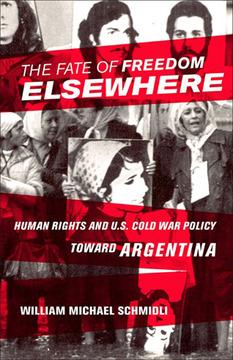
During the first quarter-century of the Cold War, upholding human rights was rarely a priority in U.S. policy toward Latin America. Seeking to protect U.S. national security, American policymakers quietly cultivated relations with politically ambitious Latin American militaries—a strategy clearly evident in the Ford administration's tacit support of state-sanctioned terror in Argentina following the 1976 military coup d'état. By the mid-1970s, however, the blossoming human rights movement in the United States posed a serious threat to the maintenance of close U.S. ties to anticommunist, right-wing military regimes.
The competition between cold warriors and human rights advocates culminated in a fierce struggle to define U.S. policy during the Jimmy Carter presidency. In The Fate of Freedom Elsewhere, William Michael Schmidli argues that Argentina emerged as the defining test case of Carter's promise to bring human rights to the center of his administration's foreign policy. Entering the Oval Office at the height of the kidnapping, torture, and murder of tens of thousands of Argentines by the military government, Carter set out to dramatically shift U.S. policy from subtle support to public condemnation of human rights violation. But could the administration elicit human rights improvements in the face of a zealous military dictatorship, rising Cold War tension, and domestic political opposition? By grappling with the disparate actors engaged in the struggle over human rights, including civil rights activists, second-wave feminists, chicano/a activists, religious progressives, members of the New Right, conservative cold warriors, and business leaders, Schmidli utilizes unique interviews with U.S. and Argentine actors as well as newly declassified archives to offer a telling analysis of the rise, efficacy, and limits of human rights in shaping U.S. foreign policy in the Cold War.
Before Memmo my notes were scattered across PDFs. Now a workspace pulls everything into one place — I see exactly what's still left to study.
Memmo's summaries are gold before exams. I don't have to re-read 800 pages two weeks before — just the important parts.
The AI chat has saved me the night before an exam more than once. I just keep asking until I get it — no waiting on a study group to reply.
The quizzes hit exactly what I need to know. Memmo tracks what I get stuck on — so I only practice what's worth it.
Flashcards with spaced repetition are magic. Memmo knows when I'm about to forget something and brings it back.
The AI podcasts are my favorite. I listen on my way to school and get a recap without sitting at a computer.

Handbok i kvalitativa metoder
281 kr

Hållbar utveckling: en introduktion för ingenjörer och andra problemlösare
334 kr

Brymans Samhällsvetenskapliga metoder
390 kr

Projektledning
491 kr

Den orättvisa hälsan: om socioekonomiska skillnader i hälsa och livslängd
326 kr

Vetenskapsteori för nybörjare
196 kr

Organizational Leadership
429 kr

På väg mot läraryrket
172 kr

Det sociala livet i skolan: Socialpsykologiska perspektiv
253 kr

Betygsättningens didaktik
151 kr

Personality
402 kr

Studying Leadership
404 kr

Managing Innovation
477 kr

Introduktion till samhällsvetenskaplig metod
347 kr

The Psychology of Sex and Gender
698 kr

Evidens och kunskap för socialt arbete
207 kr

Introduction to Leadership
605 kr