
Before Memmo my notes were scattered across PDFs. Now a workspace pulls everything into one place — I see exactly what's still left to study.
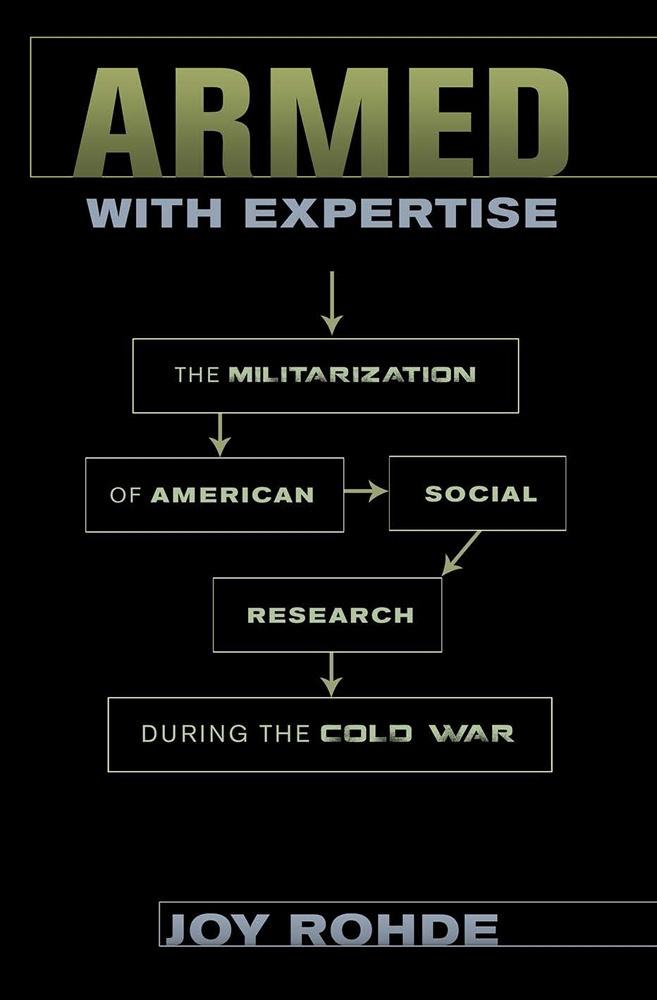
During the height of the wars in Iraq and Afghanistan, the Pentagon launched a controversial counterinsurgency program called the Human Terrain System. The program embedded social scientists within military units to provide commanders with information about the cultures and grievances of local populations. Yet the controversy it inspired was not new. Decades earlier, similar national security concerns brought the Department of Defense and American social scientists together in the search for intellectual weapons that could combat the spread of communism during the Cold War. In Armed with Expertise, Joy Rohde traces the optimistic rise, anguished fall, and surprising rebirth of Cold War–era military-sponsored social research.
Seeking expert knowledge that would enable the United States to contain communism, the Pentagon turned to social scientists. Beginning in the 1950s, political scientists, social psychologists, and anthropologists optimistically applied their expertise to military problems, convinced that their work would enhance democracy around the world. As Rohde shows, by the late 1960s, a growing number of scholars and activists condemned Pentagon-funded social scientists as handmaidens of a technocratic warfare state and sought to eliminate military-sponsored research from American intellectual life. But the Pentagon's social research projects had remarkable institutional momentum and intellectual flexibility. Instead of severing their ties to the military, the Pentagon's experts relocated to a burgeoning network of private consulting agencies and for-profit research offices. Now shielded from public scrutiny, they continued to influence national security affairs. They also diversified their portfolios to include the study of domestic problems, including urban violence and racial conflict. In examining the controversies over Cold War social science, Rohde reveals the persistent militarization of American political and intellectual life, a phenomenon that continues to raise grave questions about the relationship between expert knowledge and American democracy.
Before Memmo my notes were scattered across PDFs. Now a workspace pulls everything into one place — I see exactly what's still left to study.
Memmo's summaries are gold before exams. I don't have to re-read 800 pages two weeks before — just the important parts.
The AI chat has saved me the night before an exam more than once. I just keep asking until I get it — no waiting on a study group to reply.
The quizzes hit exactly what I need to know. Memmo tracks what I get stuck on — so I only practice what's worth it.
Flashcards with spaced repetition are magic. Memmo knows when I'm about to forget something and brings it back.
The AI podcasts are my favorite. I listen on my way to school and get a recap without sitting at a computer.

Handbok i kvalitativa metoder
281 kr

Hållbar utveckling: en introduktion för ingenjörer och andra problemlösare
334 kr

Brymans Samhällsvetenskapliga metoder
390 kr

Projektledning
491 kr

Den orättvisa hälsan: om socioekonomiska skillnader i hälsa och livslängd
326 kr

Vetenskapsteori för nybörjare
196 kr

Organizational Leadership
429 kr

På väg mot läraryrket
172 kr

Det sociala livet i skolan: Socialpsykologiska perspektiv
253 kr

Betygsättningens didaktik
151 kr

Personality
402 kr

Studying Leadership
404 kr

Managing Innovation
477 kr

Introduktion till samhällsvetenskaplig metod
347 kr

The Psychology of Sex and Gender
698 kr

Evidens och kunskap för socialt arbete
207 kr

Introduction to Leadership
605 kr