
Before Memmo my notes were scattered across PDFs. Now a workspace pulls everything into one place — I see exactly what's still left to study.
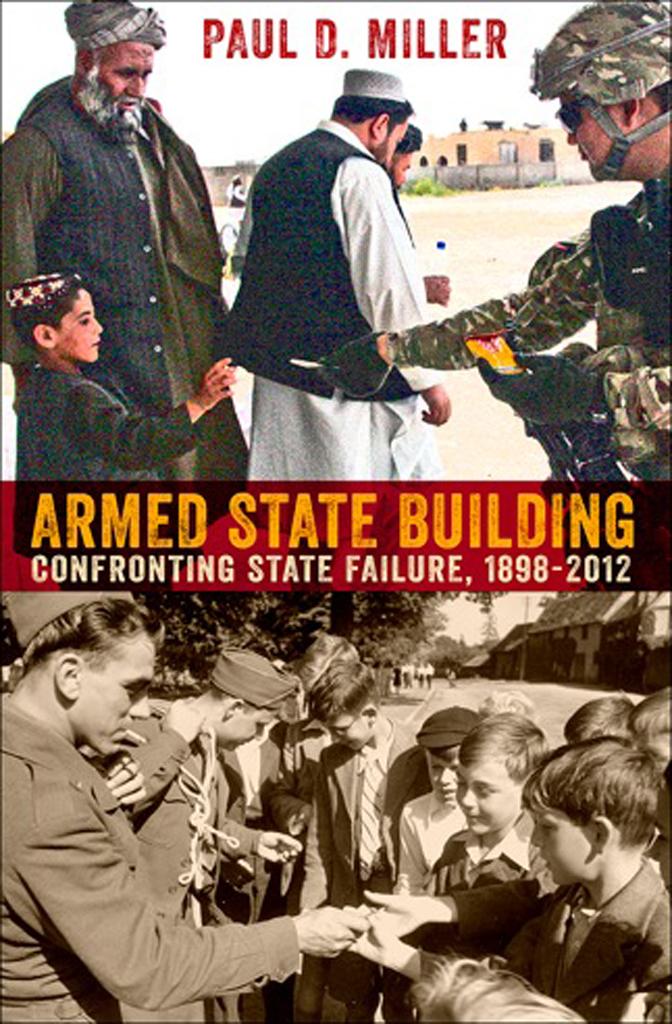
Since 1898, the United States and the United Nations have deployed military force more than three dozen times in attempts to rebuild failed states. Currently there are more state-building campaigns in progress than at any time in the past century—including Afghanistan, Bosnia, Kosovo, the Democratic Republic of Congo, Haiti, Sudan, Liberia, Cote d'Ivoire, and Lebanon—and the number of candidate nations for such campaigns in the future is substantial. Even with a broad definition of success, earlier campaigns failed more than half the time. In this book, Paul D. Miller brings his decade in the U.S. military, intelligence community, and policy worlds to bear on the question of what causes armed, international state-building campaigns by liberal powers to succeed or fail.
The United States successfully rebuilt the West German and Japanese states after World War II but failed to build a functioning state in South Vietnam. After the Cold War the United Nations oversaw relatively successful campaigns to restore order, hold elections, and organize post-conflict reconstruction in Mozambique, Namibia, Nicaragua, and elsewhere, but those successes were overshadowed by catastrophes in Angola, Liberia, and Somalia. The recent effort in Iraq and the ongoing one in Afghanistan—where Miller had firsthand military, intelligence, and policymaking experience—are yielding mixed results, despite the high levels of resources dedicated and the long duration of the missions there. Miller outlines different types of state failure, analyzes various levels of intervention that liberal states have tried in the state-building process, and distinguishes among the various failures and successes those efforts have provoked.
Before Memmo my notes were scattered across PDFs. Now a workspace pulls everything into one place — I see exactly what's still left to study.
Memmo's summaries are gold before exams. I don't have to re-read 800 pages two weeks before — just the important parts.
The AI chat has saved me the night before an exam more than once. I just keep asking until I get it — no waiting on a study group to reply.
The quizzes hit exactly what I need to know. Memmo tracks what I get stuck on — so I only practice what's worth it.
Flashcards with spaced repetition are magic. Memmo knows when I'm about to forget something and brings it back.
The AI podcasts are my favorite. I listen on my way to school and get a recap without sitting at a computer.

Handbok i kvalitativa metoder
281 kr

Hållbar utveckling: en introduktion för ingenjörer och andra problemlösare
334 kr

Brymans Samhällsvetenskapliga metoder
390 kr

Projektledning
491 kr

Den orättvisa hälsan: om socioekonomiska skillnader i hälsa och livslängd
326 kr

Vetenskapsteori för nybörjare
196 kr

Organizational Leadership
429 kr

På väg mot läraryrket
172 kr

Det sociala livet i skolan: Socialpsykologiska perspektiv
253 kr

Betygsättningens didaktik
151 kr

Personality
402 kr

Studying Leadership
404 kr

Managing Innovation
477 kr

Introduktion till samhällsvetenskaplig metod
347 kr

The Psychology of Sex and Gender
698 kr

Evidens och kunskap för socialt arbete
207 kr

Introduction to Leadership
605 kr