
Before Memmo my notes were scattered across PDFs. Now a workspace pulls everything into one place — I see exactly what's still left to study.
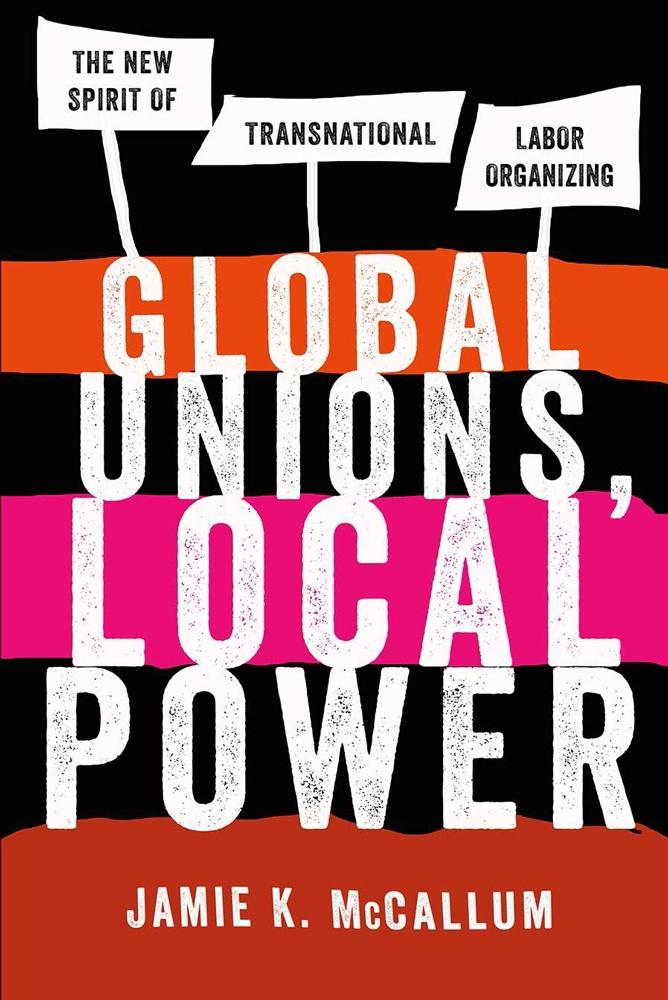
News about labor unions is usually pessimistic, focusing on declining membership and failed campaigns. But there are encouraging signs that the labor movement is evolving its strategies to benefit workers in rapidly changing global economic conditions. Global Unions, Local Power tells the story of the most successful and aggressive campaign ever waged by workers across national borders. It begins in the United States in 2007 as SEIU struggled to organize private security guards at G4S, a global security services company that is the second largest employer in the world. Failing in its bid, SEIU changed course and sought allies in other countries in which G4S operated. Its efforts resulted in wage gains, benefits increases, new union formations, and an end to management reprisals in many countries throughout the Global South, though close attention is focused on developments in South Africa and India.
In this book, Jamie K. McCallum looks beyond these achievements to probe the meaning of some of the less visible aspects of the campaign. Based on more than two years of fieldwork in nine countries and historical research into labor movement trends since the late 1960s, McCallum's findings reveal several paradoxes. Although global unionism is typically concerned with creating parity and universal standards across borders, local context can both undermine and empower the intentions of global actors, creating varied and uneven results. At the same time, despite being generally regarded as weaker than their European counterparts, U.S. unions are in the process of remaking the global labor movement in their own image. McCallum suggests that changes in political economy have encouraged unions to develop new ways to organize workers. He calls these "governance struggles," strategies that seek not to win worker rights but to make new rules of engagement with capital in order to establish a different terrain on which to organize.
Before Memmo my notes were scattered across PDFs. Now a workspace pulls everything into one place — I see exactly what's still left to study.
Memmo's summaries are gold before exams. I don't have to re-read 800 pages two weeks before — just the important parts.
The AI chat has saved me the night before an exam more than once. I just keep asking until I get it — no waiting on a study group to reply.
The quizzes hit exactly what I need to know. Memmo tracks what I get stuck on — so I only practice what's worth it.
Flashcards with spaced repetition are magic. Memmo knows when I'm about to forget something and brings it back.
The AI podcasts are my favorite. I listen on my way to school and get a recap without sitting at a computer.

Handbok i kvalitativa metoder
281 kr

Hållbar utveckling: en introduktion för ingenjörer och andra problemlösare
334 kr

Brymans Samhällsvetenskapliga metoder
390 kr

Projektledning
491 kr

Den orättvisa hälsan: om socioekonomiska skillnader i hälsa och livslängd
326 kr

Vetenskapsteori för nybörjare
196 kr

Organizational Leadership
429 kr

På väg mot läraryrket
172 kr

Det sociala livet i skolan: Socialpsykologiska perspektiv
253 kr

Betygsättningens didaktik
151 kr

Personality
402 kr

Studying Leadership
404 kr

Managing Innovation
477 kr

Introduktion till samhällsvetenskaplig metod
347 kr

The Psychology of Sex and Gender
698 kr

Evidens och kunskap för socialt arbete
207 kr

Introduction to Leadership
605 kr