
Before Memmo my notes were scattered across PDFs. Now a workspace pulls everything into one place — I see exactly what's still left to study.
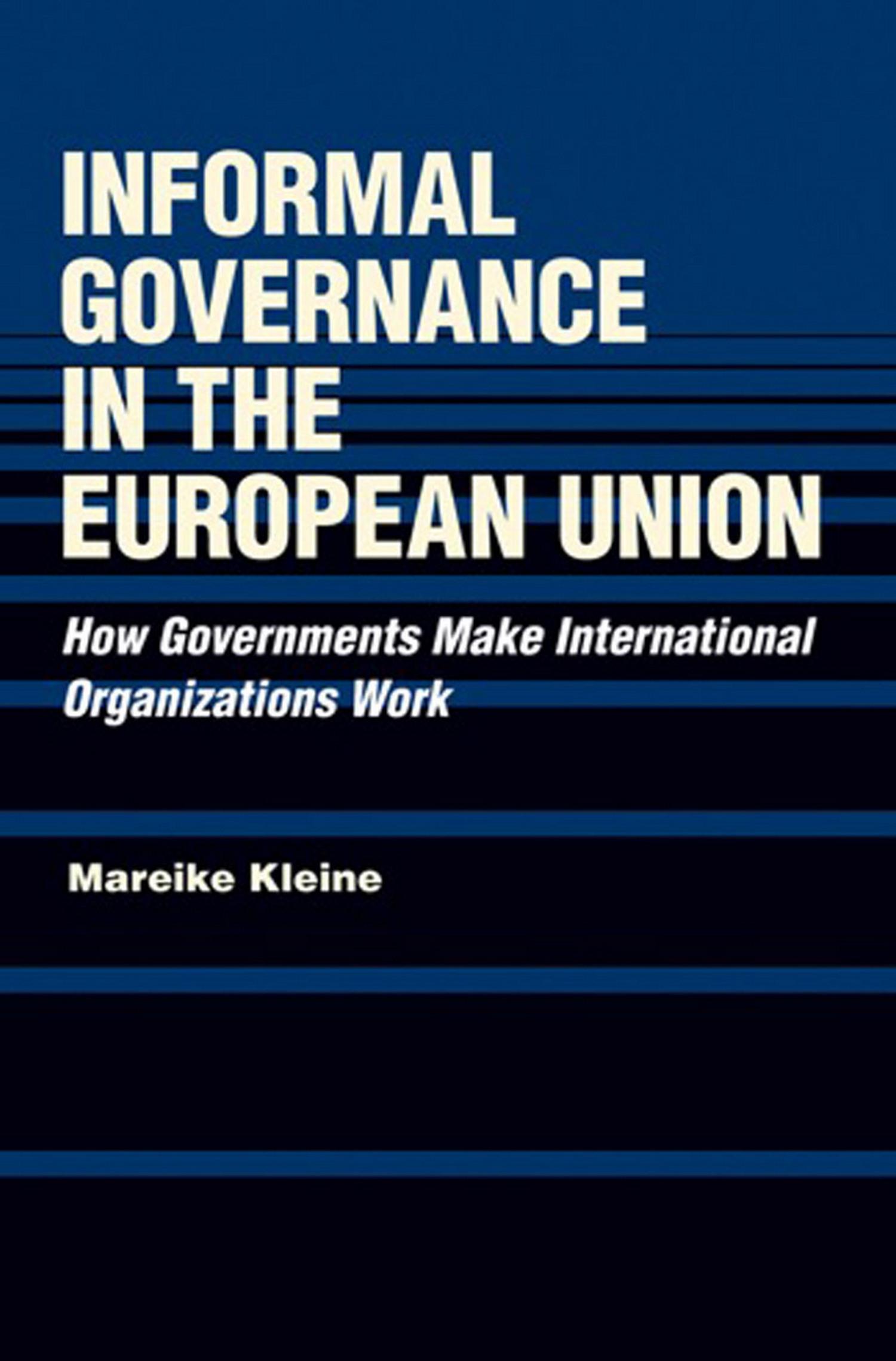
The European Union is the world's most advanced international organization, presiding over a level of legal and economic integration unmatched in global politics. To explain this achievement, many observers point to its formal rules that entail strong obligations and delegate substantial power to supranational actors such as the European Commission. This legalistic view, Mareike Kleine contends, is misleading. More often than not, governments and bureaucrats informally depart from the formal rules and thereby contradict their very purpose. Behind the EU's front of formal rules lies a thick network of informal governance practices.
If not the EU's rules, what accounts for the high level of economic integration among its members? How does the EU really work? In answering these questions, Kleine proposes a new way of thinking about international organizations. Informal governance affords governments the flexibility to resolve conflicts that adherence to EU rules may generate at the domestic level. By dispersing the costs that integration may impose on individual groups, it allows governments to keep domestic interests aligned in favor of European integration. The combination of formal rules and informal governance therefore sustains a level of cooperation that neither regime alone permits, and it reduces the EU's democratic deficit by including those interests into deliberations that are most immediately affected by its decisions. In illustrating informal norms and testing how they work, Kleine provides the first systematic analysis, based on new material from national and European archives and other primary data, of the parallel development of the formal rules and informal norms that have governed the EU from the 1958 Treaty of Rome until today.
Before Memmo my notes were scattered across PDFs. Now a workspace pulls everything into one place — I see exactly what's still left to study.
Memmo's summaries are gold before exams. I don't have to re-read 800 pages two weeks before — just the important parts.
The AI chat has saved me the night before an exam more than once. I just keep asking until I get it — no waiting on a study group to reply.
The quizzes hit exactly what I need to know. Memmo tracks what I get stuck on — so I only practice what's worth it.
Flashcards with spaced repetition are magic. Memmo knows when I'm about to forget something and brings it back.
The AI podcasts are my favorite. I listen on my way to school and get a recap without sitting at a computer.

Handbok i kvalitativa metoder
281 kr

Hållbar utveckling: en introduktion för ingenjörer och andra problemlösare
334 kr

Brymans Samhällsvetenskapliga metoder
390 kr

Projektledning
491 kr

Den orättvisa hälsan: om socioekonomiska skillnader i hälsa och livslängd
326 kr

Vetenskapsteori för nybörjare
196 kr

Organizational Leadership
429 kr

På väg mot läraryrket
172 kr

Det sociala livet i skolan: Socialpsykologiska perspektiv
253 kr

Betygsättningens didaktik
151 kr

Personality
402 kr

Studying Leadership
404 kr

Managing Innovation
477 kr

Introduktion till samhällsvetenskaplig metod
347 kr

The Psychology of Sex and Gender
698 kr

Evidens och kunskap för socialt arbete
207 kr

Introduction to Leadership
605 kr