
Before Memmo my notes were scattered across PDFs. Now a workspace pulls everything into one place — I see exactly what's still left to study.
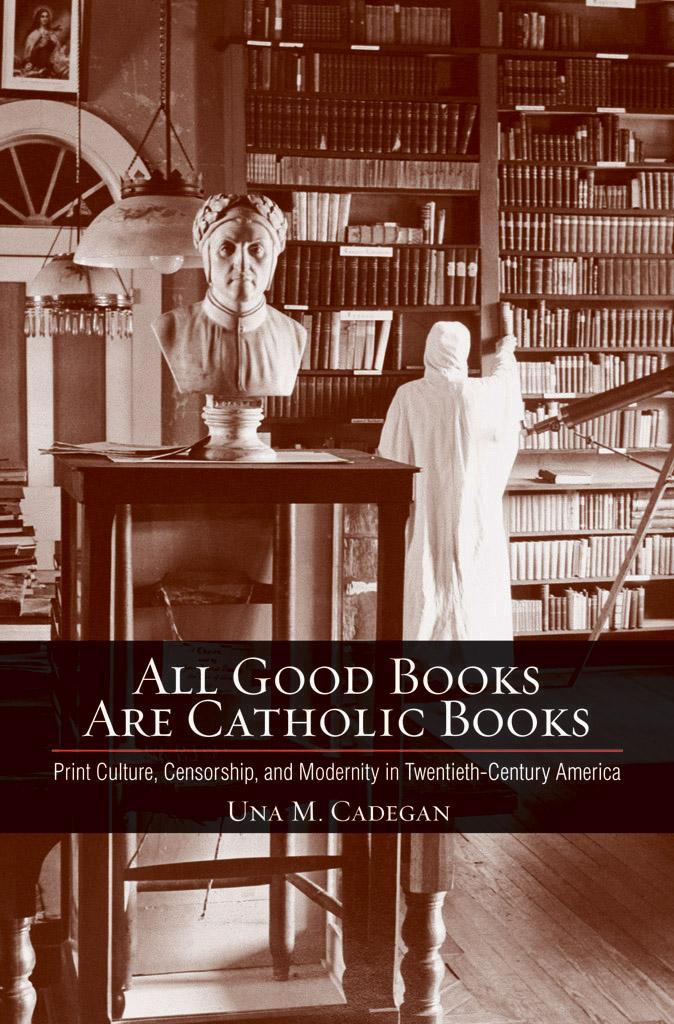
Until the close of the Second Vatican Council in 1965, the stance of the Roman Catholic Church toward the social, cultural, economic, and political developments of the twentieth century was largely antagonistic. Naturally opposed to secularization, skeptical of capitalist markets indifferent to questions of justice, confused and appalled by new forms of high and low culture, and resistant to the social and economic freedom of women—in all of these ways the Catholic Church set itself up as a thoroughly anti-modern institution. Yet, in and through the period from World War I to Vatican II, the Church did engage with, react to, and even accommodate various aspects of modernity. In All Good Books Are Catholic Books, Una M. Cadegan shows how the Church's official position on literary culture developed over this crucial period.
The Catholic Church in the United States maintained an Index of Prohibited Books and the National Legion of Decency (founded in 1933) lobbied Hollywood to edit or ban movies, pulp magazines, and comic books that were morally suspect. These regulations posed an obstacle for the self-understanding of Catholic American readers, writers, and scholars. But as Cadegan finds, Catholics developed a rationale by which they could both respect the laws of the Church as it sought to protect the integrity of doctrine and also engage the culture of artistic and commercial freedom in which they operated as Americans. Catholic literary figures including Flannery O'Connor and Thomas Merton are important to Cadegan's argument, particularly as their careers and the reception of their work demonstrate shifts in the relationship between Catholicism and literary culture. Cadegan trains her attention on American critics, editors, and university professors and administrators who mediated the relationship among the Church, parishioners, and the culture at large.
Before Memmo my notes were scattered across PDFs. Now a workspace pulls everything into one place — I see exactly what's still left to study.
Memmo's summaries are gold before exams. I don't have to re-read 800 pages two weeks before — just the important parts.
The AI chat has saved me the night before an exam more than once. I just keep asking until I get it — no waiting on a study group to reply.
The quizzes hit exactly what I need to know. Memmo tracks what I get stuck on — so I only practice what's worth it.
Flashcards with spaced repetition are magic. Memmo knows when I'm about to forget something and brings it back.
The AI podcasts are my favorite. I listen on my way to school and get a recap without sitting at a computer.

Handbok i kvalitativa metoder
281 kr

Hållbar utveckling: en introduktion för ingenjörer och andra problemlösare
334 kr

Brymans Samhällsvetenskapliga metoder
390 kr

Projektledning
491 kr

Den orättvisa hälsan: om socioekonomiska skillnader i hälsa och livslängd
326 kr

Vetenskapsteori för nybörjare
196 kr

Organizational Leadership
429 kr

På väg mot läraryrket
172 kr

Det sociala livet i skolan: Socialpsykologiska perspektiv
253 kr

Betygsättningens didaktik
151 kr

Personality
402 kr

Studying Leadership
404 kr

Managing Innovation
477 kr

Introduktion till samhällsvetenskaplig metod
347 kr

The Psychology of Sex and Gender
698 kr

Evidens och kunskap för socialt arbete
207 kr

Introduction to Leadership
605 kr