
Before Memmo my notes were scattered across PDFs. Now a workspace pulls everything into one place — I see exactly what's still left to study.
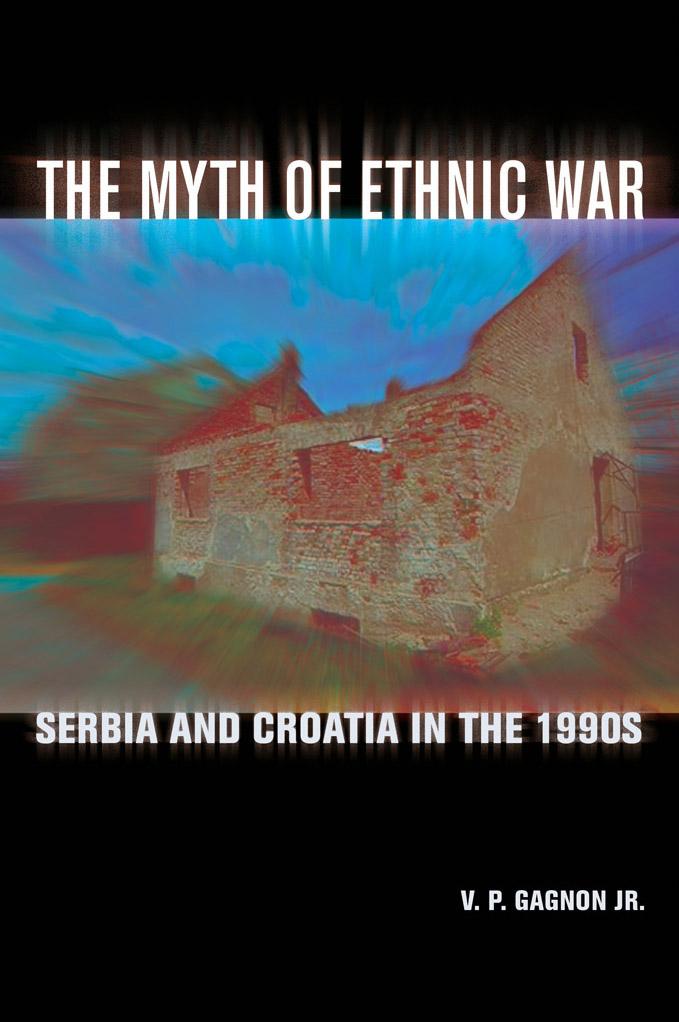
"The wars in Bosnia-Herzegovina and in neighboring Croatia and Kosovo grabbed the attention of the western world not only because of their ferocity and their geographic location, but also because of their timing. This violence erupted at the exact moment when the cold war confrontation was drawing to a close, when westerners were claiming their liberal values as triumphant, in a country that had only a few years earlier been seen as very well placed to join the west. In trying to account for this outburst, most western journalists, academics, and policymakers have resorted to the language of the premodern: tribalism, ethnic hatreds, cultural inadequacy, irrationality; in short, the Balkans as the antithesis of the modern west. Yet one of the most striking aspects of the wars in Yugoslavia is the extent to which the images purveyed in the western press and in much of the academic literature are so at odds with evidence from on the ground."—from Chapter 1
V. P. Gagnon Jr. believes that the Yugoslav wars of the 1990s were reactionary moves designed to thwart populations that were threatening the existing structures of political and economic power. He begins with facts at odds with the essentialist view of ethnic identity, such as high intermarriage rates and the very high percentage of draft-resisters. These statistics do not comport comfortably with the notion that these wars were the result of ancient blood hatreds or of nationalist leaders using ethnicity to mobilize people into conflict.
Yugoslavia in the late 1980s was, in Gagnon's view, on the verge of large-scale sociopolitical and economic change. He shows that political and economic elites in Belgrade and Zagreb first created and then manipulated violent conflict along ethnic lines as a way to short-circuit the dynamics of political change. This strategy of violence was thus a means for these threatened elites to demobilize the population. Gagnon's noteworthy and rather controversial argument provides us with a substantially new way of understanding the politics of ethnicity.
Before Memmo my notes were scattered across PDFs. Now a workspace pulls everything into one place — I see exactly what's still left to study.
Memmo's summaries are gold before exams. I don't have to re-read 800 pages two weeks before — just the important parts.
The AI chat has saved me the night before an exam more than once. I just keep asking until I get it — no waiting on a study group to reply.
The quizzes hit exactly what I need to know. Memmo tracks what I get stuck on — so I only practice what's worth it.
Flashcards with spaced repetition are magic. Memmo knows when I'm about to forget something and brings it back.
The AI podcasts are my favorite. I listen on my way to school and get a recap without sitting at a computer.

Handbok i kvalitativa metoder
281 kr

Hållbar utveckling: en introduktion för ingenjörer och andra problemlösare
334 kr

Brymans Samhällsvetenskapliga metoder
390 kr

Projektledning
491 kr

Den orättvisa hälsan: om socioekonomiska skillnader i hälsa och livslängd
326 kr

Vetenskapsteori för nybörjare
196 kr

Organizational Leadership
429 kr

På väg mot läraryrket
172 kr

Det sociala livet i skolan: Socialpsykologiska perspektiv
253 kr

Betygsättningens didaktik
151 kr

Personality
402 kr

Studying Leadership
404 kr

Managing Innovation
477 kr

Introduktion till samhällsvetenskaplig metod
347 kr

The Psychology of Sex and Gender
698 kr

Evidens och kunskap för socialt arbete
207 kr

Introduction to Leadership
605 kr