
Before Memmo my notes were scattered across PDFs. Now a workspace pulls everything into one place — I see exactly what's still left to study.
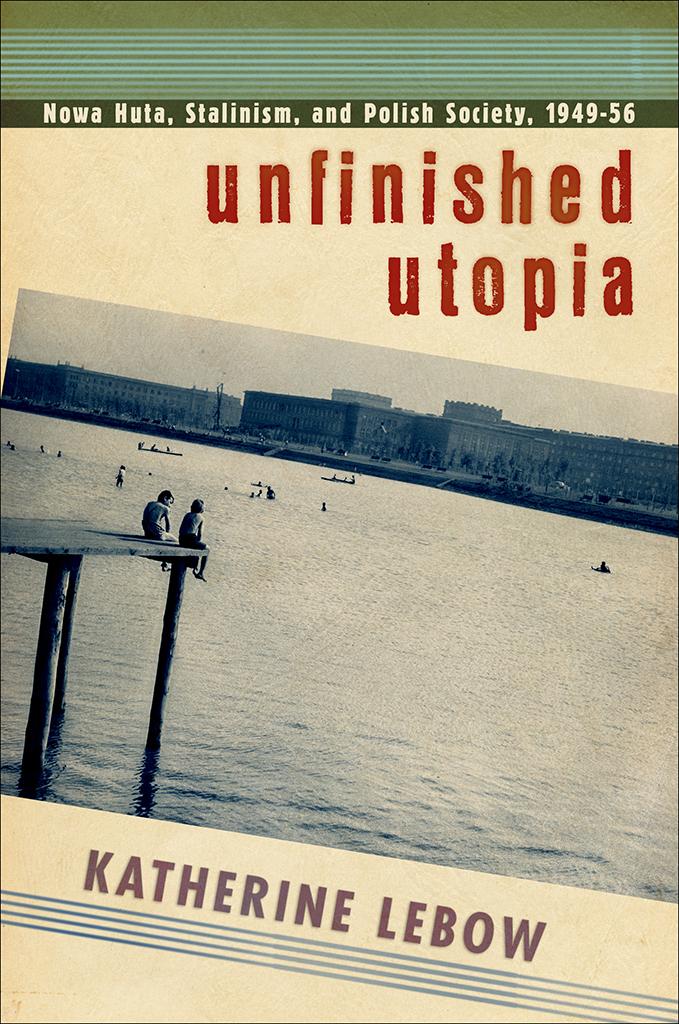
Unfinished Utopia is an extremely interesting and beautifully executed book.... This book will appeal to a very wide audience. It will of course interest historians of the Polish postwar first and foremost, but beyond that it will appeal to Eastern Europeanists and, notably, to historians of the Western European postwar as well. The book succeeds on many levels: as Polish history, as a history of postwar European recovery, as a history of Stalinism and of Communist identity formation, and, lastly, as a history of twentieth-century political and social transformations.— Eva Plach ―The Journal of Modern History
Unfinished Utopia is a social and cultural history of Nowa Huta, dubbed Poland’s "first socialist city" by Communist propaganda of the 1950s. Work began on the new town, located on the banks of the Vistula River just a few miles from the historic city of Kraków, in 1949. By contrast to its older neighbor, Nowa Huta was intended to model a new kind of socialist modernity and to be peopled with "new men," themselves both the builders and the beneficiaries of this project of socialist construction. Nowa Huta was the largest and politically most significant of the socialist cities built in East Central Europe after World War II; home to the massive Lenin Steelworks, it epitomized the Stalinist program of forced industrialization that opened the cities to rural migrants and sought fundamentally to transform the structures of Polish society.
Focusing on Nowa Huta’s construction and steel workers, youth brigade volunteers, housewives, activists, and architects, Katherine Lebow explores their various encounters with the ideology and practice of Stalinist mobilization by seeking out their voices in memoirs, oral history interviews, and archival records, juxtaposing these against both the official and unofficial transcripts of Stalinism. Far from the gray and regimented landscape we imagine Stalinism to have been, the fledgling city was a colorful and anarchic place where the formerly disenfranchised (peasants, youth, women) hastened to assert their leading role in "building socialism"—but rarely in ways that authorities had anticipated.
Before Memmo my notes were scattered across PDFs. Now a workspace pulls everything into one place — I see exactly what's still left to study.
Memmo's summaries are gold before exams. I don't have to re-read 800 pages two weeks before — just the important parts.
The AI chat has saved me the night before an exam more than once. I just keep asking until I get it — no waiting on a study group to reply.
The quizzes hit exactly what I need to know. Memmo tracks what I get stuck on — so I only practice what's worth it.
Flashcards with spaced repetition are magic. Memmo knows when I'm about to forget something and brings it back.
The AI podcasts are my favorite. I listen on my way to school and get a recap without sitting at a computer.

Handbok i kvalitativa metoder
281 kr

Hållbar utveckling: en introduktion för ingenjörer och andra problemlösare
334 kr

Brymans Samhällsvetenskapliga metoder
390 kr

Projektledning
491 kr

Den orättvisa hälsan: om socioekonomiska skillnader i hälsa och livslängd
326 kr

Vetenskapsteori för nybörjare
196 kr

Organizational Leadership
429 kr

På väg mot läraryrket
172 kr

Det sociala livet i skolan: Socialpsykologiska perspektiv
253 kr

Betygsättningens didaktik
151 kr

Personality
402 kr

Studying Leadership
404 kr

Managing Innovation
477 kr

Introduktion till samhällsvetenskaplig metod
347 kr

The Psychology of Sex and Gender
698 kr

Evidens och kunskap för socialt arbete
207 kr

Introduction to Leadership
605 kr