
Before Memmo my notes were scattered across PDFs. Now a workspace pulls everything into one place — I see exactly what's still left to study.
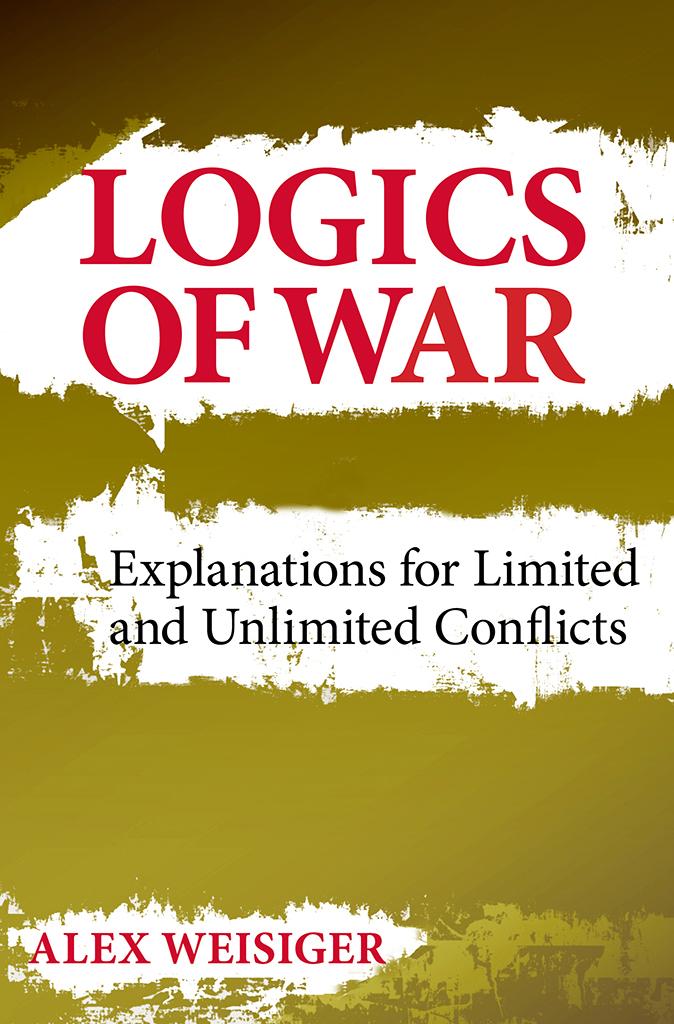
Most wars between countries end quickly and at relatively low cost. The few in which high-intensity fighting continues for years bring about a disproportionate amount of death and suffering. What separates these few unusually long and intense wars from the many conflicts that are far less destructive? In Logics of War, Alex Weisiger tests three explanations for a nation's decision to go to war and continue fighting regardless of the costs. He combines sharp statistical analysis of interstate wars over the past two centuries with nine narrative case studies. He examines both well-known conflicts like World War II and the Persian Gulf War, as well as unfamiliar ones such as the 1864–1870 Paraguayan War (or the War of the Triple Alliance), which proportionally caused more deaths than any other war in modern history.
When leaders go to war expecting easy victory, events usually correct their misperceptions quickly and with fairly low casualties, thereby setting the stage for a negotiated agreement. A second explanation involves motives born of domestic politics; as war becomes more intense, however, leaders are increasingly constrained in their ability to continue the fighting. Particularly destructive wars instead arise from mistrust of an opponent's intentions. Countries that launch preventive wars to forestall expected decline tend to have particularly ambitious war aims that they hold to even when fighting goes poorly. Moreover, in some cases, their opponents interpret the preventive attack as evidence of a dispositional commitment to aggression, resulting in the rejection of any form of negotiation and a demand for unconditional surrender. Weisiger's treatment of a topic of central concern to scholars of major wars will also be read with great interest by military historians, political psychologists, and sociologists.
Before Memmo my notes were scattered across PDFs. Now a workspace pulls everything into one place — I see exactly what's still left to study.
Memmo's summaries are gold before exams. I don't have to re-read 800 pages two weeks before — just the important parts.
The AI chat has saved me the night before an exam more than once. I just keep asking until I get it — no waiting on a study group to reply.
The quizzes hit exactly what I need to know. Memmo tracks what I get stuck on — so I only practice what's worth it.
Flashcards with spaced repetition are magic. Memmo knows when I'm about to forget something and brings it back.
The AI podcasts are my favorite. I listen on my way to school and get a recap without sitting at a computer.

Handbok i kvalitativa metoder
281 kr

Hållbar utveckling: en introduktion för ingenjörer och andra problemlösare
334 kr

Brymans Samhällsvetenskapliga metoder
390 kr

Projektledning
491 kr

Den orättvisa hälsan: om socioekonomiska skillnader i hälsa och livslängd
326 kr

Vetenskapsteori för nybörjare
196 kr

Organizational Leadership
429 kr

På väg mot läraryrket
172 kr

Det sociala livet i skolan: Socialpsykologiska perspektiv
253 kr

Betygsättningens didaktik
151 kr

Personality
402 kr

Studying Leadership
404 kr

Managing Innovation
477 kr

Introduktion till samhällsvetenskaplig metod
347 kr

The Psychology of Sex and Gender
698 kr

Evidens och kunskap för socialt arbete
207 kr

Introduction to Leadership
605 kr