
Before Memmo my notes were scattered across PDFs. Now a workspace pulls everything into one place — I see exactly what's still left to study.
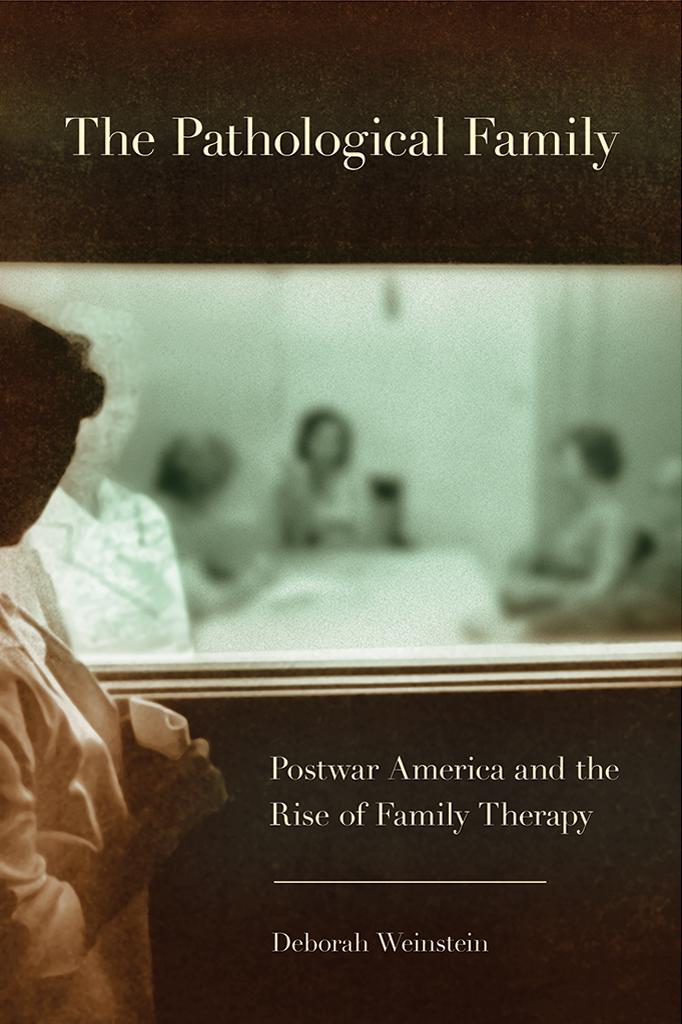
While iconic popular images celebrated family life during the 1950s and 1960s, American families were simultaneously regarded as potentially menacing sources of social disruption. The history of family therapy makes the complicated power of the family at midcentury vividly apparent. Clinicians developed a new approach to psychotherapy that claimed to locate the cause and treatment of mental illness in observable patterns of family interaction and communication rather than in individual psyches. Drawing on cybernetics, systems theory, and the social and behavioral sciences, they ambitiously aimed to cure schizophrenia and stop juvenile delinquency. With particular sensitivity to the importance of scientific observation and visual technologies such as one-way mirrors and training films in shaping the young field, The Pathological Family examines how family therapy developed against the intellectual and cultural landscape of postwar America.
As Deborah Weinstein shows, the midcentury expansion of America's therapeutic culture and the postwar fixation on family life profoundly affected one another. Family therapists and other postwar commentators alike framed the promotion of democracy in the language of personality formation and psychological health forged in the crucible of the family. As therapists in this era shifted their clinical gaze to whole families, they nevertheless grappled in particular with the role played by mothers in the onset of their children's aberrant behavior. Although attitudes toward family therapy have shifted during intervening generations, the relations between family and therapeutic culture remain salient today.
Before Memmo my notes were scattered across PDFs. Now a workspace pulls everything into one place — I see exactly what's still left to study.
Memmo's summaries are gold before exams. I don't have to re-read 800 pages two weeks before — just the important parts.
The AI chat has saved me the night before an exam more than once. I just keep asking until I get it — no waiting on a study group to reply.
The quizzes hit exactly what I need to know. Memmo tracks what I get stuck on — so I only practice what's worth it.
Flashcards with spaced repetition are magic. Memmo knows when I'm about to forget something and brings it back.
The AI podcasts are my favorite. I listen on my way to school and get a recap without sitting at a computer.

Handbok i kvalitativa metoder
281 kr

Hållbar utveckling: en introduktion för ingenjörer och andra problemlösare
334 kr

Brymans Samhällsvetenskapliga metoder
390 kr

Projektledning
491 kr

Den orättvisa hälsan: om socioekonomiska skillnader i hälsa och livslängd
326 kr

Organizational Leadership
429 kr

Vetenskapsteori för nybörjare
196 kr

På väg mot läraryrket
172 kr

Det sociala livet i skolan: Socialpsykologiska perspektiv
253 kr

Betygsättningens didaktik
151 kr

Personality
402 kr

Studying Leadership
404 kr

Managing Innovation
477 kr

Introduktion till samhällsvetenskaplig metod
347 kr

The Psychology of Sex and Gender
698 kr

Evidens och kunskap för socialt arbete
207 kr

Introduction to Leadership
605 kr