
Before Memmo my notes were scattered across PDFs. Now a workspace pulls everything into one place — I see exactly what's still left to study.
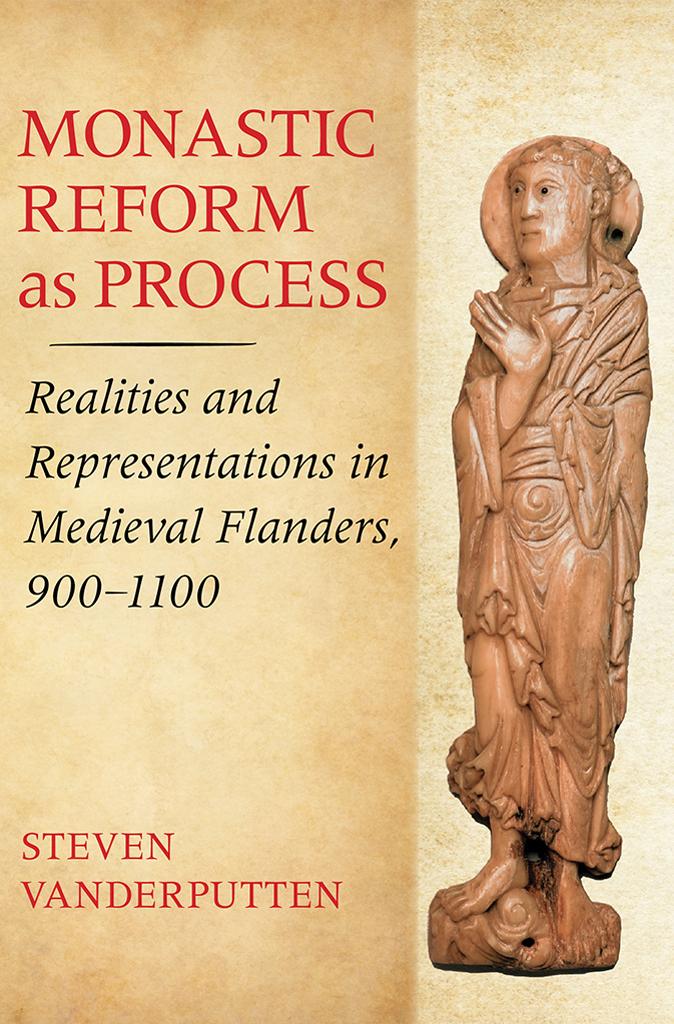
The history of monastic institutions in the Middle Ages may at first appear remarkably uniform and predictable. Medieval commentators and modern scholars have observed how monasteries of the tenth to early twelfth centuries experienced long periods of stasis alternating with bursts of rapid development known as reforms. Charismatic leaders by sheer force of will, and by assiduously recruiting the support of the ecclesiastical and lay elites, pushed monasticism forward toward reform, remediating the inevitable decline of discipline and government in these institutions. A lack of concrete information on what happened at individual monasteries is not regarded as a significant problem, as long as there is the possibility to reconstruct the reformers' ''program.'' While this general picture makes for a compelling narrative, it doesn't necessarily hold up when one looks closely at the history of specific institutions.
In Monastic Reform as Process, Steven Vanderputten puts the history of monastic reform to the test by examining the evidence from seven monasteries in Flanders, one of the wealthiest principalities of northwestern Europe, between 900 and 1100. He finds that the reform of a monastery should be studied not as an "exogenous shock" but as an intentional blending of reformist ideals with existing structures and traditions. He also shows that reformist government was cumulative in nature, and many of the individual achievements and initiatives of reformist abbots were only possible because they built upon previous achievements. Rather than looking at reforms as "flashpoint events," we need to view them as processes worthy of study in their own right. Deeply researched and carefully argued, Monastic Reform as Process will be essential reading for scholars working on the history of monasteries more broadly as well as those studying the phenomenon of reform throughout history.
Before Memmo my notes were scattered across PDFs. Now a workspace pulls everything into one place — I see exactly what's still left to study.
Memmo's summaries are gold before exams. I don't have to re-read 800 pages two weeks before — just the important parts.
The AI chat has saved me the night before an exam more than once. I just keep asking until I get it — no waiting on a study group to reply.
The quizzes hit exactly what I need to know. Memmo tracks what I get stuck on — so I only practice what's worth it.
Flashcards with spaced repetition are magic. Memmo knows when I'm about to forget something and brings it back.
The AI podcasts are my favorite. I listen on my way to school and get a recap without sitting at a computer.

Handbok i kvalitativa metoder
281 kr

Hållbar utveckling: en introduktion för ingenjörer och andra problemlösare
334 kr

Brymans Samhällsvetenskapliga metoder
390 kr

Projektledning
491 kr

Den orättvisa hälsan: om socioekonomiska skillnader i hälsa och livslängd
326 kr

Organizational Leadership
429 kr

Vetenskapsteori för nybörjare
196 kr

På väg mot läraryrket
172 kr

Det sociala livet i skolan: Socialpsykologiska perspektiv
253 kr

Betygsättningens didaktik
151 kr

Personality
402 kr

Studying Leadership
404 kr

Managing Innovation
477 kr

Introduktion till samhällsvetenskaplig metod
347 kr

The Psychology of Sex and Gender
698 kr

Evidens och kunskap för socialt arbete
207 kr

Introduction to Leadership
605 kr