
Before Memmo my notes were scattered across PDFs. Now a workspace pulls everything into one place — I see exactly what's still left to study.
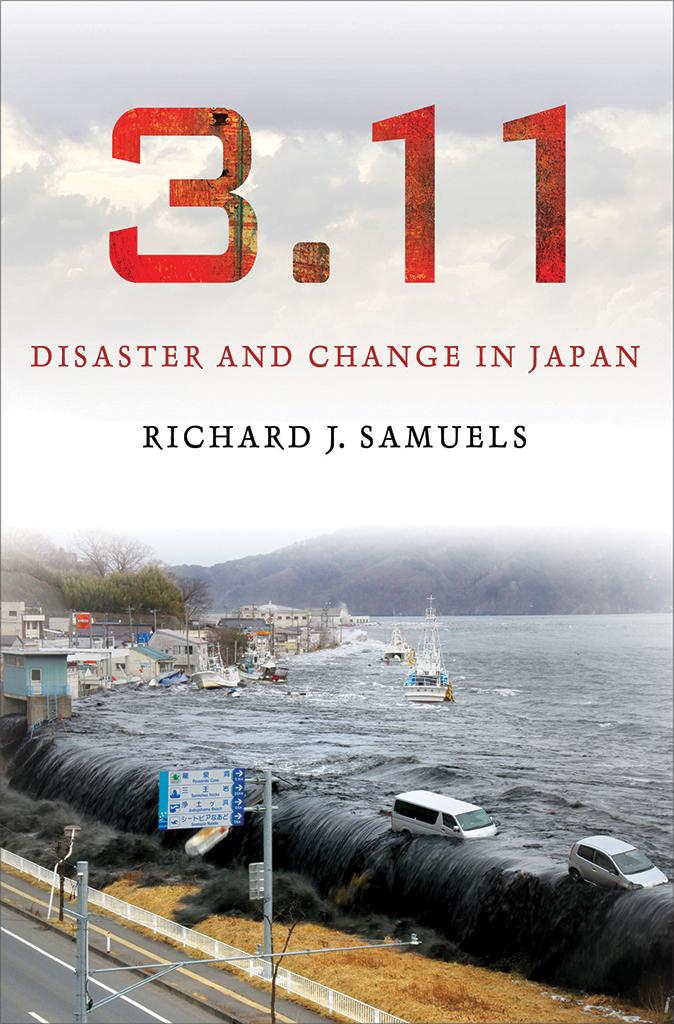
On March 11, 2011, Japan was struck by the shockwaves of a 9.0 magnitude undersea earthquake originating less than 50 miles off its eastern coastline. The most powerful earthquake to have hit Japan in recorded history, it produced a devastating tsunami with waves reaching heights of over 130 feet that in turn caused an unprecedented multireactor meltdown at Fukushima Daiichi Nuclear Power Plant. This triple catastrophe claimed almost 20,000 lives, destroyed whole towns, and will ultimately cost hundreds of billions of dollars for reconstruction.
In 3.11, Richard Samuels offers the first broad scholarly assessment of the disaster's impact on Japan's government and society. The events of March 2011 occurred after two decades of social and economic malaise—as well as considerable political and administrative dysfunction at both the national and local levels—and resulted in national soul-searching. Political reformers saw in the tragedy cause for hope: an opportunity for Japan to remake itself. Samuels explores Japan's post-earthquake actions in three key sectors: national security, energy policy, and local governance. For some reformers, 3.11 was a warning for Japan to overhaul its priorities and political processes. For others, it was a once-in-a-millennium event; they cautioned that while national policy could be improved, dramatic changes would be counterproductive. Still others declared that the catastrophe demonstrated the need to return to an idealized past and rebuild what has been lost to modernity and globalization.
Samuels chronicles the battles among these perspectives and analyzes various attempts to mobilize popular support by political entrepreneurs who repeatedly invoked three powerfully affective themes: leadership, community, and vulnerability. Assessing reformers' successes and failures as they used the catastrophe to push their particular agendas—and by examining the earthquake and its aftermath alongside prior disasters in Japan, China, and the United States—Samuels outlines Japan's rhetoric of crisis and shows how it has come to define post-3.11 politics and public policy.
Before Memmo my notes were scattered across PDFs. Now a workspace pulls everything into one place — I see exactly what's still left to study.
Memmo's summaries are gold before exams. I don't have to re-read 800 pages two weeks before — just the important parts.
The AI chat has saved me the night before an exam more than once. I just keep asking until I get it — no waiting on a study group to reply.
The quizzes hit exactly what I need to know. Memmo tracks what I get stuck on — so I only practice what's worth it.
Flashcards with spaced repetition are magic. Memmo knows when I'm about to forget something and brings it back.
The AI podcasts are my favorite. I listen on my way to school and get a recap without sitting at a computer.

Handbok i kvalitativa metoder
281 kr

Hållbar utveckling: en introduktion för ingenjörer och andra problemlösare
334 kr

Brymans Samhällsvetenskapliga metoder
390 kr

Projektledning
491 kr

Den orättvisa hälsan: om socioekonomiska skillnader i hälsa och livslängd
326 kr

Organizational Leadership
429 kr

Vetenskapsteori för nybörjare
196 kr

På väg mot läraryrket
172 kr

Det sociala livet i skolan: Socialpsykologiska perspektiv
253 kr

Betygsättningens didaktik
151 kr

Personality
402 kr

Studying Leadership
404 kr

Managing Innovation
477 kr

Introduktion till samhällsvetenskaplig metod
347 kr

The Psychology of Sex and Gender
698 kr

Evidens och kunskap för socialt arbete
207 kr

Introduction to Leadership
605 kr