
Before Memmo my notes were scattered across PDFs. Now a workspace pulls everything into one place — I see exactly what's still left to study.
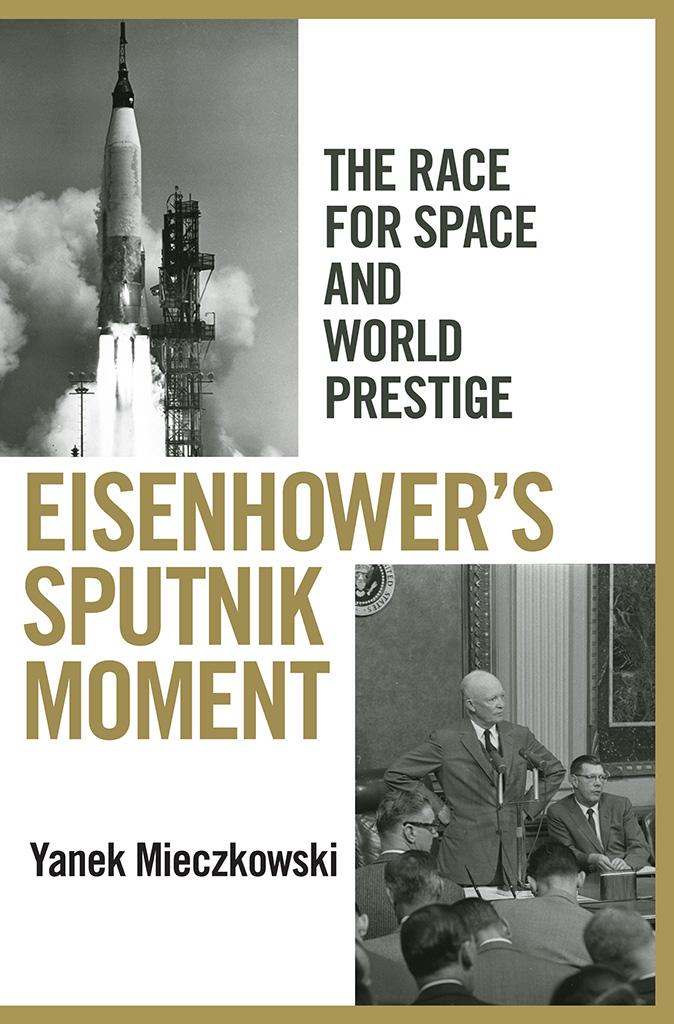
In a critical Cold War moment, Dwight D. Eisenhower's presidency suddenly changed when the Soviet Union launched Sputnik, the world's first satellite. What Ike called "a small ball" became a source of Russian pride and propaganda, and it wounded him politically, as critics charged that he responded sluggishly to the challenge of space exploration. Yet Eisenhower refused to panic after Sputnik—and he did more than just stay calm. He helped to guide the United States into the Space Age, even though Americans have given greater credit to John F. Kennedy for that achievement.
In Eisenhower's Sputnik Moment, Yanek Mieczkowski examines the early history of America's space program, reassessing Eisenhower's leadership. He details how Eisenhower approved breakthrough satellites, supported a new civilian space agency, signed a landmark science education law, and fostered improved relations with scientists. These feats made Eisenhower's post-Sputnik years not the flop that critics alleged but a time of remarkable progress, even as he endured the setbacks of recession, medical illness, and a humiliating first U.S. attempt to launch a satellite. Eisenhower's principled stands enabled him to resist intense pressure to boost federal spending, and he instead pursued his priorities—a balanced budget, prosperous economy, and sturdy national defense. Yet Sputnik also altered the world's power dynamics, sweeping Eisenhower in directions that were new—even alien—to him, and he misjudged the importance of space in the Cold War's "prestige race." By contrast, Kennedy capitalized on the issue in the 1960 election, and after taking office he urged a manned mission to the moon, leaving Eisenhower to grumble over the young president's aggressive approach.
Offering a fast-paced account of this Cold War episode, Mieczkowski demonstrates that Eisenhower built an impressive record in space and on earth, all the while offering warnings about America's stature and strengths that still hold true today.
Before Memmo my notes were scattered across PDFs. Now a workspace pulls everything into one place — I see exactly what's still left to study.
Memmo's summaries are gold before exams. I don't have to re-read 800 pages two weeks before — just the important parts.
The AI chat has saved me the night before an exam more than once. I just keep asking until I get it — no waiting on a study group to reply.
The quizzes hit exactly what I need to know. Memmo tracks what I get stuck on — so I only practice what's worth it.
Flashcards with spaced repetition are magic. Memmo knows when I'm about to forget something and brings it back.
The AI podcasts are my favorite. I listen on my way to school and get a recap without sitting at a computer.

Handbok i kvalitativa metoder
281 kr

Hållbar utveckling: en introduktion för ingenjörer och andra problemlösare
334 kr

Brymans Samhällsvetenskapliga metoder
390 kr

Projektledning
491 kr

Den orättvisa hälsan: om socioekonomiska skillnader i hälsa och livslängd
326 kr

Organizational Leadership
429 kr

Vetenskapsteori för nybörjare
196 kr

På väg mot läraryrket
172 kr

Det sociala livet i skolan: Socialpsykologiska perspektiv
253 kr

Betygsättningens didaktik
151 kr

Personality
402 kr

Studying Leadership
404 kr

Managing Innovation
477 kr

Introduktion till samhällsvetenskaplig metod
347 kr

The Psychology of Sex and Gender
698 kr

Evidens och kunskap för socialt arbete
207 kr

Introduction to Leadership
605 kr