
Before Memmo my notes were scattered across PDFs. Now a workspace pulls everything into one place — I see exactly what's still left to study.
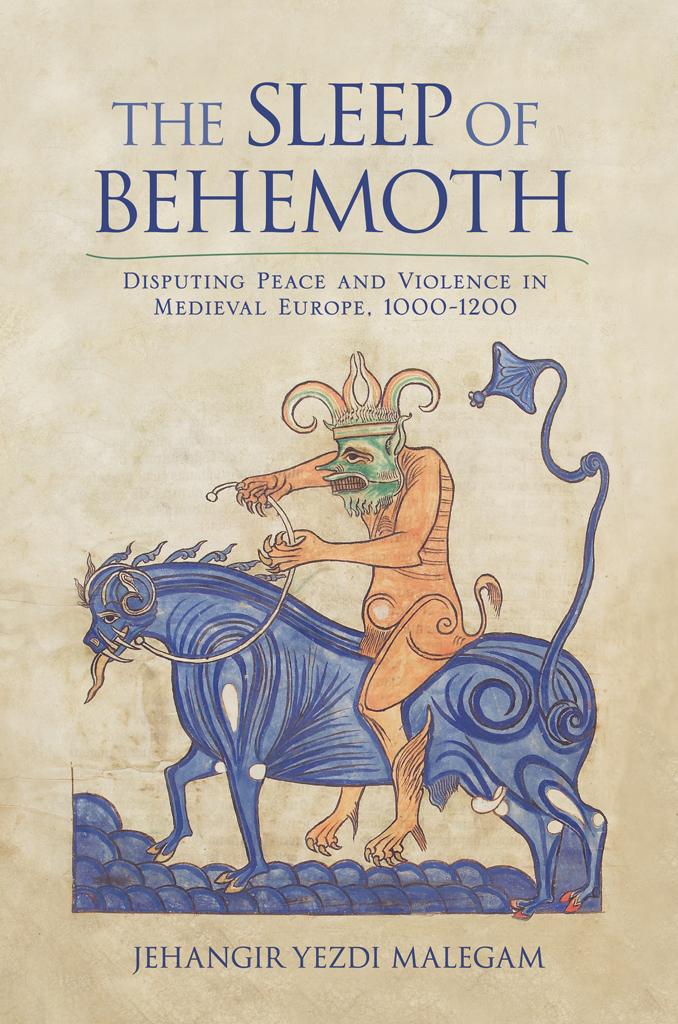
In The Sleep of Behemoth, Jehangir Yezdi Malegam explores the emergence of conflicting concepts of peace in western Europe during the High Middle Ages. Ever since the early Church, Christian thinkers had conceived of their peace separate from the peace of the world, guarded by the sacraments and shared only grudgingly with powers and principalities. To kingdoms and communities they had allowed attenuated versions of this peace, modes of accommodation and domination that had tranquility as the goal. After 1000, reformers in the papal curia and monks and canons in the intellectual circles of northern France began to reimagine the Church as an engine of true peace, whose task it was eventually to absorb all peoples through progressive acts of revolutionary peacemaking. Peace as they envisioned it became a mandate for reform through conflict, coercion, and insurrection. And the pursuit of mere tranquility appeared dangerous, and even diabolical.
As Malegam shows, within western Christendom's major centers of intellectual activity and political thought, the clergy competed over the meaning and monopolization of the term "peace," contrasting it with what one canon lawyer called the "sleep of Behemoth," a diabolical "false" peace of lassitude and complacency, one that produced unsuitable forms of community and friendship that must be overturned at all costs. Out of this contest over the meaning and ownership of true peace, Malegam concludes, medieval thinkers developed theologies that shaped secular political theory in the later Middle Ages. The Sleep of Behemoth traces this radical experiment in redefining the meaning of peace from the papal courts of Rome and the schools of Laon, Liège, and Paris to its gradual spread across the continent and its impact on such developments as the rise of papal monarchism; the growth of urban, communal self-government; and the emergence of secular and mystical scholasticism.
Before Memmo my notes were scattered across PDFs. Now a workspace pulls everything into one place — I see exactly what's still left to study.
Memmo's summaries are gold before exams. I don't have to re-read 800 pages two weeks before — just the important parts.
The AI chat has saved me the night before an exam more than once. I just keep asking until I get it — no waiting on a study group to reply.
The quizzes hit exactly what I need to know. Memmo tracks what I get stuck on — so I only practice what's worth it.
Flashcards with spaced repetition are magic. Memmo knows when I'm about to forget something and brings it back.
The AI podcasts are my favorite. I listen on my way to school and get a recap without sitting at a computer.

Handbok i kvalitativa metoder
281 kr

Hållbar utveckling: en introduktion för ingenjörer och andra problemlösare
334 kr

Brymans Samhällsvetenskapliga metoder
390 kr

Projektledning
491 kr

Den orättvisa hälsan: om socioekonomiska skillnader i hälsa och livslängd
326 kr

Organizational Leadership
429 kr

Vetenskapsteori för nybörjare
196 kr

På väg mot läraryrket
172 kr

Det sociala livet i skolan: Socialpsykologiska perspektiv
253 kr

Betygsättningens didaktik
151 kr

Personality
402 kr

Studying Leadership
404 kr

Managing Innovation
477 kr

Introduktion till samhällsvetenskaplig metod
347 kr

The Psychology of Sex and Gender
698 kr

Evidens och kunskap för socialt arbete
207 kr

Introduction to Leadership
605 kr