
Before Memmo my notes were scattered across PDFs. Now a workspace pulls everything into one place — I see exactly what's still left to study.
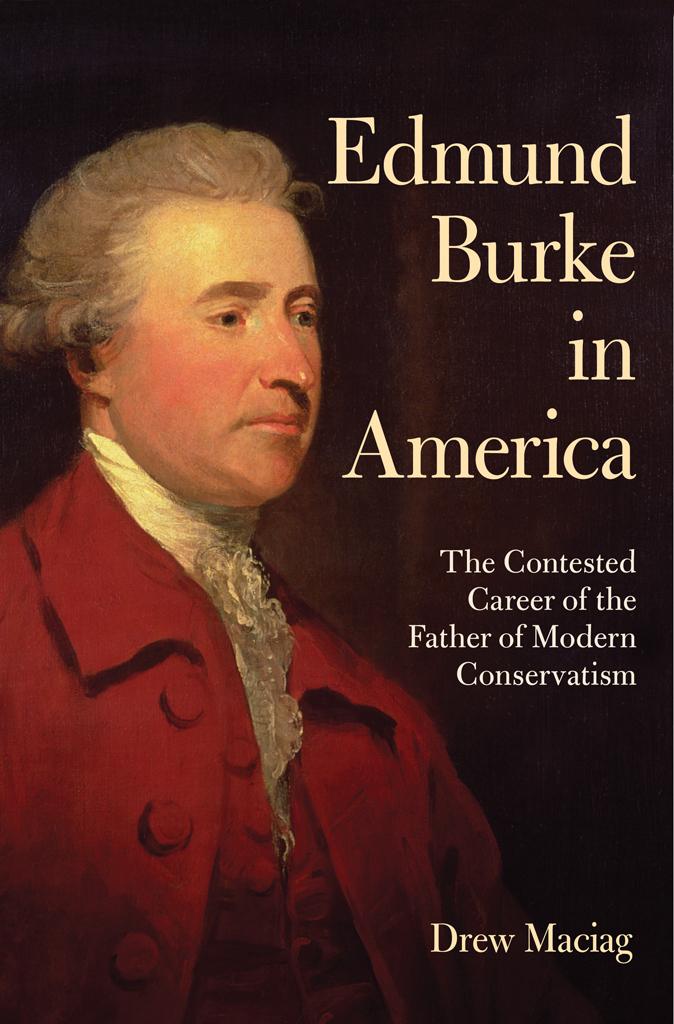
The statesman and political philosopher Edmund Burke (1729–1797) is a touchstone for modern conservatism in the United States, and his name and his writings have been invoked by figures ranging from the arch Federalist George Cabot to the twentieth-century political philosopher Leo Strauss. But Burke's legacy has neither been consistently associated with conservative thought nor has the richness and subtlety of his political vision been fully appreciated by either his American admirers or detractors. In Edmund Burke in America, Drew Maciag traces Burke's reception and reputation in the United States, from the contest of ideas between Burke and Thomas Paine in the Revolutionary period, to the Progressive Era (when Republicans and Democrats alike invoked Burke's wisdom), to his apotheosis within the modern conservative movement.
Throughout, Maciag is sensitive to the relationship between American opinions about Burke and the changing circumstances of American life. The dynamic tension between conservative and liberal attitudes in American society surfaced in debates over the French Revolution, Jacksonian democracy, Gilded Age values, Progressive reform, Cold War anticommunism, and post-1960s liberalism. The post–World War II rediscovery of Burke by New Conservatives and their adoption of him as the "father of conservatism" provided an intellectual foundation for the conservative ascendancy of the late twentieth century. Highlighting the Burkean influence on such influential writers as George Bancroft, E. L. Godkin, and Russell Kirk, Maciag also explores the underappreciated impact of Burke's thought on four U.S. presidents: John Adams and John Quincy Adams, Theodore Roosevelt, and Woodrow Wilson. Through close and keen readings of political speeches, public lectures, and works of history and political theory and commentary, Maciag offers a sweeping account of the American political scene over two centuries.
Before Memmo my notes were scattered across PDFs. Now a workspace pulls everything into one place — I see exactly what's still left to study.
Memmo's summaries are gold before exams. I don't have to re-read 800 pages two weeks before — just the important parts.
The AI chat has saved me the night before an exam more than once. I just keep asking until I get it — no waiting on a study group to reply.
The quizzes hit exactly what I need to know. Memmo tracks what I get stuck on — so I only practice what's worth it.
Flashcards with spaced repetition are magic. Memmo knows when I'm about to forget something and brings it back.
The AI podcasts are my favorite. I listen on my way to school and get a recap without sitting at a computer.

Handbok i kvalitativa metoder
281 kr

Hållbar utveckling: en introduktion för ingenjörer och andra problemlösare
334 kr

Brymans Samhällsvetenskapliga metoder
390 kr

Projektledning
491 kr

Den orättvisa hälsan: om socioekonomiska skillnader i hälsa och livslängd
326 kr

Vetenskapsteori för nybörjare
196 kr

Organizational Leadership
429 kr

På väg mot läraryrket
172 kr

Det sociala livet i skolan: Socialpsykologiska perspektiv
253 kr

Betygsättningens didaktik
151 kr

Personality
402 kr

Studying Leadership
404 kr

Managing Innovation
477 kr

Introduktion till samhällsvetenskaplig metod
347 kr

The Psychology of Sex and Gender
698 kr

Evidens och kunskap för socialt arbete
207 kr

Introduction to Leadership
605 kr