
Before Memmo my notes were scattered across PDFs. Now a workspace pulls everything into one place — I see exactly what's still left to study.
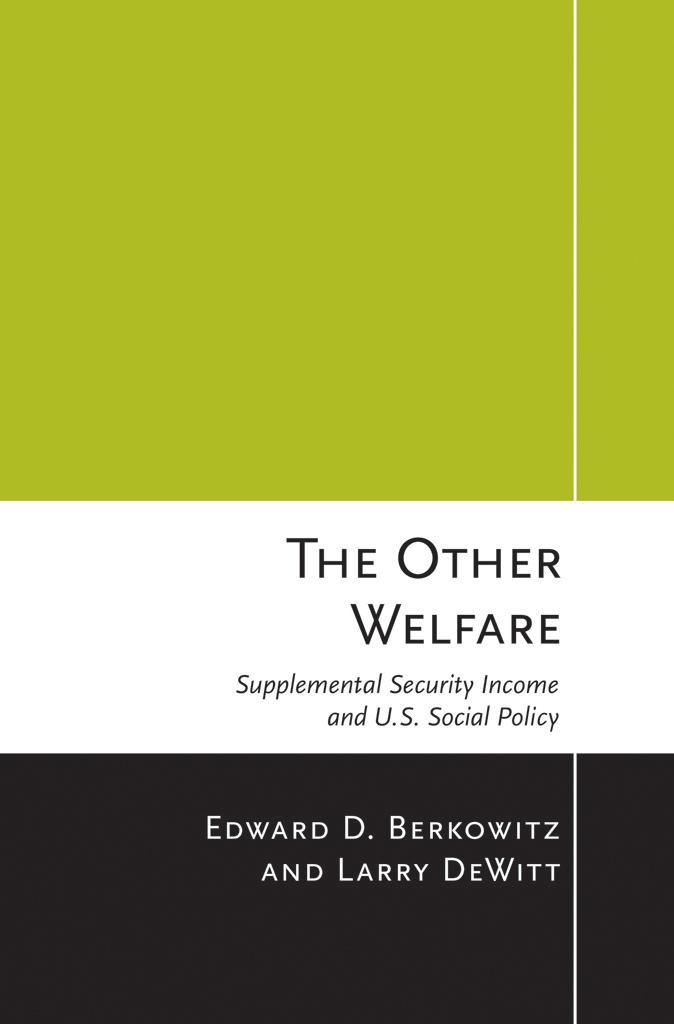
The Other Welfare offers the first comprehensive history of Supplemental Security Income (SSI), from its origins as part of President Nixon's daring social reform efforts to its pivotal role in the politics of the Clinton administration. Enacted into law in 1972, Supplemental Security Income (SSI) marked the culmination of liberal social and economic policies that began during the New Deal. The new program provided cash benefits to needy elderly, blind, and disabled individuals. Because of the complex character of SSI—marking both the high tide of the Great Society and the beginning of the retrenchment of the welfare state—it provides the perfect subject for assessing the development of the American state in the late twentieth century.
SSI was launched with the hope of freeing welfare programs from social and political stigma; it instead became a source of controversy almost from its very start. Intended as a program that paid uniform benefits across the nation, it ended up replicating many of the state-by-state differences that characterized the American welfare state. Begun as a program intended to provide income for the elderly, SSI evolved into a program that served people with disabilities, becoming a primary source of financial aid for the deinstitutionalized mentally ill and a principal support for children with disabilities.
Written by a leading historian of America's welfare state and the former chief historian of the Social Security Administration, The Other Welfare illuminates the course of modern social policy. Using documents previously unavailable to researchers, the authors delve into SSI's transformation from the idealistic intentions of its founders to the realities of its performance in America's highly splintered political system. In telling this important and overlooked history, this book alters the conventional wisdom about the development of American social welfare policy.
Before Memmo my notes were scattered across PDFs. Now a workspace pulls everything into one place — I see exactly what's still left to study.
Memmo's summaries are gold before exams. I don't have to re-read 800 pages two weeks before — just the important parts.
The AI chat has saved me the night before an exam more than once. I just keep asking until I get it — no waiting on a study group to reply.
The quizzes hit exactly what I need to know. Memmo tracks what I get stuck on — so I only practice what's worth it.
Flashcards with spaced repetition are magic. Memmo knows when I'm about to forget something and brings it back.
The AI podcasts are my favorite. I listen on my way to school and get a recap without sitting at a computer.

Handbok i kvalitativa metoder
281 kr

Hållbar utveckling: en introduktion för ingenjörer och andra problemlösare
334 kr

Brymans Samhällsvetenskapliga metoder
390 kr

Projektledning
491 kr

Den orättvisa hälsan: om socioekonomiska skillnader i hälsa och livslängd
326 kr

Organizational Leadership
429 kr

Vetenskapsteori för nybörjare
196 kr

På väg mot läraryrket
172 kr

Det sociala livet i skolan: Socialpsykologiska perspektiv
253 kr

Betygsättningens didaktik
151 kr

Personality
402 kr

Studying Leadership
404 kr

Managing Innovation
477 kr

Introduktion till samhällsvetenskaplig metod
347 kr

The Psychology of Sex and Gender
698 kr

Evidens och kunskap för socialt arbete
207 kr

Introduction to Leadership
605 kr