
Before Memmo my notes were scattered across PDFs. Now a workspace pulls everything into one place — I see exactly what's still left to study.
Winner of the Award for Excellence in Government and Political Science (AAP)
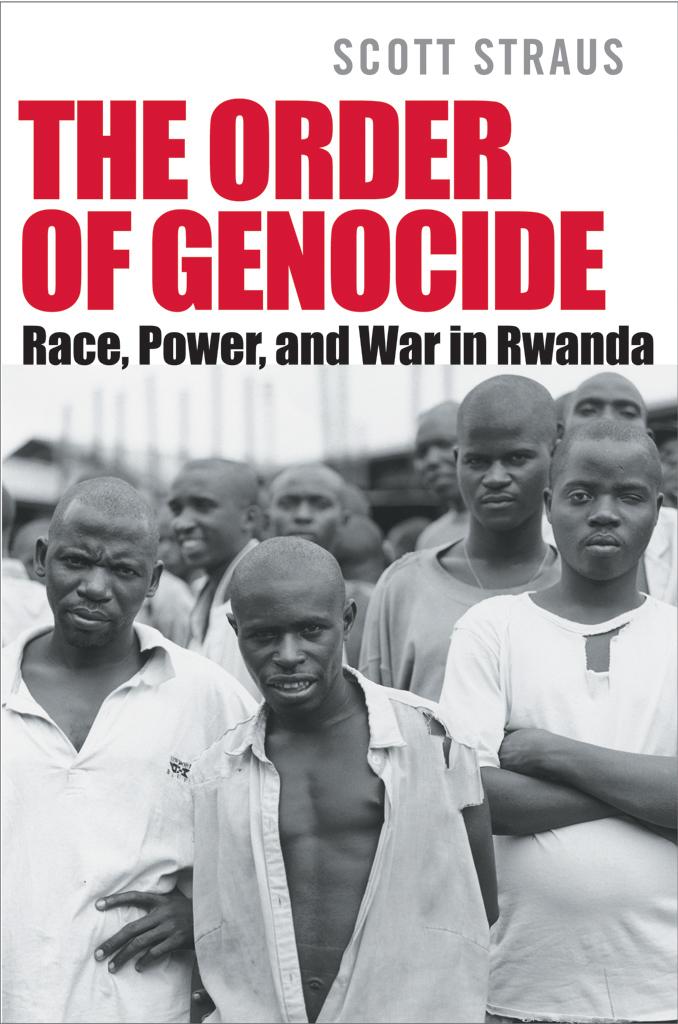
The Rwandan genocide has become a touchstone for debates about the causes of mass violence and the responsibilities of the international community. Yet a number of key questions about this tragedy remain unanswered: How did the violence spread from community to community and so rapidly engulf the nation? Why did individuals make decisions that led them to take up machetes against their neighbors? And what was the logic that drove the campaign of extermination?
According to Scott Straus, a social scientist and former journalist in East Africa for several years (who received a Pulitzer Prize nomination for his reporting for the Houston Chronicle), many of the widely held beliefs about the causes and course of genocide in Rwanda are incomplete. They focus largely on the actions of the ruling elite or the inaction of the international community. Considerably less is known about how and why elite decisions became widespread exterminatory violence.
Challenging the prevailing wisdom, Straus provides substantial new evidence about local patterns of violence, using original research—including the most comprehensive surveys yet undertaken among convicted perpetrators—to assess competing theories about the causes and dynamics of the genocide. Current interpretations stress three main causes for the genocide: ethnic identity, ideology, and mass-media indoctrination (in particular the influence of hate radio). Straus's research does not deny the importance of ethnicity, but he finds that it operated more as a background condition. Instead, Straus emphasizes fear and intra-ethnic intimidation as the primary drivers of the violence. A defensive civil war and the assassination of a president created a feeling of acute insecurity. Rwanda's unusually effective state was also central, as was the country's geography and population density, which limited the number of exit options for both victims and perpetrators.
In conclusion, Straus steps back from the particulars of the Rwandan genocide to offer a new, dynamic model for understanding other instances of genocide in recent history—the Holocaust, Armenia, Cambodia, the Balkans—and assessing the future likelihood of such events.
Before Memmo my notes were scattered across PDFs. Now a workspace pulls everything into one place — I see exactly what's still left to study.
Memmo's summaries are gold before exams. I don't have to re-read 800 pages two weeks before — just the important parts.
The AI chat has saved me the night before an exam more than once. I just keep asking until I get it — no waiting on a study group to reply.
The quizzes hit exactly what I need to know. Memmo tracks what I get stuck on — so I only practice what's worth it.
Flashcards with spaced repetition are magic. Memmo knows when I'm about to forget something and brings it back.
The AI podcasts are my favorite. I listen on my way to school and get a recap without sitting at a computer.

Handbok i kvalitativa metoder
281 kr

Hållbar utveckling: en introduktion för ingenjörer och andra problemlösare
334 kr

Brymans Samhällsvetenskapliga metoder
390 kr

Projektledning
491 kr

Den orättvisa hälsan: om socioekonomiska skillnader i hälsa och livslängd
326 kr

Vetenskapsteori för nybörjare
196 kr

Organizational Leadership
429 kr

På väg mot läraryrket
172 kr

Det sociala livet i skolan: Socialpsykologiska perspektiv
253 kr

Betygsättningens didaktik
151 kr

Personality
402 kr

Studying Leadership
404 kr

Managing Innovation
477 kr

Introduktion till samhällsvetenskaplig metod
347 kr

The Psychology of Sex and Gender
698 kr

Evidens och kunskap för socialt arbete
207 kr

Introduction to Leadership
605 kr