
Before Memmo my notes were scattered across PDFs. Now a workspace pulls everything into one place — I see exactly what's still left to study.
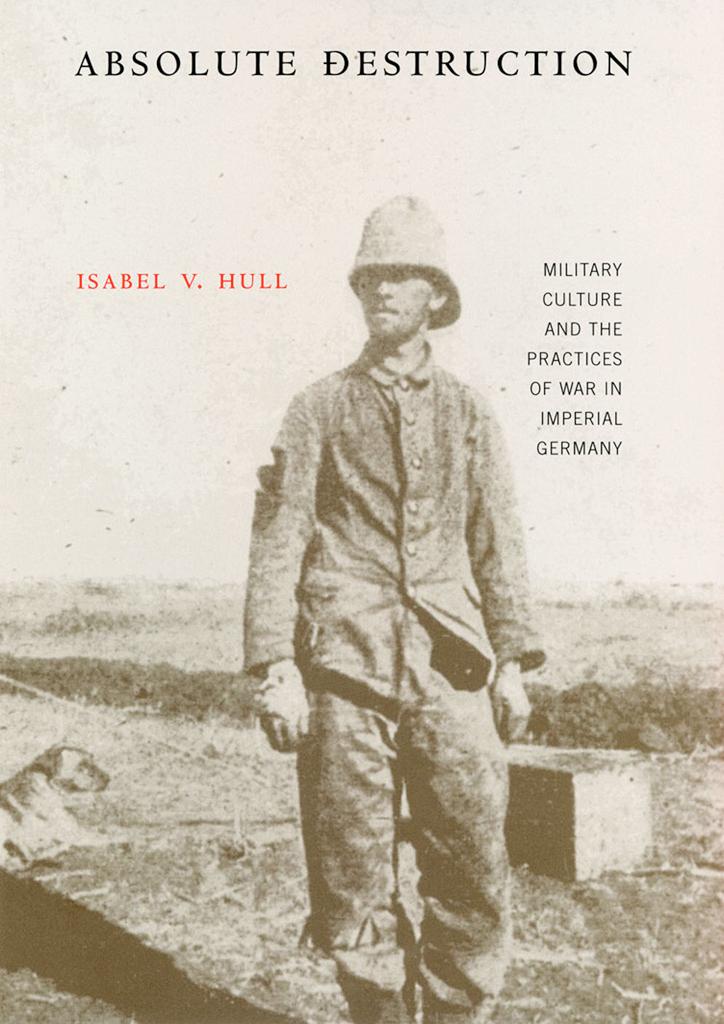
In a book that is at once a major contribution to modern European history and a cautionary tale for today, Isabel V. Hull argues that the routines and practices of the Imperial German Army, unchecked by effective civilian institutions, increasingly sought the absolute destruction of its enemies as the only guarantee of the nation's security. So deeply embedded were the assumptions and procedures of this distinctively German military culture that the Army, in its drive to annihilate the enemy military, did not shrink from the utter destruction of civilian property and lives. Carried to its extreme, the logic of "military necessity" found real security only in extremities of destruction, in the "silence of the graveyard."
Hull begins with a dramatic account, based on fresh archival work, of the German Army's slide from administrative murder to genocide in German Southwest Africa (1904–7). The author then moves back to 1870 and the war that inaugurated the Imperial era in German history, and analyzes the genesis and nature of this specifically German military culture and its operations in colonial warfare. In the First World War the routines perfected in the colonies were visited upon European populations. Hull focuses on one set of cases (Belgium and northern France) in which the transition to total destruction was checked (if barely) and on another (Armenia) in which "military necessity" caused Germany to accept its ally's genocidal policies even after these became militarily counterproductive. She then turns to the Endkampf (1918), the German General Staff's plan to achieve victory in the Great War even if the homeland were destroyed in the process—a seemingly insane campaign that completes the logic of this deeply institutionalized set of military routines and practices. Hull concludes by speculating on the role of this distinctive military culture in National Socialism's military and racial policies.
Absolute Destruction has serious implications for the nature of warmaking in any modern power. At its heart is a warning about the blindness of bureaucratic routines, especially when those bureaucracies command the instruments of mass death.
Before Memmo my notes were scattered across PDFs. Now a workspace pulls everything into one place — I see exactly what's still left to study.
Memmo's summaries are gold before exams. I don't have to re-read 800 pages two weeks before — just the important parts.
The AI chat has saved me the night before an exam more than once. I just keep asking until I get it — no waiting on a study group to reply.
The quizzes hit exactly what I need to know. Memmo tracks what I get stuck on — so I only practice what's worth it.
Flashcards with spaced repetition are magic. Memmo knows when I'm about to forget something and brings it back.
The AI podcasts are my favorite. I listen on my way to school and get a recap without sitting at a computer.

Handbok i kvalitativa metoder
281 kr

Hållbar utveckling: en introduktion för ingenjörer och andra problemlösare
334 kr

Brymans Samhällsvetenskapliga metoder
390 kr

Projektledning
491 kr

Den orättvisa hälsan: om socioekonomiska skillnader i hälsa och livslängd
326 kr

Organizational Leadership
429 kr

Vetenskapsteori för nybörjare
196 kr

På väg mot läraryrket
172 kr

Det sociala livet i skolan: Socialpsykologiska perspektiv
253 kr

Betygsättningens didaktik
151 kr

Personality
402 kr

Studying Leadership
404 kr

Managing Innovation
477 kr

Introduktion till samhällsvetenskaplig metod
347 kr

The Psychology of Sex and Gender
698 kr

Evidens och kunskap för socialt arbete
207 kr

Introduction to Leadership
605 kr