
Before Memmo my notes were scattered across PDFs. Now a workspace pulls everything into one place — I see exactly what's still left to study.
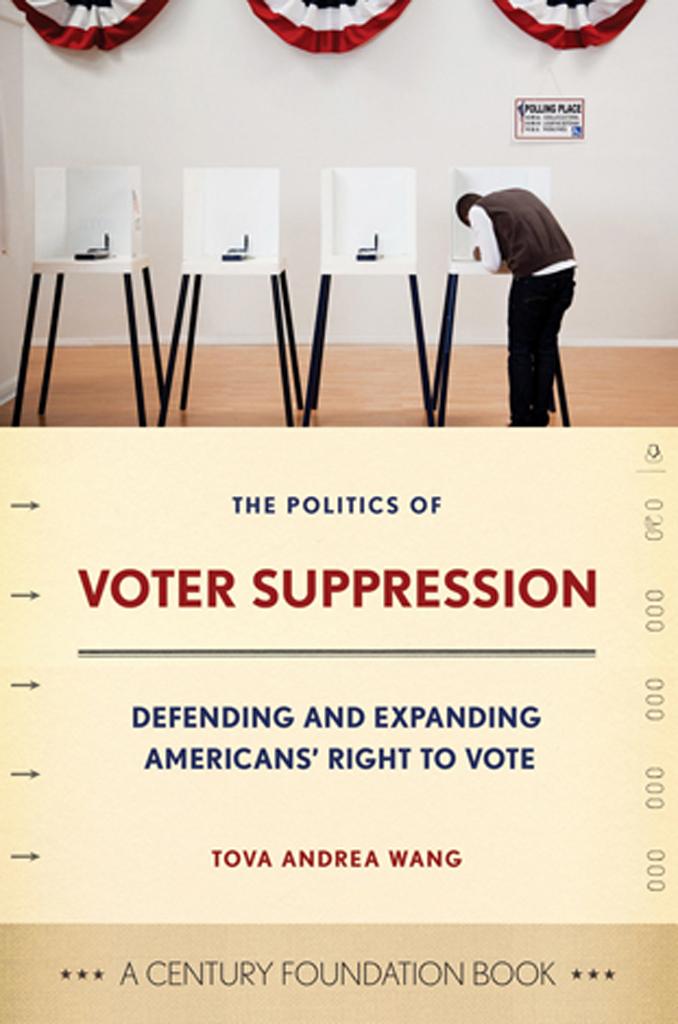
The Politics of Voter Suppression arrives in time to assess actual practices at the polls this fall and to reengage with debates about voter suppression tactics such as requiring specific forms of identification. Tova Andrea Wang examines the history of how U.S. election reforms have been manipulated for partisan advantage and establishes a new framework for analyzing current laws and policies. The tactics that have been employed to suppress voting in recent elections are not novel, she finds, but rather build upon the strategies used by a variety of actors going back nearly a century and a half. This continuity, along with the shift to a Republican domination of voter suppression efforts for the past fifty years, should inform what we think about reform policy today.
Wang argues that activities that suppress voting are almost always illegitimate, while reforms that increase participation are nearly always legitimate. In short, use and abuse of election laws and policies to suppress votes has obvious detrimental impacts on democracy itself. Such activities are also harmful because of their direct impacts on actual election outcomes. Wang regards as beneficial any legal effort to increase the number of Americans involved in the electoral system. This includes efforts that are focused on improving voter turnout among certain populations typically regarded as supporting one party, as long as the methods and means for boosting participation are open to all. Wang identifies and describes a number of specific legitimate and positive reforms that will increase voter turnout.
Before Memmo my notes were scattered across PDFs. Now a workspace pulls everything into one place — I see exactly what's still left to study.
Memmo's summaries are gold before exams. I don't have to re-read 800 pages two weeks before — just the important parts.
The AI chat has saved me the night before an exam more than once. I just keep asking until I get it — no waiting on a study group to reply.
The quizzes hit exactly what I need to know. Memmo tracks what I get stuck on — so I only practice what's worth it.
Flashcards with spaced repetition are magic. Memmo knows when I'm about to forget something and brings it back.
The AI podcasts are my favorite. I listen on my way to school and get a recap without sitting at a computer.

Handbok i kvalitativa metoder
281 kr

Hållbar utveckling: en introduktion för ingenjörer och andra problemlösare
334 kr

Brymans Samhällsvetenskapliga metoder
390 kr

Projektledning
491 kr

Den orättvisa hälsan: om socioekonomiska skillnader i hälsa och livslängd
326 kr

Vetenskapsteori för nybörjare
196 kr

Organizational Leadership
429 kr

På väg mot läraryrket
172 kr

Det sociala livet i skolan: Socialpsykologiska perspektiv
253 kr

Betygsättningens didaktik
151 kr

Personality
402 kr

Studying Leadership
404 kr

Managing Innovation
477 kr

Introduktion till samhällsvetenskaplig metod
347 kr

The Psychology of Sex and Gender
698 kr

Evidens och kunskap för socialt arbete
207 kr

Introduction to Leadership
605 kr