
Before Memmo my notes were scattered across PDFs. Now a workspace pulls everything into one place — I see exactly what's still left to study.
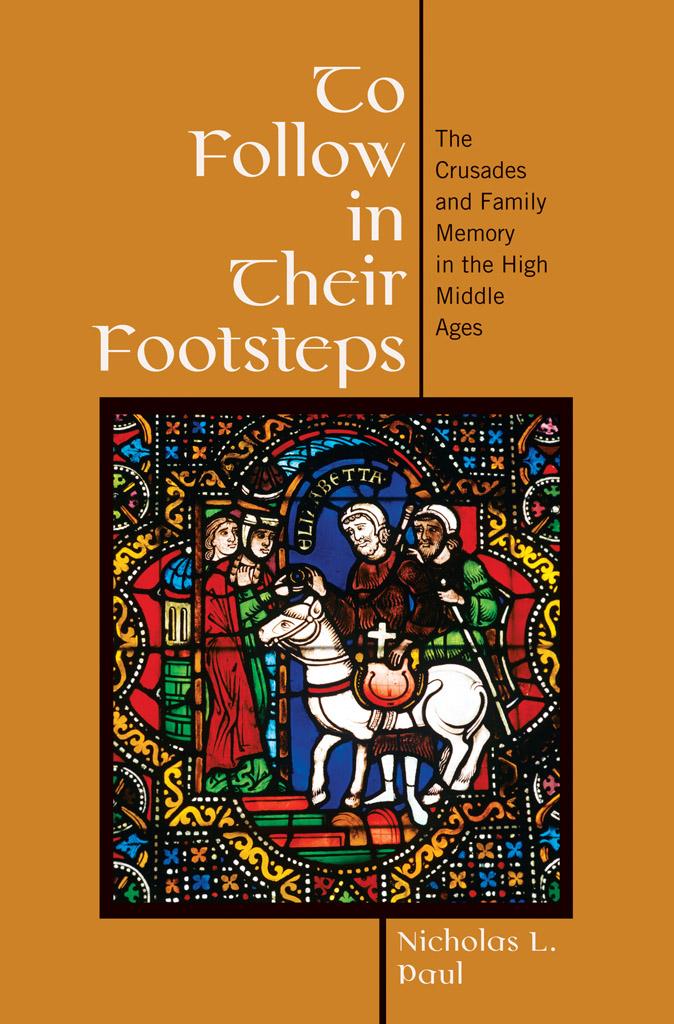
When the First Crusade ended with the conquest of Jerusalem in 1099, jubilant crusaders returned home to Europe bringing with them stories, sacred relics, and other memorabilia, including banners, jewelry, and weapons. In the ensuing decades, the memory of the crusaders' bravery and pious sacrifice was invoked widely among the noble families of western Christendom. Popes preaching future crusades would count on these very same families for financing, leadership, and for the willing warriors who would lay down their lives on the battlefield. Despite the great risks and financial hardships associated with crusading, descendants of those who suffered and died on crusade would continue to take the cross, in some cases over several generations. Indeed, as Nicholas L. Paul reveals in To Follow in Their Footsteps, crusading was very much a family affair.
Scholars of the crusades have long pointed to the importance of dynastic tradition and ties of kinship in the crusading movement but have failed to address more fundamental questions about the operation of these social processes. What is a "family tradition"? How are such traditions constructed and maintained, and by whom? How did crusading families confront the loss of their kin in distant lands? Making creative use of Latin dynastic narratives as well as vernacular literature, personal possessions and art objects, and architecture from across western Europe, Paul shows how traditions of crusading were established and reinforced in the collective memories of noble families throughout the twelfth and thirteenth centuries. Even rulers who never fulfilled crusading vows found their political lives dominated and, in some ways, directed by the memory of their crusading ancestors. Filled with unique insights and careful analysis, To Follow in Their Footsteps reveals the lasting impact of the crusades, beyond the expeditions themselves, on the formation of dynastic identity and the culture of the medieval European nobility.
Before Memmo my notes were scattered across PDFs. Now a workspace pulls everything into one place — I see exactly what's still left to study.
Memmo's summaries are gold before exams. I don't have to re-read 800 pages two weeks before — just the important parts.
The AI chat has saved me the night before an exam more than once. I just keep asking until I get it — no waiting on a study group to reply.
The quizzes hit exactly what I need to know. Memmo tracks what I get stuck on — so I only practice what's worth it.
Flashcards with spaced repetition are magic. Memmo knows when I'm about to forget something and brings it back.
The AI podcasts are my favorite. I listen on my way to school and get a recap without sitting at a computer.

Handbok i kvalitativa metoder
281 kr

Hållbar utveckling: en introduktion för ingenjörer och andra problemlösare
334 kr

Brymans Samhällsvetenskapliga metoder
390 kr

Projektledning
491 kr

Den orättvisa hälsan: om socioekonomiska skillnader i hälsa och livslängd
326 kr

Vetenskapsteori för nybörjare
196 kr

Organizational Leadership
429 kr

På väg mot läraryrket
172 kr

Det sociala livet i skolan: Socialpsykologiska perspektiv
253 kr

Betygsättningens didaktik
151 kr

Personality
402 kr

Studying Leadership
404 kr

Managing Innovation
477 kr

Introduktion till samhällsvetenskaplig metod
347 kr

The Psychology of Sex and Gender
698 kr

Evidens och kunskap för socialt arbete
207 kr

Introduction to Leadership
605 kr