
Before Memmo my notes were scattered across PDFs. Now a workspace pulls everything into one place — I see exactly what's still left to study.
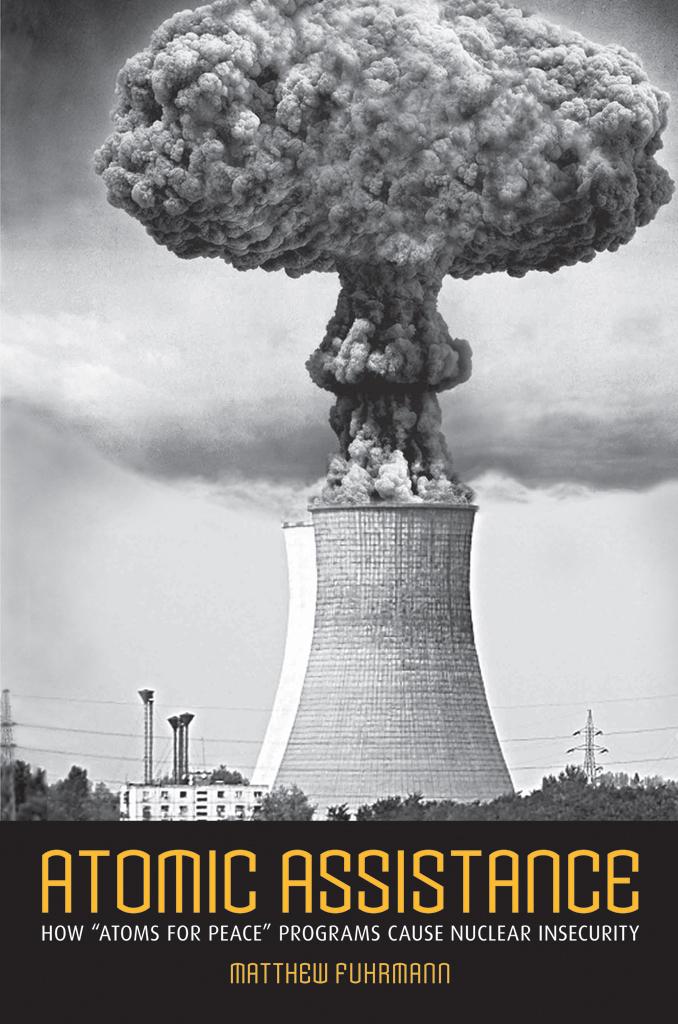
Nuclear technology is dual use in nature, meaning that it can be used to produce nuclear energy or to build nuclear weapons. Despite security concerns about proliferation, the United States and other nuclear nations have regularly shared with other countries nuclear technology, materials, and knowledge for peaceful purposes. In Atomic Assistance, Matthew Fuhrmann argues that governments use peaceful nuclear assistance as a tool of economic statecraft. Nuclear suppliers hope that they can reap the benefits of foreign aid—improving relationships with their allies, limiting the influence of their adversaries, enhancing their energy security by gaining favorable access to oil supplies—without undermining their security. By providing peaceful nuclear assistance, however, countries inadvertently help spread nuclear weapons.
Fuhrmann draws on several cases of "Atoms for Peace," including U.S. civilian nuclear assistance to Iran from 1957 to 1979; Soviet aid to Libya from 1975 to 1986; French, Italian, and Brazilian nuclear exports to Iraq from 1975 to 1981; and U.S. nuclear cooperation with India from 2001 to 2008. He also explores decision making in countries such as Japan, North Korea, Pakistan, South Africa, and Syria to determine why states began (or did not begin) nuclear weapons programs and why some programs succeeded while others failed. Fuhrmann concludes that, on average, countries receiving higher levels of peaceful nuclear assistance are more likely to pursue and acquire the bomb—especially if they experience an international crisis after receiving aid.
Before Memmo my notes were scattered across PDFs. Now a workspace pulls everything into one place — I see exactly what's still left to study.
Memmo's summaries are gold before exams. I don't have to re-read 800 pages two weeks before — just the important parts.
The AI chat has saved me the night before an exam more than once. I just keep asking until I get it — no waiting on a study group to reply.
The quizzes hit exactly what I need to know. Memmo tracks what I get stuck on — so I only practice what's worth it.
Flashcards with spaced repetition are magic. Memmo knows when I'm about to forget something and brings it back.
The AI podcasts are my favorite. I listen on my way to school and get a recap without sitting at a computer.

Handbok i kvalitativa metoder
281 kr

Hållbar utveckling: en introduktion för ingenjörer och andra problemlösare
334 kr

Brymans Samhällsvetenskapliga metoder
390 kr

Projektledning
491 kr

Den orättvisa hälsan: om socioekonomiska skillnader i hälsa och livslängd
326 kr

Organizational Leadership
429 kr

Vetenskapsteori för nybörjare
196 kr

På väg mot läraryrket
172 kr

Det sociala livet i skolan: Socialpsykologiska perspektiv
253 kr

Betygsättningens didaktik
151 kr

Personality
402 kr

Studying Leadership
404 kr

Managing Innovation
477 kr

Introduktion till samhällsvetenskaplig metod
347 kr

The Psychology of Sex and Gender
698 kr

Evidens och kunskap för socialt arbete
207 kr

Introduction to Leadership
605 kr