
Before Memmo my notes were scattered across PDFs. Now a workspace pulls everything into one place — I see exactly what's still left to study.
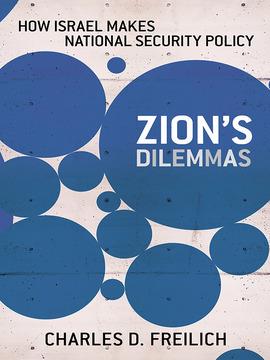
In Zion's Dilemmas, a former deputy national security advisor to the State of Israel details the history and, in many cases, the chronic inadequacies in the making of Israeli national security policy. Charles D. Freilich identifies profound, ongoing problems that he ascribes to a series of factors: a hostile and highly volatile regional environment, Israel's proportional representation electoral system, and structural peculiarities of the Israeli government and bureaucracy.
Freilich uses his insider understanding and substantial archival and interview research to describe how Israel has made strategic decisions and to present a first of its kind model of national security decision-making in Israel. He analyzes the major events of the last thirty years, from Camp David I to the 1982 invasion of Lebanon, through Camp David II, the Gaza Disengagement Plan of 2005, and the second Lebanon war of 2006. In these and other cases he identifies opportunities forgone, failures that resulted from a flawed decision-making process, and the entanglement of Israeli leaders in an inconsistent, highly politicized, and sometimes improvisational planning process. The cabinet is dysfunctional and Israel does not have an effective statutory forum for its decision-making—most of which is thus conducted in informal settings. In many cases policy objectives and options are poorly formulated. For all these problems, however, the Israeli decision-making process does have some strengths, among them the ability to make rapid and flexible responses, generally pragmatic decision-making, effective planning within the defense establishment, and the skills and motivation of those involved. Freilich concludes with cogent and timely recommendations for reform.
Before Memmo my notes were scattered across PDFs. Now a workspace pulls everything into one place — I see exactly what's still left to study.
Memmo's summaries are gold before exams. I don't have to re-read 800 pages two weeks before — just the important parts.
The AI chat has saved me the night before an exam more than once. I just keep asking until I get it — no waiting on a study group to reply.
The quizzes hit exactly what I need to know. Memmo tracks what I get stuck on — so I only practice what's worth it.
Flashcards with spaced repetition are magic. Memmo knows when I'm about to forget something and brings it back.
The AI podcasts are my favorite. I listen on my way to school and get a recap without sitting at a computer.

Handbok i kvalitativa metoder
281 kr

Hållbar utveckling: en introduktion för ingenjörer och andra problemlösare
334 kr

Brymans Samhällsvetenskapliga metoder
390 kr

Projektledning
491 kr

Den orättvisa hälsan: om socioekonomiska skillnader i hälsa och livslängd
326 kr

Organizational Leadership
429 kr

Vetenskapsteori för nybörjare
196 kr

På väg mot läraryrket
172 kr

Det sociala livet i skolan: Socialpsykologiska perspektiv
253 kr

Betygsättningens didaktik
151 kr

Personality
402 kr

Studying Leadership
404 kr

Managing Innovation
477 kr

Introduktion till samhällsvetenskaplig metod
347 kr

The Psychology of Sex and Gender
698 kr

Evidens och kunskap för socialt arbete
207 kr

Introduction to Leadership
605 kr