
Before Memmo my notes were scattered across PDFs. Now a workspace pulls everything into one place — I see exactly what's still left to study.
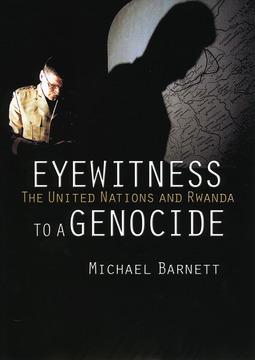
Why was the UN a bystander during the Rwandan genocide? Do its sins of omission leave it morally responsible for the hundreds of thousands of dead? Michael Barnett, who worked at the U.S. Mission to the United Nations from 1993 to 1994, covered Rwanda for much of the genocide. Based on his first-hand experiences, archival work, and interviews with many key participants, he reconstructs the history of the UN's involvement in Rwanda.
In the weeks leading up to the genocide, the author documents, the UN was increasingly aware or had good reason to suspect that Rwanda was a site of crimes against humanity. Yet it failed to act. Barnett argues that its indifference was driven not by incompetence or cynicism but rather by reasoned choices cradled by moral considerations. Employing a novel approach to ethics in practice and in relationship to international organizations, Barnett offers an unsettling possibility: the UN culture recast the ethical commitments of well-intentioned individuals, arresting any duty to aid at the outset of the genocide.
Barnett argues that the UN bears some moral responsibility for the genocide. Particularly disturbing is his observation that not only did the UN violate its moral responsibilities, but also that many in New York believed that they were "doing the right thing" as they did so. Barnett addresses the ways in which the Rwandan genocide raises a warning about this age of humanitarianism and concludes by asking whether it is possible to build moral institutions.
Before Memmo my notes were scattered across PDFs. Now a workspace pulls everything into one place — I see exactly what's still left to study.
Memmo's summaries are gold before exams. I don't have to re-read 800 pages two weeks before — just the important parts.
The AI chat has saved me the night before an exam more than once. I just keep asking until I get it — no waiting on a study group to reply.
The quizzes hit exactly what I need to know. Memmo tracks what I get stuck on — so I only practice what's worth it.
Flashcards with spaced repetition are magic. Memmo knows when I'm about to forget something and brings it back.
The AI podcasts are my favorite. I listen on my way to school and get a recap without sitting at a computer.

Handbok i kvalitativa metoder
281 kr

Hållbar utveckling: en introduktion för ingenjörer och andra problemlösare
334 kr

Brymans Samhällsvetenskapliga metoder
390 kr

Projektledning
491 kr

Den orättvisa hälsan: om socioekonomiska skillnader i hälsa och livslängd
326 kr

Vetenskapsteori för nybörjare
196 kr

Organizational Leadership
429 kr

På väg mot läraryrket
172 kr

Det sociala livet i skolan: Socialpsykologiska perspektiv
253 kr

Betygsättningens didaktik
151 kr

Personality
402 kr

Studying Leadership
404 kr

Managing Innovation
477 kr

Introduktion till samhällsvetenskaplig metod
347 kr

The Psychology of Sex and Gender
698 kr

Evidens och kunskap för socialt arbete
207 kr

Introduction to Leadership
605 kr