
Before Memmo my notes were scattered across PDFs. Now a workspace pulls everything into one place — I see exactly what's still left to study.
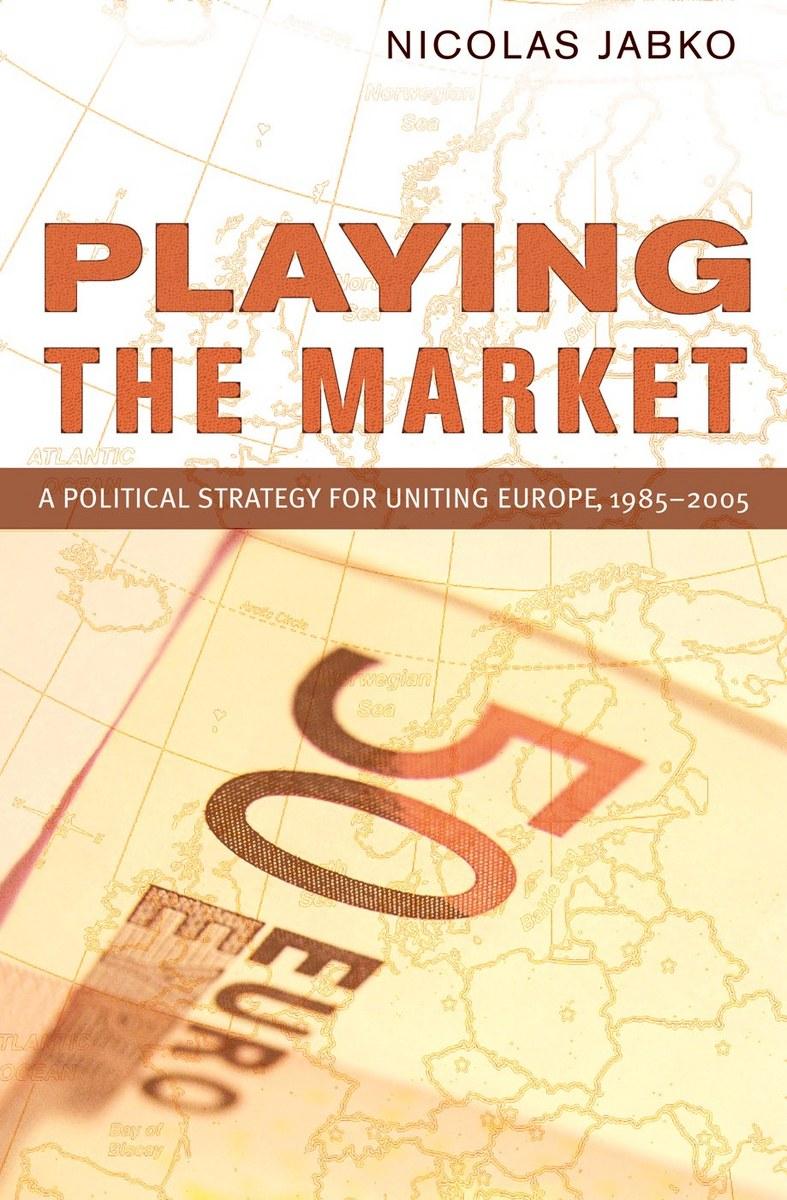
In the 1980s and 1990s, Nicolas Jabko suggests, the character of European integration altered radically, from slow growth to what he terms a "quiet revolution." In this book he traces the political strategy that underlay the move from the Single Market of 1986 through the official creation of the European Union in 1992 to the coming of the euro in 1999. The official, shared language of the political forces behind this revolution was that of market reforms—yet, as Jabko notes, this was a very strange "market" revolution, one that saw the building of massive new public institutions designed to regulate economic activity, such as the Economic and Monetary Union, and deeper liberalization in economic areas unaffected by external pressure than in truly internationalized sectors of the European economy.
What held together this remarkably diverse reform movement? Precisely because "the market" wasn't a single standard, the agenda of market reforms gained the support of a vast and heterogenous coalition. The "market" was in fact a broad palette of ideas to which different actors could appeal under different circumstances. It variously stood for a constraint on government regulations, a norm by which economic activities were (or should be) governed, a space for the active pursuit of economic growth, an excuse to discipline government policies, and a beacon for new public powers and rule-making. In chapters on financial reform, the provision of collective services, regional development and social policy, and economic and monetary union, Jabko traces how a coalition of strange bedfellows mobilized a variety of market ideas to integrate Europe.
Before Memmo my notes were scattered across PDFs. Now a workspace pulls everything into one place — I see exactly what's still left to study.
Memmo's summaries are gold before exams. I don't have to re-read 800 pages two weeks before — just the important parts.
The AI chat has saved me the night before an exam more than once. I just keep asking until I get it — no waiting on a study group to reply.
The quizzes hit exactly what I need to know. Memmo tracks what I get stuck on — so I only practice what's worth it.
Flashcards with spaced repetition are magic. Memmo knows when I'm about to forget something and brings it back.
The AI podcasts are my favorite. I listen on my way to school and get a recap without sitting at a computer.

Handbok i kvalitativa metoder
281 kr

Hållbar utveckling: en introduktion för ingenjörer och andra problemlösare
334 kr

Brymans Samhällsvetenskapliga metoder
390 kr

Projektledning
491 kr

Den orättvisa hälsan: om socioekonomiska skillnader i hälsa och livslängd
326 kr

Organizational Leadership
429 kr

Vetenskapsteori för nybörjare
196 kr

På väg mot läraryrket
172 kr

Det sociala livet i skolan: Socialpsykologiska perspektiv
253 kr

Betygsättningens didaktik
151 kr

Personality
402 kr

Studying Leadership
404 kr

Managing Innovation
477 kr

Introduktion till samhällsvetenskaplig metod
347 kr

The Psychology of Sex and Gender
698 kr

Evidens och kunskap för socialt arbete
207 kr

Introduction to Leadership
605 kr