
Before Memmo my notes were scattered across PDFs. Now a workspace pulls everything into one place — I see exactly what's still left to study.
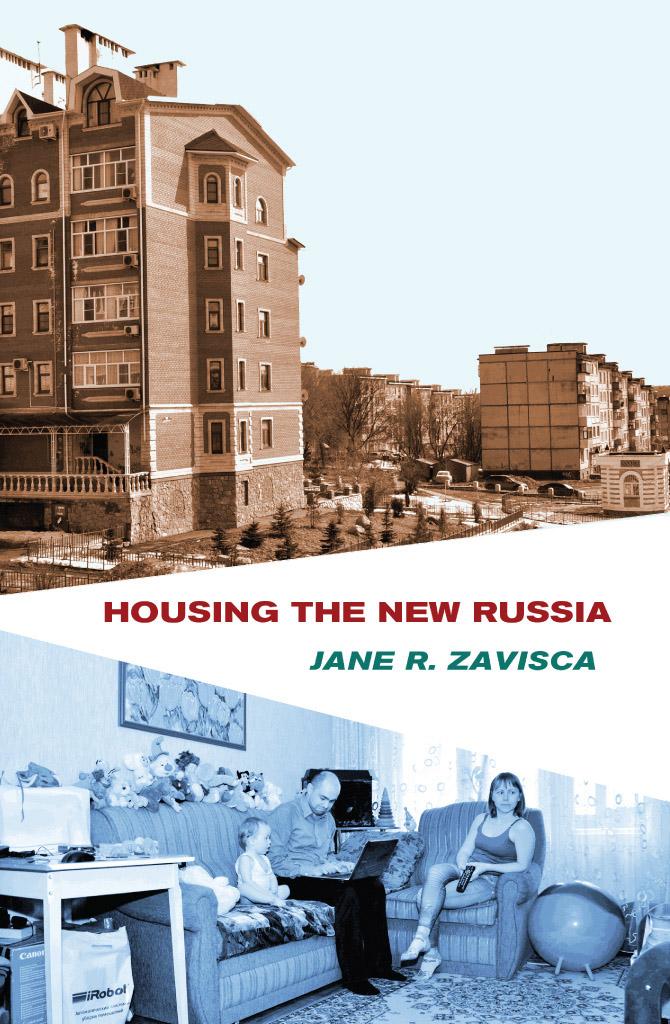
In Housing the New Russia, Jane R. Zavisca examines Russia's attempts to transition from a socialist vision of housing, in which the government promised a separate, state-owned apartment for every family, to a market-based and mortgage-dependent model of home ownership. In 1992, the post-Soviet Russian government signed an agreement with the United States to create the Russian housing market. The vision of an American-style market guided housing policy over the next two decades. Privatization gave socialist housing to existing occupants, creating a nation of homeowners overnight. New financial institutions, modeled on the American mortgage system, laid the foundation for a market. Next the state tried to stimulate mortgages—and reverse the declining birth rate, another major concern—by subsidizing loans for young families.
Imported housing institutions, however, failed to resonate with local conceptions of ownership, property, and rights. Most Russians reject mortgages, which they call "debt bondage," as an unjust "overpayment" for a good they consider to be a basic right. Instead of stimulating homeownership, privatization, combined with high prices and limited credit, created a system of "property without markets." Frustrated aspirations and unjustified inequality led most Russians to call for a government-controlled housing market. Under the Soviet system, residents retained lifelong tenancy rights, perceiving the apartments they inhabited as their own. In the wake of privatization, young Russians can no longer count on the state to provide their house, nor can they afford to buy a home with wages, forcing many to live with extended family well into adulthood. Zavisca shows that the contradictions of housing policy are a significant factor in Russia's falling birth rates and the apparent failure of its pronatalist policies. These consequences further stack the deck against the likelihood that an affordable housing market will take off in the near future.
Before Memmo my notes were scattered across PDFs. Now a workspace pulls everything into one place — I see exactly what's still left to study.
Memmo's summaries are gold before exams. I don't have to re-read 800 pages two weeks before — just the important parts.
The AI chat has saved me the night before an exam more than once. I just keep asking until I get it — no waiting on a study group to reply.
The quizzes hit exactly what I need to know. Memmo tracks what I get stuck on — so I only practice what's worth it.
Flashcards with spaced repetition are magic. Memmo knows when I'm about to forget something and brings it back.
The AI podcasts are my favorite. I listen on my way to school and get a recap without sitting at a computer.

Handbok i kvalitativa metoder
281 kr

Hållbar utveckling: en introduktion för ingenjörer och andra problemlösare
334 kr

Brymans Samhällsvetenskapliga metoder
390 kr

Projektledning
491 kr

Den orättvisa hälsan: om socioekonomiska skillnader i hälsa och livslängd
326 kr

Vetenskapsteori för nybörjare
196 kr

Organizational Leadership
429 kr

På väg mot läraryrket
172 kr

Det sociala livet i skolan: Socialpsykologiska perspektiv
253 kr

Betygsättningens didaktik
151 kr

Personality
402 kr

Studying Leadership
404 kr

Managing Innovation
477 kr

Introduktion till samhällsvetenskaplig metod
347 kr

The Psychology of Sex and Gender
698 kr

Evidens och kunskap för socialt arbete
207 kr

Introduction to Leadership
605 kr