
Before Memmo my notes were scattered across PDFs. Now a workspace pulls everything into one place — I see exactly what's still left to study.
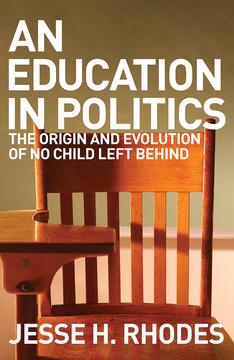
Since the early 1990s, the federal role in education—exemplified by the controversial No Child Left Behind Act (NCLB)—has expanded dramatically. Yet states and localities have retained a central role in education policy, leading to a growing struggle for control over the direction of the nation's schools. In An Education in Politics, Jesse H. Rhodes explains the uneven development of federal involvement in education. While supporters of expanded federal involvement enjoyed some success in bringing new ideas to the federal policy agenda, Rhodes argues, they also encountered stiff resistance from proponents of local control. Built atop existing decentralized policies, new federal reforms raised difficult questions about which level of government bore ultimate responsibility for improving schools.
Rhodes's argument focuses on the role played by civil rights activists, business leaders, and education experts in promoting the reforms that would be enacted with federal policies such as NCLB. It also underscores the constraints on federal involvement imposed by existing education policies, hostile interest groups, and, above all, the nation's federal system. Indeed, the federal system, which left specific policy formation and implementation to the states and localities, repeatedly frustrated efforts to effect changes: national reforms lost their force as policies passed through iterations at the state, county, and municipal levels. Ironically, state and local resistance only encouraged civil rights activists, business leaders, and their political allies to advocate even more stringent reforms that imposed heavier burdens on state and local governments. Through it all, the nation's education system made only incremental steps toward the goal of providing a quality education for every child.
Before Memmo my notes were scattered across PDFs. Now a workspace pulls everything into one place — I see exactly what's still left to study.
Memmo's summaries are gold before exams. I don't have to re-read 800 pages two weeks before — just the important parts.
The AI chat has saved me the night before an exam more than once. I just keep asking until I get it — no waiting on a study group to reply.
The quizzes hit exactly what I need to know. Memmo tracks what I get stuck on — so I only practice what's worth it.
Flashcards with spaced repetition are magic. Memmo knows when I'm about to forget something and brings it back.
The AI podcasts are my favorite. I listen on my way to school and get a recap without sitting at a computer.

Handbok i kvalitativa metoder
281 kr

Hållbar utveckling: en introduktion för ingenjörer och andra problemlösare
334 kr

Brymans Samhällsvetenskapliga metoder
390 kr

Projektledning
491 kr

Den orättvisa hälsan: om socioekonomiska skillnader i hälsa och livslängd
326 kr

Vetenskapsteori för nybörjare
196 kr

Organizational Leadership
429 kr

På väg mot läraryrket
172 kr

Det sociala livet i skolan: Socialpsykologiska perspektiv
253 kr

Betygsättningens didaktik
151 kr

Personality
402 kr

Studying Leadership
404 kr

Managing Innovation
477 kr

Introduktion till samhällsvetenskaplig metod
347 kr

The Psychology of Sex and Gender
698 kr

Evidens och kunskap för socialt arbete
207 kr

Introduction to Leadership
605 kr