
Before Memmo my notes were scattered across PDFs. Now a workspace pulls everything into one place — I see exactly what's still left to study.
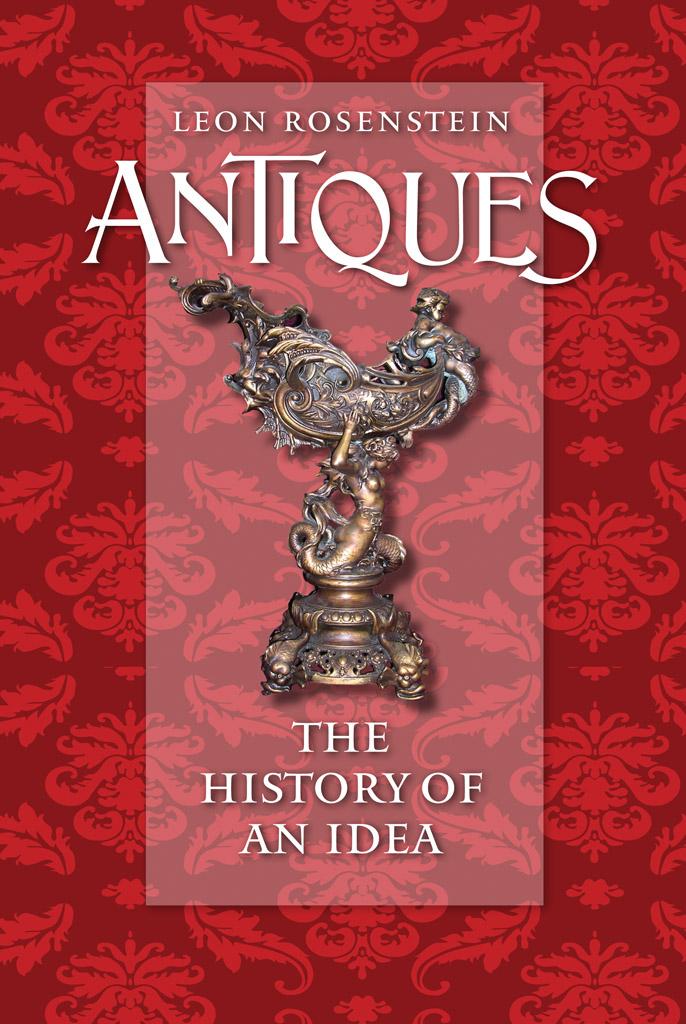
The notion of retrieving a bit of the past-by owning a material piece of it-has always appealed to humans. Often our most prized possessions are those that have had a long history before they came into our hands. Part of the pleasure we gain from the encounter with antiques stems from the palpable age and the assumed (sometimes imaginary) cultural resonances of the particular object. But precisely what is it about these objects that creates this attraction? What common characteristics do they share and why and how do these traits affect us as they do?
In Antiques: The History of an Idea, Leon Rosenstein, a distinguished philosopher who has also been an antiques dealer for more than twenty years, offers a sweeping and lively account of the origin and development of the antique as both a cultural concept and an aesthetic category. He shows that the appeal of antiques is multifaceted: it concerns their value as commodities, their age and historical and cultural associations, their uniqueness, their sensuous and tactile values, their beauty.
Exploring how the idea of antiques evolved over time, Rosenstein chronicles the history of antique collecting and connoisseurship. He describes changing conceptions of the past in different epochs as evidenced by preservations, restorations, and renascences; examines shifting attitudes toward foreign cultures as revealed in stylistic borrowings and the importation of artifacts; and investigates varying understandings of and meanings assigned to their traits and functions as historical objects.
While relying on the past for his evidence, Rosenstein approaches antiques from an entirely original perspective, setting history within a philosophical framework. He begins by providing a working definition of antiques that distinguishes them from other artifacts in general and, more distinctly, both from works of fine art and from the collectible detritus of popular culture. He then establishes a novel set of criteria for determining when an artifact is an antique: ten traits that an object must possess in order to elicit the aesthetic response that is unique to antiques. Concluding with a provocative discussion of the relation between antiques and civilization, this engaging and thought-provoking book helps explain the enduring appeal of owning a piece of the past.
Before Memmo my notes were scattered across PDFs. Now a workspace pulls everything into one place — I see exactly what's still left to study.
Memmo's summaries are gold before exams. I don't have to re-read 800 pages two weeks before — just the important parts.
The AI chat has saved me the night before an exam more than once. I just keep asking until I get it — no waiting on a study group to reply.
The quizzes hit exactly what I need to know. Memmo tracks what I get stuck on — so I only practice what's worth it.
Flashcards with spaced repetition are magic. Memmo knows when I'm about to forget something and brings it back.
The AI podcasts are my favorite. I listen on my way to school and get a recap without sitting at a computer.

Handbok i kvalitativa metoder
281 kr

Hållbar utveckling: en introduktion för ingenjörer och andra problemlösare
334 kr

Brymans Samhällsvetenskapliga metoder
390 kr

Projektledning
491 kr

Den orättvisa hälsan: om socioekonomiska skillnader i hälsa och livslängd
326 kr

Vetenskapsteori för nybörjare
196 kr

Organizational Leadership
429 kr

På väg mot läraryrket
172 kr

Det sociala livet i skolan: Socialpsykologiska perspektiv
253 kr

Betygsättningens didaktik
151 kr

Personality
402 kr

Studying Leadership
404 kr

Managing Innovation
477 kr

Introduktion till samhällsvetenskaplig metod
347 kr

The Psychology of Sex and Gender
698 kr

Evidens och kunskap för socialt arbete
207 kr

Introduction to Leadership
605 kr