
Before Memmo my notes were scattered across PDFs. Now a workspace pulls everything into one place — I see exactly what's still left to study.
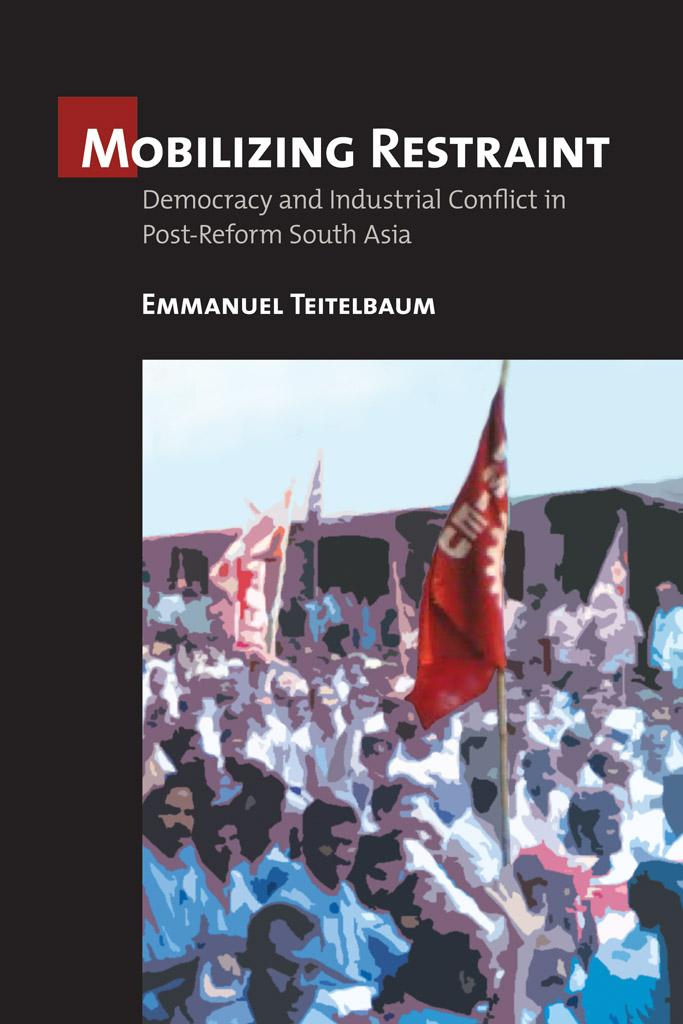
In Mobilizing Restraint, Emmanuel Teitelbaum argues that, contrary to conventional wisdom, democracies are better at managing industrial conflict than authoritarian regimes. This is because democracies have two unique tools at their disposal for managing worker protest: mutually beneficial union-party ties and worker rights. By contrast, authoritarian governments have tended to repress unions and to sever mutually beneficial ties to organized labor. Many of the countries that fall between these two extremes—from those that have only the trappings of democracy to those that have imperfectly implemented democratic reforms—exert control over labor in the absence of overt repression but without the robust organizational and institutional capacity enjoyed by full-fledged democracies. Based on the recent history of industrial conflict and industrial peace in South Asia, Teitelbaum argues that the political exclusion and repression of organized labor commonly witnessed in authoritarian and hybrid regimes has extremely deleterious effects on labor relations and ultimately economic growth.
To test his arguments, Teitelbaum draws on an array of data, including his original qualitative interviews and survey evidence from Sri Lanka and three Indian states—Kerala, Maharashtra, and West Bengal. He also analyzes panel data from fifteen Indian states to evaluate the relationship between political competition and worker protest and to study the effects of protective labor legislation on economic performance. In Teitelbaum's view, countries must undergo further political liberalization before they are able to replicate the success of the sophisticated types of growth-enhancing management of industrial protest seen throughout many parts of South Asia.
Before Memmo my notes were scattered across PDFs. Now a workspace pulls everything into one place — I see exactly what's still left to study.
Memmo's summaries are gold before exams. I don't have to re-read 800 pages two weeks before — just the important parts.
The AI chat has saved me the night before an exam more than once. I just keep asking until I get it — no waiting on a study group to reply.
The quizzes hit exactly what I need to know. Memmo tracks what I get stuck on — so I only practice what's worth it.
Flashcards with spaced repetition are magic. Memmo knows when I'm about to forget something and brings it back.
The AI podcasts are my favorite. I listen on my way to school and get a recap without sitting at a computer.

Handbok i kvalitativa metoder
281 kr

Hållbar utveckling: en introduktion för ingenjörer och andra problemlösare
334 kr

Brymans Samhällsvetenskapliga metoder
390 kr

Projektledning
491 kr

Den orättvisa hälsan: om socioekonomiska skillnader i hälsa och livslängd
326 kr

Organizational Leadership
429 kr

Vetenskapsteori för nybörjare
196 kr

På väg mot läraryrket
172 kr

Det sociala livet i skolan: Socialpsykologiska perspektiv
253 kr

Betygsättningens didaktik
151 kr

Personality
402 kr

Studying Leadership
404 kr

Managing Innovation
477 kr

Introduktion till samhällsvetenskaplig metod
347 kr

The Psychology of Sex and Gender
698 kr

Evidens och kunskap för socialt arbete
207 kr

Introduction to Leadership
605 kr