
Before Memmo my notes were scattered across PDFs. Now a workspace pulls everything into one place — I see exactly what's still left to study.
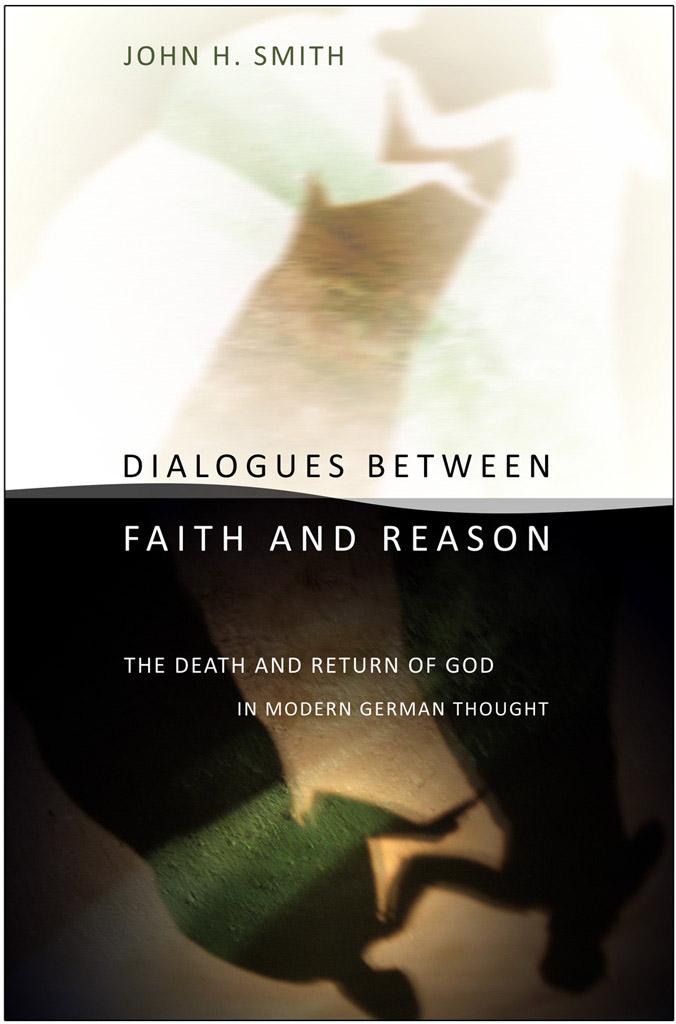
The contemporary theologian Hans Küng has asked if the "death of God," proclaimed by Nietzsche as the event of modernity, was inevitable. Did the empowering of new forms of rationality in Western culture beginning around 1500 lead necessarily to the reduction or privatization of faith? In Dialogues between Faith and Reason, John H. Smith traces a major line in the history of theology and the philosophy of religion down the "slippery slope" of secularization—from Luther and Erasmus, through Idealism, to Nietzsche, Heidegger, and contemporary theory such as that of Derrida, Habermas, Vattimo, and Asad. At the same time, Smith points to the persistence of a tradition that grew out of the Reformation and continues in the mostly Protestant philosophical reflection on whether and how faith can be justified by reason. In this accessible and vigorously argued book, Smith posits that faith and reason have long been locked in mutual engagement in which they productively challenge each other as partners in an ongoing "dialogue."
Smith is struck by the fact that although in the secularized West the death of God is said to be fundamental to the modern condition, our current post-modernity is often characterized as a "postsecular" time. For Smith, this means not only that we are experiencing a broad-based "return of religion" but also, and more important for his argument, that we are now able to recognize the role of religion within the history of modernity. Emphasizing that, thanks to the logos located "in the beginning," the death of God is part of the inner logic of the Christian tradition, he argues that this same strand of reasoning also ensures that God will always "return" (often in new forms). In Smith's view, rational reflection on God has both undermined and justified faith, while faith has rejected and relied on rational argument. Neither a defense of atheism nor a call to belief, his book explores the long history of their interaction in modern religious and philosophical thought.
Before Memmo my notes were scattered across PDFs. Now a workspace pulls everything into one place — I see exactly what's still left to study.
Memmo's summaries are gold before exams. I don't have to re-read 800 pages two weeks before — just the important parts.
The AI chat has saved me the night before an exam more than once. I just keep asking until I get it — no waiting on a study group to reply.
The quizzes hit exactly what I need to know. Memmo tracks what I get stuck on — so I only practice what's worth it.
Flashcards with spaced repetition are magic. Memmo knows when I'm about to forget something and brings it back.
The AI podcasts are my favorite. I listen on my way to school and get a recap without sitting at a computer.

Handbok i kvalitativa metoder
281 kr

Hållbar utveckling: en introduktion för ingenjörer och andra problemlösare
334 kr

Brymans Samhällsvetenskapliga metoder
390 kr

Projektledning
491 kr

Den orättvisa hälsan: om socioekonomiska skillnader i hälsa och livslängd
326 kr

Vetenskapsteori för nybörjare
196 kr

Organizational Leadership
429 kr

På väg mot läraryrket
172 kr

Det sociala livet i skolan: Socialpsykologiska perspektiv
253 kr

Betygsättningens didaktik
151 kr

Personality
402 kr

Studying Leadership
404 kr

Managing Innovation
477 kr

Introduktion till samhällsvetenskaplig metod
347 kr

The Psychology of Sex and Gender
698 kr

Evidens och kunskap för socialt arbete
207 kr

Introduction to Leadership
605 kr