
Before Memmo my notes were scattered across PDFs. Now a workspace pulls everything into one place — I see exactly what's still left to study.
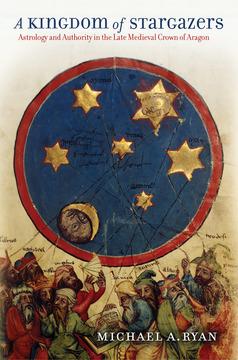
Astrology in the Middle Ages was considered a branch of the magical arts, one informed by Jewish and Muslim scientific knowledge in Muslim Spain. As such it was deeply troubling to some Church authorities. Using the stars and planets to divine the future ran counter to the orthodox Christian notion that human beings have free will, and some clerical authorities argued that it almost certainly entailed the summoning of spiritual forces considered diabolical. We know that occult beliefs and practices became widespread in the later Middle Ages, but there is much about the phenomenon that we do not understand. For instance, how deeply did occult beliefs penetrate courtly culture and what exactly did those in positions of power hope to gain by interacting with the occult? In A Kingdom of Stargazers, Michael A. Ryan examines the interest in astrology in the Iberian kingdom of Aragon, where ideas about magic and the occult were deeply intertwined with notions of power, authority, and providence.
Ryan focuses on the reigns of Pere III (1336–1387) and his sons Joan I (1387–1395) and Martí I (1395–1410). Pere and Joan spent lavish amounts of money on astrological writings, and astrologers held great sway within their courts. When Martí I took the throne, however, he was determined to purge Joan's courtiers and return to religious orthodoxy. As Ryan shows, the appeal of astrology to those in power was clear: predicting the future through divination was a valuable tool for addressing the extraordinary problems—political, religious, demographic—plaguing Europe in the fourteenth century. Meanwhile, the kings' contemporaries within the noble, ecclesiastical, and mercantile elite had their own reasons for wanting to know what the future held, but their engagement with the occult was directly related to the amount of power and authority the monarch exhibited and applied. A Kingdom of Stargazers joins a growing body of scholarship that explores the mixing of religious and magical ideas in the late Middle Ages.
Before Memmo my notes were scattered across PDFs. Now a workspace pulls everything into one place — I see exactly what's still left to study.
Memmo's summaries are gold before exams. I don't have to re-read 800 pages two weeks before — just the important parts.
The AI chat has saved me the night before an exam more than once. I just keep asking until I get it — no waiting on a study group to reply.
The quizzes hit exactly what I need to know. Memmo tracks what I get stuck on — so I only practice what's worth it.
Flashcards with spaced repetition are magic. Memmo knows when I'm about to forget something and brings it back.
The AI podcasts are my favorite. I listen on my way to school and get a recap without sitting at a computer.

Handbok i kvalitativa metoder
281 kr

Hållbar utveckling: en introduktion för ingenjörer och andra problemlösare
334 kr

Brymans Samhällsvetenskapliga metoder
390 kr

Projektledning
491 kr

Den orättvisa hälsan: om socioekonomiska skillnader i hälsa och livslängd
326 kr

Vetenskapsteori för nybörjare
196 kr

Organizational Leadership
429 kr

På väg mot läraryrket
172 kr

Det sociala livet i skolan: Socialpsykologiska perspektiv
253 kr

Betygsättningens didaktik
151 kr

Personality
402 kr

Studying Leadership
404 kr

Managing Innovation
477 kr

Introduktion till samhällsvetenskaplig metod
347 kr

The Psychology of Sex and Gender
698 kr

Evidens och kunskap för socialt arbete
207 kr

Introduction to Leadership
605 kr