
Before Memmo my notes were scattered across PDFs. Now a workspace pulls everything into one place — I see exactly what's still left to study.
"Rebel Rulers skillfully blends theoretical insights into the factors that explain effective governance with rich ethnographic research to produce a thought-provoking analysis of how rebels (attempt) to govern the populations under their control."
â• Journal of Politics
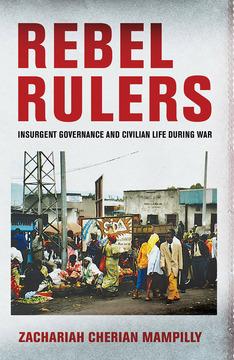
Rebel groups are often portrayed as predators, their leaders little more than warlords. In conflicts large and small, however, insurgents frequently take and hold territory, establishing sophisticated systems of governance that deliver extensive public services to civilians under their control. From police and courts, schools, hospitals, and taxation systems to more symbolic expressions such as official flags and anthems, some rebels are able to appropriate functions of the modern state, often to great effect in generating civilian compliance. Other insurgent organizations struggle to provide even the most basic services and suffer from the local unrest and international condemnation that result.
Rebel Rulers is informed by Zachariah Cherian Mampilly's extensive fieldwork in rebel-controlled areas. Focusing on three insurgent organizations—the Liberation Tigers of Tamil Eelam (LTTE) in Sri Lanka, the Rally for Congolese Democracy (RCD) in Congo, and the Sudan People's Liberation Movement/Army (SPLM/A) in Sudan—Mampilly's comparative analysis shows that rebel leaders design governance systems in response to pressures from three main sources. They must take into consideration the needs of local civilians, who can challenge rebel rule in various ways. They must deal with internal factions that threaten their control. And they must respond to the transnational actors that operate in most contemporary conflict zones. The development of insurgent governments can benefit civilians even as they enable rebels to assert control over their newly attained and sometimes chaotic territories.
Before Memmo my notes were scattered across PDFs. Now a workspace pulls everything into one place — I see exactly what's still left to study.
Memmo's summaries are gold before exams. I don't have to re-read 800 pages two weeks before — just the important parts.
The AI chat has saved me the night before an exam more than once. I just keep asking until I get it — no waiting on a study group to reply.
The quizzes hit exactly what I need to know. Memmo tracks what I get stuck on — so I only practice what's worth it.
Flashcards with spaced repetition are magic. Memmo knows when I'm about to forget something and brings it back.
The AI podcasts are my favorite. I listen on my way to school and get a recap without sitting at a computer.

Handbok i kvalitativa metoder
281 kr

Hållbar utveckling: en introduktion för ingenjörer och andra problemlösare
334 kr

Brymans Samhällsvetenskapliga metoder
390 kr

Projektledning
491 kr

Den orättvisa hälsan: om socioekonomiska skillnader i hälsa och livslängd
326 kr

Vetenskapsteori för nybörjare
196 kr

Organizational Leadership
429 kr

På väg mot läraryrket
172 kr

Det sociala livet i skolan: Socialpsykologiska perspektiv
253 kr

Betygsättningens didaktik
151 kr

Personality
402 kr

Studying Leadership
404 kr

Managing Innovation
477 kr

Introduktion till samhällsvetenskaplig metod
347 kr

The Psychology of Sex and Gender
698 kr

Evidens och kunskap för socialt arbete
207 kr

Introduction to Leadership
605 kr