
Before Memmo my notes were scattered across PDFs. Now a workspace pulls everything into one place — I see exactly what's still left to study.
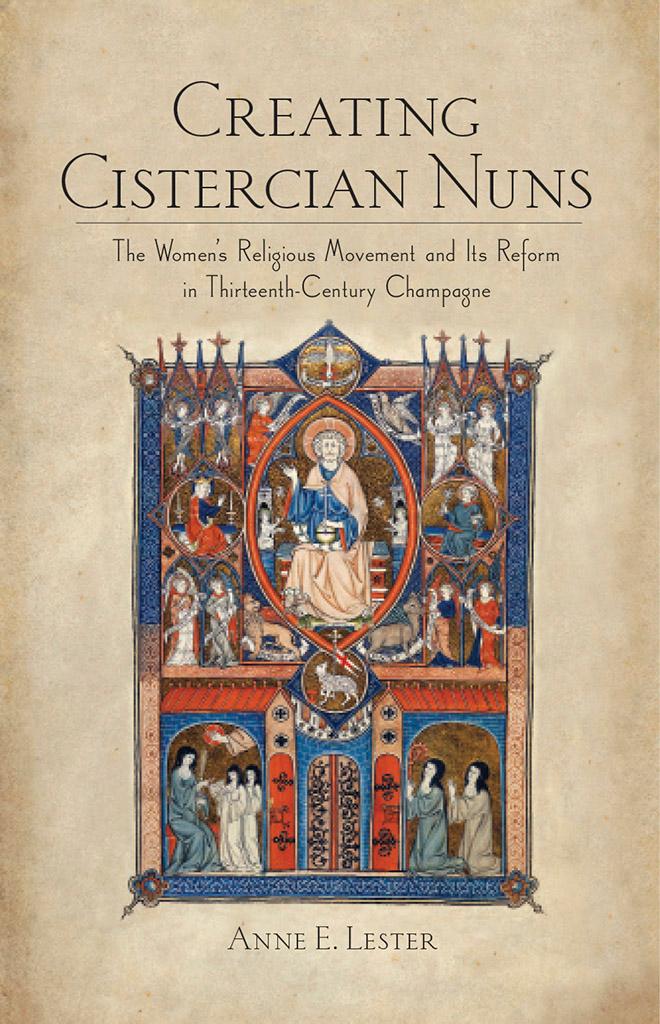
In Creating Cistercian Nuns, Anne E. Lester addresses a central issue in the history of the medieval church: the role of women in the rise of the religious reform movement of the thirteenth century. Focusing on the county of Champagne in France, Lester reconstructs the history of the women's religious movement and its institutionalization within the Cistercian order.
The common picture of the early Cistercian order is that it was unreceptive to religious women. Male Cistercian leaders often avoided institutional oversight of communities of nuns, preferring instead to cultivate informal relationships of spiritual advice and guidance with religious women. As a result, scholars believed that women who wished to live a life of service and poverty were more likely to join one of the other reforming orders rather than the Cistercians. As Lester shows, however, this picture is deeply flawed. Between 1220 and 1240 the Cistercian order incorporated small independent communities of religious women in unprecedented numbers. Moreover, the order not only accommodated women but also responded to their interpretations of apostolic piety, even as it defined and determined what constituted Cistercian nuns in terms of dress, privileges, and liturgical practice. Lester reconstructs the lived experiences of these women, integrating their ideals and practices into the broader religious and social developments of the thirteenth century—including the crusade movement, penitential piety, the care of lepers, and the reform agenda of the Fourth Lateran Council. The book closes by addressing the reasons for the subsequent decline of Cistercian convents in the fourteenth century. Based on extensive analysis of unpublished archives, Creating Cistercian Nuns will force scholars to revise their understanding of the women's religious movement as it unfolded during the thirteenth century.
Before Memmo my notes were scattered across PDFs. Now a workspace pulls everything into one place — I see exactly what's still left to study.
Memmo's summaries are gold before exams. I don't have to re-read 800 pages two weeks before — just the important parts.
The AI chat has saved me the night before an exam more than once. I just keep asking until I get it — no waiting on a study group to reply.
The quizzes hit exactly what I need to know. Memmo tracks what I get stuck on — so I only practice what's worth it.
Flashcards with spaced repetition are magic. Memmo knows when I'm about to forget something and brings it back.
The AI podcasts are my favorite. I listen on my way to school and get a recap without sitting at a computer.

Handbok i kvalitativa metoder
281 kr

Hållbar utveckling: en introduktion för ingenjörer och andra problemlösare
334 kr

Brymans Samhällsvetenskapliga metoder
390 kr

Projektledning
491 kr

Den orättvisa hälsan: om socioekonomiska skillnader i hälsa och livslängd
326 kr

Vetenskapsteori för nybörjare
196 kr

Organizational Leadership
429 kr

På väg mot läraryrket
172 kr

Det sociala livet i skolan: Socialpsykologiska perspektiv
253 kr

Betygsättningens didaktik
151 kr

Personality
402 kr

Studying Leadership
404 kr

Managing Innovation
477 kr

Introduktion till samhällsvetenskaplig metod
347 kr

The Psychology of Sex and Gender
698 kr

Evidens och kunskap för socialt arbete
207 kr

Introduction to Leadership
605 kr