
Before Memmo my notes were scattered across PDFs. Now a workspace pulls everything into one place — I see exactly what's still left to study.
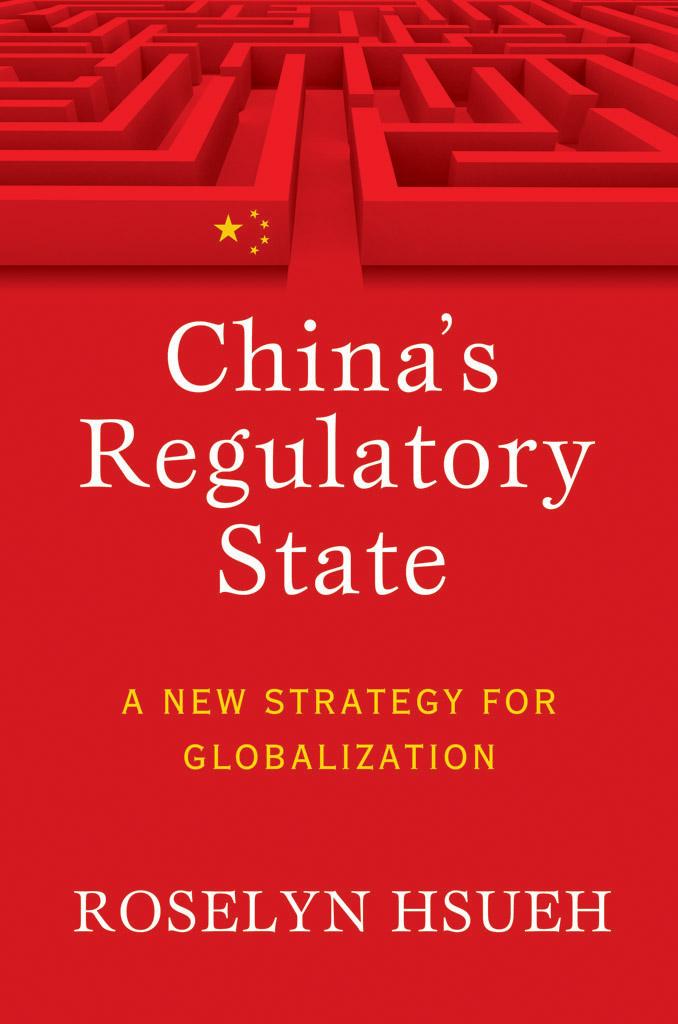
Today's China is governed by a new economic model that marks a radical break from the Mao and Deng eras; it departs fundamentally from both the East Asian developmental state and its own Communist past. It has not, however, adopted a liberal economic model. China has retained elements of statist control even though it has liberalized foreign direct investment more than any other developing country in recent years. This mode of global economic integration reveals much about China's state capacity and development strategy, which is based on retaining government control over critical sectors while meeting commitments made to the World Trade Organization. In China's Regulatory State, Roselyn Hsueh demonstrates that China only appears to be a more liberal state; even as it introduces competition and devolves economic decisionmaking, the state has selectively imposed new regulations at the sectoral level, asserting and even tightening control over industry and market development, to achieve state goals.
By investigating in depth how China implemented its economic policies between 1978 and 2010, Hsueh gives the most complete picture yet of China's regulatory state, particularly as it has shaped the telecommunications and textiles industries. Hsueh contends that a logic of strategic value explains how the state, with its different levels of authority and maze of bureaucracies, interacts with new economic stakeholders to enhance its control in certain economic sectors while relinquishing control in others. Sectoral characteristics determine policy specifics although the organization of institutions and boom-bust cycles influence how the state reformulates old rules and creates new ones to maximize benefits and minimize costs after an initial phase of liberalization. This pathbreaking analysis of state goals, government-business relations, and methods of governance across industries in China also considers Japan's, South Korea's, and Taiwan's manifestly different approaches to globalization.
Before Memmo my notes were scattered across PDFs. Now a workspace pulls everything into one place — I see exactly what's still left to study.
Memmo's summaries are gold before exams. I don't have to re-read 800 pages two weeks before — just the important parts.
The AI chat has saved me the night before an exam more than once. I just keep asking until I get it — no waiting on a study group to reply.
The quizzes hit exactly what I need to know. Memmo tracks what I get stuck on — so I only practice what's worth it.
Flashcards with spaced repetition are magic. Memmo knows when I'm about to forget something and brings it back.
The AI podcasts are my favorite. I listen on my way to school and get a recap without sitting at a computer.

Handbok i kvalitativa metoder
281 kr

Hållbar utveckling: en introduktion för ingenjörer och andra problemlösare
334 kr

Brymans Samhällsvetenskapliga metoder
390 kr

Projektledning
491 kr

Den orättvisa hälsan: om socioekonomiska skillnader i hälsa och livslängd
326 kr

Vetenskapsteori för nybörjare
196 kr

Organizational Leadership
429 kr

På väg mot läraryrket
172 kr

Det sociala livet i skolan: Socialpsykologiska perspektiv
253 kr

Betygsättningens didaktik
151 kr

Personality
402 kr

Studying Leadership
404 kr

Managing Innovation
477 kr

Introduktion till samhällsvetenskaplig metod
347 kr

The Psychology of Sex and Gender
698 kr

Evidens och kunskap för socialt arbete
207 kr

Introduction to Leadership
605 kr