
Before Memmo my notes were scattered across PDFs. Now a workspace pulls everything into one place — I see exactly what's still left to study.
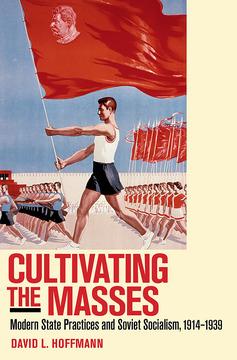
Under Stalin's leadership, the Soviet government carried out a massive number of deportations, incarcerations, and executions. Paradoxically, at the very moment that Soviet authorities were killing thousands of individuals, they were also engaged in an enormous pronatalist campaign to boost the population. Even as the number of repressions grew exponentially, Communist Party leaders enacted sweeping social welfare and public health measures to safeguard people's well-being. Extensive state surveillance of the population went hand in hand with literacy campaigns, political education, and efforts to instill in people an appreciation of high culture. In Cultivating the Masses, David L. Hoffmann examines the Party leadership's pursuit of these seemingly contradictory policies in order to grasp fully the character of the Stalinist regime, a regime intent on transforming the socioeconomic order and the very nature of its citizens.
To analyze Soviet social policies, Hoffmann places them in an international comparative context. He explains Soviet technologies of social intervention as one particular constellation of modern state practices. These practices developed in conjunction with the ambitions of nineteenth-century European reformers to refashion society, and they subsequently prompted welfare programs, public health initiatives, and reproductive regulations in countries around the world. The mobilizational demands of World War I impelled political leaders to expand even further their efforts at population management, via economic controls, surveillance, propaganda, and state violence. Born at this moment of total war, the Soviet system institutionalized these wartime methods as permanent features of governance. Party leaders, whose dictatorship included no checks on state power, in turn attached interventionist practices to their ideological goal of building socialism.
Before Memmo my notes were scattered across PDFs. Now a workspace pulls everything into one place — I see exactly what's still left to study.
Memmo's summaries are gold before exams. I don't have to re-read 800 pages two weeks before — just the important parts.
The AI chat has saved me the night before an exam more than once. I just keep asking until I get it — no waiting on a study group to reply.
The quizzes hit exactly what I need to know. Memmo tracks what I get stuck on — so I only practice what's worth it.
Flashcards with spaced repetition are magic. Memmo knows when I'm about to forget something and brings it back.
The AI podcasts are my favorite. I listen on my way to school and get a recap without sitting at a computer.

Handbok i kvalitativa metoder
281 kr

Hållbar utveckling: en introduktion för ingenjörer och andra problemlösare
334 kr

Brymans Samhällsvetenskapliga metoder
390 kr

Projektledning
491 kr

Den orättvisa hälsan: om socioekonomiska skillnader i hälsa och livslängd
326 kr

Vetenskapsteori för nybörjare
196 kr

Organizational Leadership
429 kr

På väg mot läraryrket
172 kr

Det sociala livet i skolan: Socialpsykologiska perspektiv
253 kr

Betygsättningens didaktik
151 kr

Personality
402 kr

Studying Leadership
404 kr

Managing Innovation
477 kr

Introduktion till samhällsvetenskaplig metod
347 kr

The Psychology of Sex and Gender
698 kr

Evidens och kunskap för socialt arbete
207 kr

Introduction to Leadership
605 kr