
Before Memmo my notes were scattered across PDFs. Now a workspace pulls everything into one place — I see exactly what's still left to study.
John W. Budd's The Thought of Work provides a much needed and highly eloquent statement of the meanings and orientations to work across time and nations. It is essential reading for students of work from senior scholars to beginning undergraduates.— Randy Hodson, Distinguished Professor of Social and Behavioral Sciences The Ohio State University and past editor ― American Sociological Review
By drawing explicit attention to diverse, implicit meanings of work, The Thought of Work allows us to better understand work, to value it, and to structure it in desirable ways that reflect its profound importance.
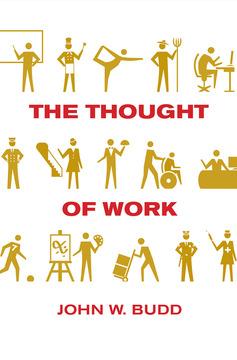
What is work? Is it simply a burden to be tolerated or something more meaningful to one's sense of identity and self-worth? And why does it matter? In a uniquely thought-provoking book, John W. Budd presents ten historical and contemporary views of work from across the social sciences and humanities. By uncovering the diverse ways in which we conceptualize work—such as a way to serve or care for others, a source of freedom, a source of income, a method of psychological fulfillment, or a social relation shaped by class, gender, race, and power—The Thought of Work reveals the wide-ranging nature of work and establishes its fundamental importance for the human experience. When we work, we experience our biological, psychological, economic, and social selves. Work locates us in the world, helps us and others make sense of who we are, and determines our access to material and social resources.
By integrating these distinct views, Budd replaces the usual fragmentary approaches to understanding the nature and meaning of work with a comprehensive approach that promotes a deep understanding of how work is understood, experienced, and analyzed. Concepts of work affect who and what is valued, perceptions of freedom and social integration, identity construction, evaluations of worker well-being, the legitimacy and design of human resource management practices, support for labor unions and labor standards, and relationships between religious faith and work ethics.
Before Memmo my notes were scattered across PDFs. Now a workspace pulls everything into one place — I see exactly what's still left to study.
Memmo's summaries are gold before exams. I don't have to re-read 800 pages two weeks before — just the important parts.
The AI chat has saved me the night before an exam more than once. I just keep asking until I get it — no waiting on a study group to reply.
The quizzes hit exactly what I need to know. Memmo tracks what I get stuck on — so I only practice what's worth it.
Flashcards with spaced repetition are magic. Memmo knows when I'm about to forget something and brings it back.
The AI podcasts are my favorite. I listen on my way to school and get a recap without sitting at a computer.

Handbok i kvalitativa metoder
281 kr

Hållbar utveckling: en introduktion för ingenjörer och andra problemlösare
334 kr

Brymans Samhällsvetenskapliga metoder
390 kr

Projektledning
491 kr

Den orättvisa hälsan: om socioekonomiska skillnader i hälsa och livslängd
326 kr

Organizational Leadership
429 kr

Vetenskapsteori för nybörjare
196 kr

På väg mot läraryrket
172 kr

Det sociala livet i skolan: Socialpsykologiska perspektiv
253 kr

Betygsättningens didaktik
151 kr

Personality
402 kr

Studying Leadership
404 kr

Managing Innovation
477 kr

Introduktion till samhällsvetenskaplig metod
347 kr

The Psychology of Sex and Gender
698 kr

Evidens och kunskap för socialt arbete
207 kr

Introduction to Leadership
605 kr