
Before Memmo my notes were scattered across PDFs. Now a workspace pulls everything into one place — I see exactly what's still left to study.
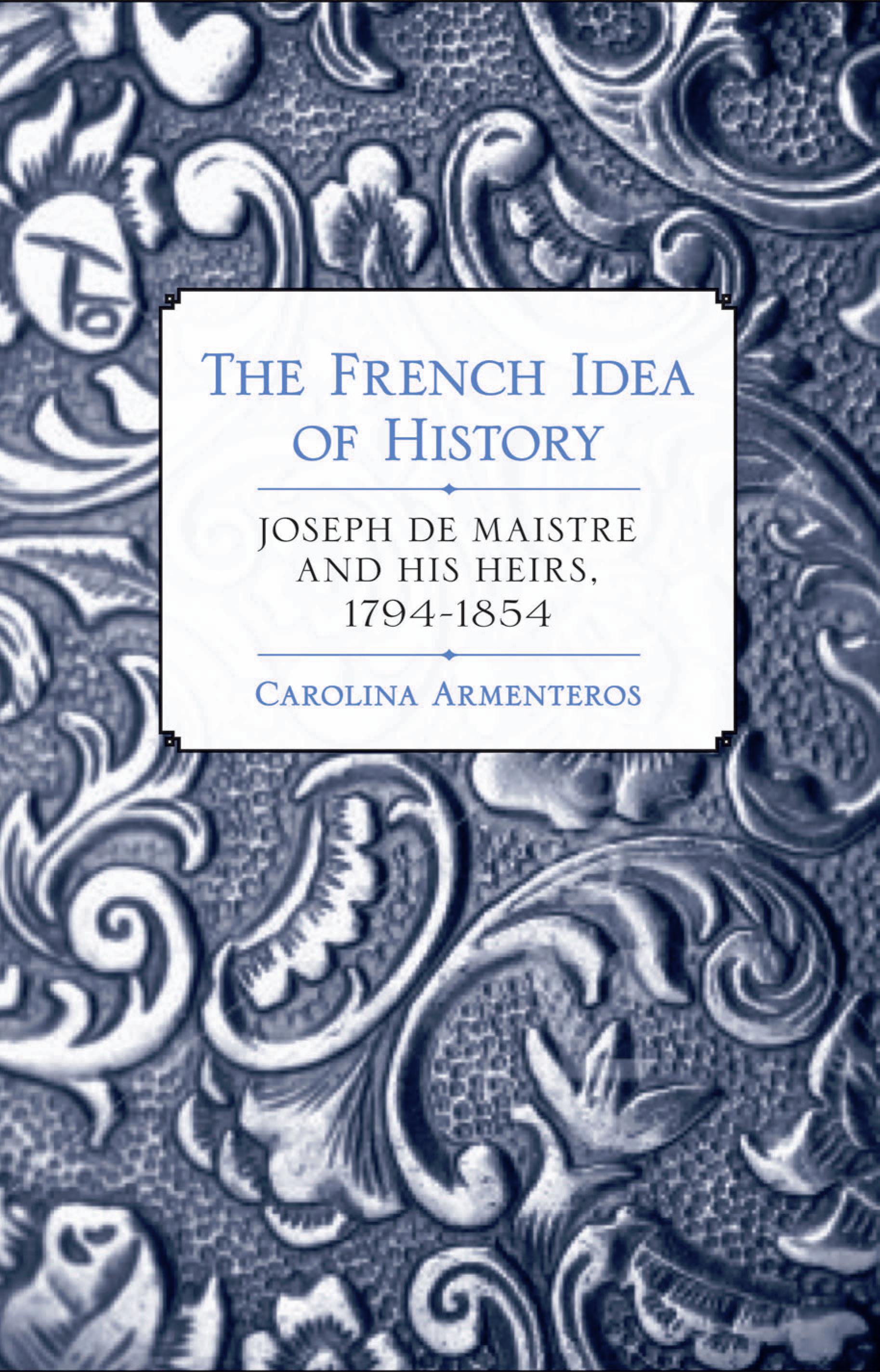
"A fierce absolutist, a furious theocrat... the champion of the hardest, narrowest, and most inflexible dogmatism... part learned doctor, part inquisitor, part executioner." Thus did Émile Faguet describe Joseph-Marie de Maistre (1753–1821) in his 1899 history of nineteenth-century thought. This view of the influential thinker as a reactionary has, with little variation, held sway ever since. In The French Idea of History, Carolina Armenteros recovers a very different figure, one with a far more subtle understanding of, and response to, the events of his day. Maistre emerges from this deeply learned book as the crucial bridge between the Enlightenment and the historicized thought of the nineteenth century. Armenteros demonstrates that Maistre inaugurated a specifically French way of thinking about past, present, and future that held sway not only among conservative political theorists but also among intellectuals generally considered to belong to the left, particularly the Utopian Socialists.
The historical rupture represented by the French Revolution compelled contemporaries to reflect on the nature and meaning of history. Some who remained religious during those years felt history with particular intensity, awakening suddenly to the fear that God might have abandoned humankind. This profound spiritual anxiety emerged in Maistre's work: under his pen, everything—knowledge, society, religion, government, the human body—had to be historicized and temporalized in order to be known. The imperative was to end history by uncovering its essence. Socialists, positivists, and traditionalists drew on Maistre's historical ideas to construct the collective good and design the future. The dream that history held the key to human renewal and the obliteration of violence faded after the 1848 revolutions, but it permanently changed French social, political, moral, and religious thought.
Before Memmo my notes were scattered across PDFs. Now a workspace pulls everything into one place — I see exactly what's still left to study.
Memmo's summaries are gold before exams. I don't have to re-read 800 pages two weeks before — just the important parts.
The AI chat has saved me the night before an exam more than once. I just keep asking until I get it — no waiting on a study group to reply.
The quizzes hit exactly what I need to know. Memmo tracks what I get stuck on — so I only practice what's worth it.
Flashcards with spaced repetition are magic. Memmo knows when I'm about to forget something and brings it back.
The AI podcasts are my favorite. I listen on my way to school and get a recap without sitting at a computer.

Handbok i kvalitativa metoder
281 kr

Hållbar utveckling: en introduktion för ingenjörer och andra problemlösare
334 kr

Brymans Samhällsvetenskapliga metoder
390 kr

Projektledning
491 kr

Den orättvisa hälsan: om socioekonomiska skillnader i hälsa och livslängd
326 kr

Vetenskapsteori för nybörjare
196 kr

Organizational Leadership
429 kr

På väg mot läraryrket
172 kr

Det sociala livet i skolan: Socialpsykologiska perspektiv
253 kr

Betygsättningens didaktik
151 kr

Personality
402 kr

Studying Leadership
404 kr

Managing Innovation
477 kr

Introduktion till samhällsvetenskaplig metod
347 kr

The Psychology of Sex and Gender
698 kr

Evidens och kunskap för socialt arbete
207 kr

Introduction to Leadership
605 kr