
Before Memmo my notes were scattered across PDFs. Now a workspace pulls everything into one place — I see exactly what's still left to study.
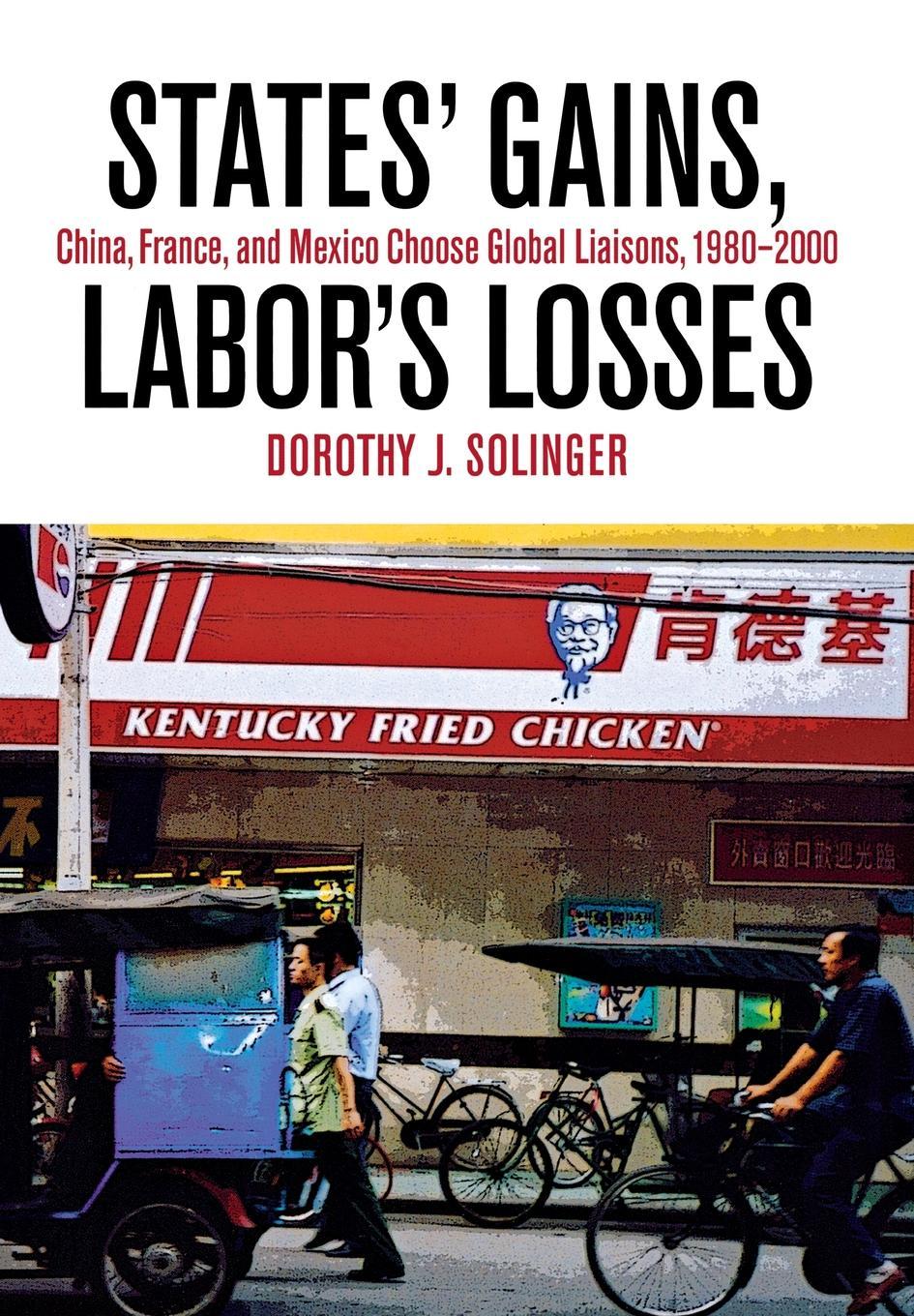
In this explicitly comparative work, Dorothy J. Solinger examines the effects of global markets on the domestic politics of major states. In the late 1970s, leaders around the world faced a need both to continue productive investment and to cut labor costs to compete internationally in a changed world market. To accommodate forces seemingly beyond their control, they often opted to reduce social protections and benefits that citizens had come to expect, in the process recalibrating their established political-economic coalitions. For countries whose governance was built on a coalition between workers and the state, the political conundrum was particularly intense.
States' Gains, Labor's Losses concentrates on three countries—China, France, and Mexico—where revolution-inspired political compacts between labor and the state had to be renegotiated. In all three cases, choices to forge a deepened dependence on international capital markets required the ruling parties to fire large numbers of workers and cut social benefits while attempting not to provoke widespread social unrest or even full-scale revolt among their supporters. China, France, and Mexico also shared strong legacies of protectionism and state intervention in the economy, so the decision of each to join a supranational economic organization (France and the EU, China and the GATT/WTO, Mexico and NAFTA) in the hope of alleviating crises of capital shortage involved submission to a new set of liberal economic rules that further compromised their sociopolitical compacts.
Examining a fundamental question about the dynamics of globalization and worker protest through an innovative comparative perspective, States' Gains, Labor's Losses emphasizes the growing tensions and new compromises between the working class and their political leaders in the face of intense international economic pressures.
Before Memmo my notes were scattered across PDFs. Now a workspace pulls everything into one place — I see exactly what's still left to study.
Memmo's summaries are gold before exams. I don't have to re-read 800 pages two weeks before — just the important parts.
The AI chat has saved me the night before an exam more than once. I just keep asking until I get it — no waiting on a study group to reply.
The quizzes hit exactly what I need to know. Memmo tracks what I get stuck on — so I only practice what's worth it.
Flashcards with spaced repetition are magic. Memmo knows when I'm about to forget something and brings it back.
The AI podcasts are my favorite. I listen on my way to school and get a recap without sitting at a computer.

Handbok i kvalitativa metoder
281 kr

Hållbar utveckling: en introduktion för ingenjörer och andra problemlösare
334 kr

Brymans Samhällsvetenskapliga metoder
390 kr

Projektledning
491 kr

Den orättvisa hälsan: om socioekonomiska skillnader i hälsa och livslängd
326 kr

Organizational Leadership
429 kr

Vetenskapsteori för nybörjare
196 kr

På väg mot läraryrket
172 kr

Det sociala livet i skolan: Socialpsykologiska perspektiv
253 kr

Betygsättningens didaktik
151 kr

Personality
402 kr

Studying Leadership
404 kr

Managing Innovation
477 kr

Introduktion till samhällsvetenskaplig metod
347 kr

The Psychology of Sex and Gender
698 kr

Evidens och kunskap för socialt arbete
207 kr

Introduction to Leadership
605 kr