
Before Memmo my notes were scattered across PDFs. Now a workspace pulls everything into one place — I see exactly what's still left to study.
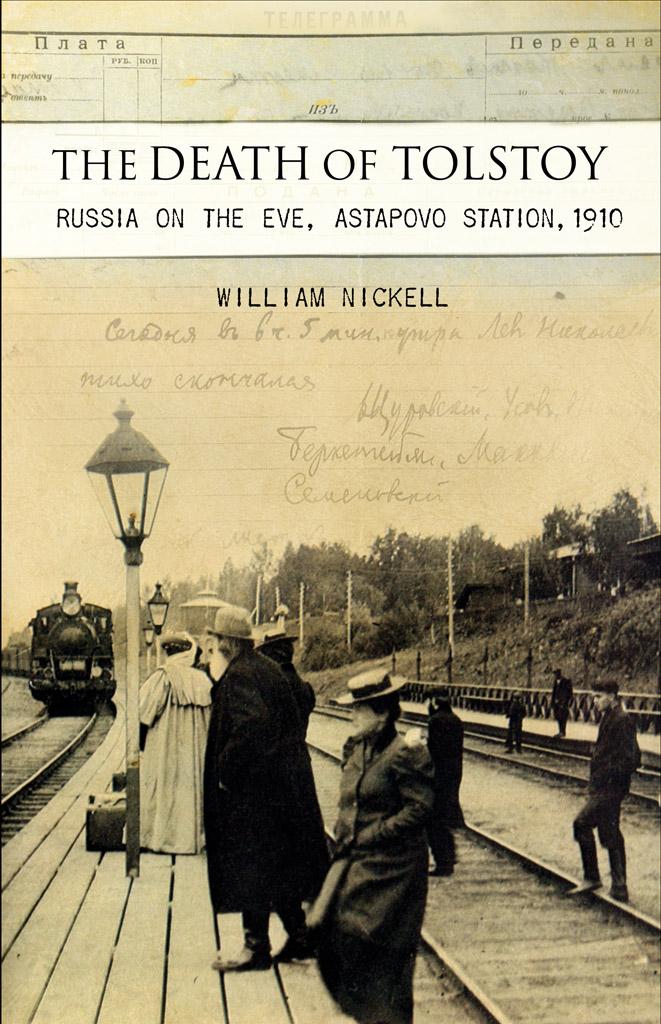
In the middle of the night of October 28, 1910, Leo Tolstoy, the most famous man in Russia, vanished. A secular saint revered for his literary genius, pacificism, and dedication to the earth and the poor, Tolstoy had left his home in secret to embark on a final journey. His disappearance immediately became a national sensation. Two days later he was located at a monastery, but was soon gone again. When he turned up next at Astapovo, a small, remote railway station, all of Russia was following the story. As he lay dying of pneumonia, he became the hero of a national narrative of immense significance.
In The Death of Tolstoy, William Nickell describes a Russia engaged in a war of words over how this story should be told. The Orthodox Church, which had excommunicated Tolstoy in 1901, first argued that he had returned to the fold and then came out against his beliefs more vehemently than ever. Police spies sent by the state tracked his every move, fearing that his death would embolden his millions of supporters among the young, the peasantry, and the intelligentsia. Representatives of the press converged on the stationhouse at Astapovo where Tolstoy lay ill, turning his death into a feverish media event that strikingly anticipated today's no-limits coverage of celebrity lives—and deaths. Drawing on newspaper accounts, personal correspondence, police reports, secret circulars, telegrams, letters, and memoirs, Nickell shows the public spectacle of Tolstoy's last days to be a vivid reflection of a fragile, anxious empire on the eve of war and revolution.
For more on Tolstoy's death, see the companion website created by the author at http://humweb.ucsc.edu/bnickell/tolstoy/.
Before Memmo my notes were scattered across PDFs. Now a workspace pulls everything into one place — I see exactly what's still left to study.
Memmo's summaries are gold before exams. I don't have to re-read 800 pages two weeks before — just the important parts.
The AI chat has saved me the night before an exam more than once. I just keep asking until I get it — no waiting on a study group to reply.
The quizzes hit exactly what I need to know. Memmo tracks what I get stuck on — so I only practice what's worth it.
Flashcards with spaced repetition are magic. Memmo knows when I'm about to forget something and brings it back.
The AI podcasts are my favorite. I listen on my way to school and get a recap without sitting at a computer.

Handbok i kvalitativa metoder
281 kr

Hållbar utveckling: en introduktion för ingenjörer och andra problemlösare
334 kr

Brymans Samhällsvetenskapliga metoder
390 kr

Projektledning
491 kr

Den orättvisa hälsan: om socioekonomiska skillnader i hälsa och livslängd
326 kr

Vetenskapsteori för nybörjare
196 kr

Organizational Leadership
429 kr

På väg mot läraryrket
172 kr

Det sociala livet i skolan: Socialpsykologiska perspektiv
253 kr

Betygsättningens didaktik
151 kr

Personality
402 kr

Studying Leadership
404 kr

Managing Innovation
477 kr

Introduktion till samhällsvetenskaplig metod
347 kr

The Psychology of Sex and Gender
698 kr

Evidens och kunskap för socialt arbete
207 kr

Introduction to Leadership
605 kr