
Before Memmo my notes were scattered across PDFs. Now a workspace pulls everything into one place — I see exactly what's still left to study.
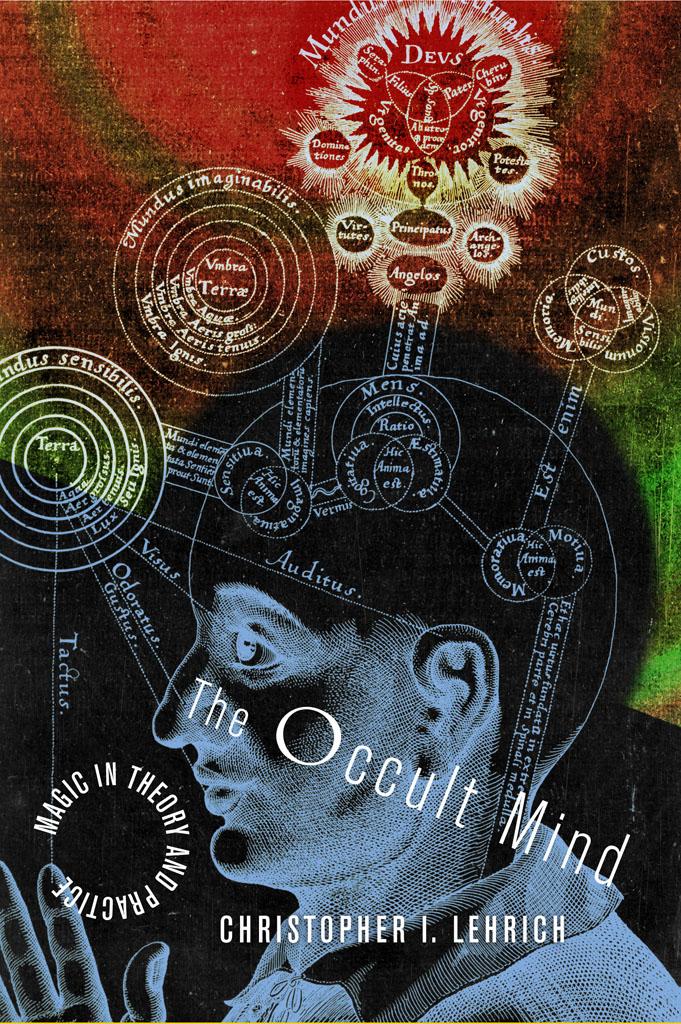
"Given the historical orientation of philosophy, is it unreasonable to suggest a wider cast of the net into the deep waters of magic? By encountering magical thought as theory, we come to a new understanding of a thought that looks back at us from a funhouse mirror."—The Occult Mind
Divination, like many critical modes, involves reading signs, and magic, more generally, can be seen as a kind of criticism that takes the universe—seen and unseen, known and unknowable—as its text. In The Occult Mind, Christopher I. Lehrich explores the history of magic in Western thought, suggesting a bold new understanding of the claims made about the power of various belief systems. In closely interlinked essays on such disparate topics as ley lines, the Tarot, the Corpus Hermeticum, writing and ritual in magical practice, and early attempts to decipher Egyptian hieroglyphics, Lehrich treats magic and its parts as an intellectual object that requires interpretive zeal on the part of readers/observers. Drawing illuminating parallels between the practice of magic and more recent interpretive systems—structuralism, deconstruction, semiotics—Lehrich deftly suggests that the specter of magic haunts all such attempts to grasp the character of knowledge.
Offering a radical new approach to the nature and value of occult thought, Lehrich's brilliantly conceived and executed book posits magic as a mode of theory that is intrinsically subversive of normative conceptions of reason and truth. In elucidating the deep parallels between occult thought and academic discourse, Lehrich demonstrates that sixteenth-century occult philosophy often touched on issues that have become central to philosophical discourse only in the past fifty years.
Before Memmo my notes were scattered across PDFs. Now a workspace pulls everything into one place — I see exactly what's still left to study.
Memmo's summaries are gold before exams. I don't have to re-read 800 pages two weeks before — just the important parts.
The AI chat has saved me the night before an exam more than once. I just keep asking until I get it — no waiting on a study group to reply.
The quizzes hit exactly what I need to know. Memmo tracks what I get stuck on — so I only practice what's worth it.
Flashcards with spaced repetition are magic. Memmo knows when I'm about to forget something and brings it back.
The AI podcasts are my favorite. I listen on my way to school and get a recap without sitting at a computer.

Handbok i kvalitativa metoder
281 kr

Hållbar utveckling: en introduktion för ingenjörer och andra problemlösare
334 kr

Brymans Samhällsvetenskapliga metoder
390 kr

Projektledning
491 kr

Den orättvisa hälsan: om socioekonomiska skillnader i hälsa och livslängd
326 kr

Organizational Leadership
429 kr

Vetenskapsteori för nybörjare
196 kr

På väg mot läraryrket
172 kr

Det sociala livet i skolan: Socialpsykologiska perspektiv
253 kr

Betygsättningens didaktik
151 kr

Personality
402 kr

Studying Leadership
404 kr

Managing Innovation
477 kr

Introduktion till samhällsvetenskaplig metod
347 kr

The Psychology of Sex and Gender
698 kr

Evidens och kunskap för socialt arbete
207 kr

Introduction to Leadership
605 kr