
Before Memmo my notes were scattered across PDFs. Now a workspace pulls everything into one place — I see exactly what's still left to study.
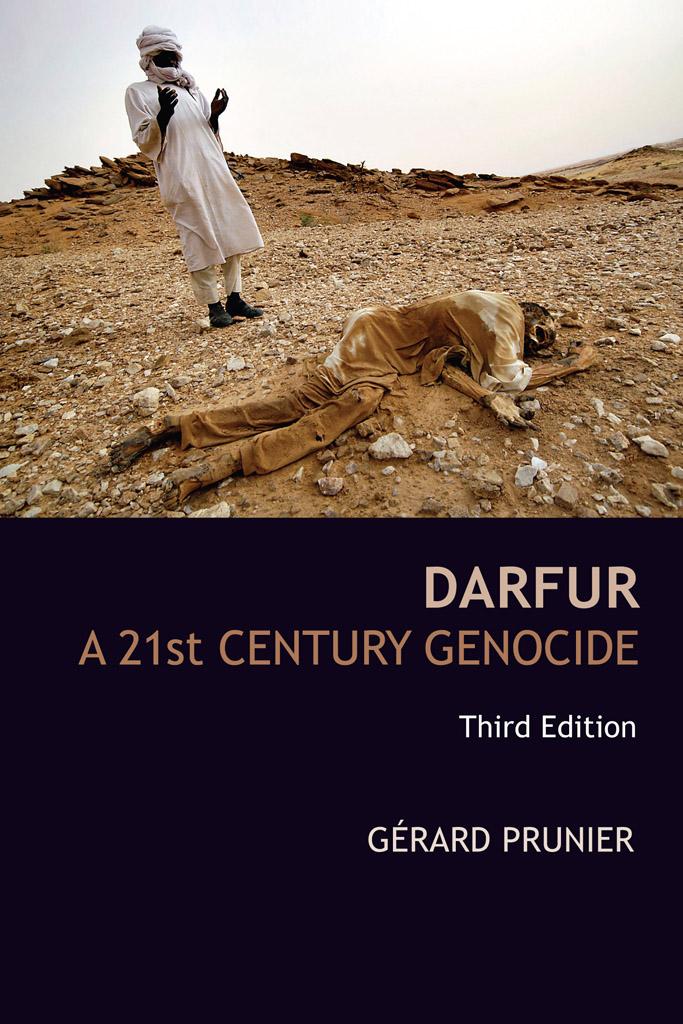
In mid-2004 the Darfur crisis in Western Sudan forced itself onto the center stage of world affairs. Arab Janjaweed militias, who support the Khartoum government, have engaged in a campaign of violence against the residents of Western Sudan. A formerly obscure tribal conflict in the heart of Africa has escalated into the first genocide of the twenty-first century. In sharp contrast to official reaction to the Rwandan massacres, U.S. Secretary of State Colin Powell called the situation in Darfur a genocide in September 2004. Its characteristics Arabism, Islamism, famine as a weapon of war, mass rape, international obfuscation, and a refusal to look evil squarely in the face reflect many of the problems of the global South in general and of Africa in particular.
Journalistic explanations of the unfolding humanitarian catastrophe have been given to hurried generalizations and inaccuracies: the genocide has been portrayed as an ethnic clash marked by Arab-on-African violence, with the Janjaweed militias under strict government control, but neither of these impressions is strictly true. Darfur: The Ambiguous Genocide explains what lies behind the conflict, how it came about, why it should not be oversimplified, and why it is so relevant to the future of the continent.
G rard Prunier sets out the ethnopolitical makeup of the Sudan and explains why the Darfur rebellion is regarded as a key threat to Arab power in the country much more so than secessionism in the Christian South. This, he argues, accounts for the government s deployment of exemplary violence by the Janjaweed militias in order to intimidate other African Muslims into subservience. As the world watches, governments decide if, when, and how to intervene, and international organizations struggle to distribute aid, the knowledge in Prunier's book will provide crucial assistance.
Before Memmo my notes were scattered across PDFs. Now a workspace pulls everything into one place — I see exactly what's still left to study.
Memmo's summaries are gold before exams. I don't have to re-read 800 pages two weeks before — just the important parts.
The AI chat has saved me the night before an exam more than once. I just keep asking until I get it — no waiting on a study group to reply.
The quizzes hit exactly what I need to know. Memmo tracks what I get stuck on — so I only practice what's worth it.
Flashcards with spaced repetition are magic. Memmo knows when I'm about to forget something and brings it back.
The AI podcasts are my favorite. I listen on my way to school and get a recap without sitting at a computer.

Handbok i kvalitativa metoder
281 kr

Hållbar utveckling: en introduktion för ingenjörer och andra problemlösare
334 kr

Brymans Samhällsvetenskapliga metoder
390 kr

Projektledning
491 kr

Den orättvisa hälsan: om socioekonomiska skillnader i hälsa och livslängd
326 kr

Organizational Leadership
429 kr

Vetenskapsteori för nybörjare
196 kr

På väg mot läraryrket
172 kr

Det sociala livet i skolan: Socialpsykologiska perspektiv
253 kr

Betygsättningens didaktik
151 kr

Personality
402 kr

Studying Leadership
404 kr

Managing Innovation
477 kr

Introduktion till samhällsvetenskaplig metod
347 kr

The Psychology of Sex and Gender
698 kr

Evidens och kunskap för socialt arbete
207 kr

Introduction to Leadership
605 kr