
Before Memmo my notes were scattered across PDFs. Now a workspace pulls everything into one place — I see exactly what's still left to study.
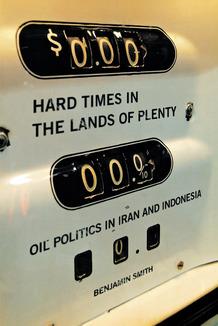
That natural resources can be a curse as well as a blessing is almost a truism in political analysis. In many late-developing countries, the "resource curse" theory predicts, the exploitation of valuable resources will not result in stable, prosperous states but rather in their opposite. Petroleum deposits, for example, may generate so much income that rulers will have little need to establish efficient, tax-extracting bureaucracies, leading to shallow, poorly functioning administrations that remain at the mercy of the world market for oil. Alternatively, resources may be geographically concentrated, thereby intensifying regional, ethnic, or other divisive tensions.
In Hard Times in the Land of Plenty, Benjamin Smith deciphers the paradox of the resource curse and questions its inevitability through an innovative comparison of the experiences of Iran and Indonesia. These two populous, oil-rich countries saw profoundly different changes in their fortunes in the period 1960–1980. Focusing on the roles of state actors and organized opposition in using oil revenues, Smith finds that the effects of oil wealth on politics and on regime durability vary according to the circumstances under which oil exports became a major part of a country's economy. The presence of natural resources is, he argues, a political opportunity rather than simply a structural variable. Drawing on extensive primary research in Iran and Indonesia and quantitative research on nineteen other oil-rich developing countries, Smith challenges us to reconsider resource wealth in late-developing countries, not as a simple curse or blessing, but instead as a tremendously flexible source of both political resources and potential complications.
Before Memmo my notes were scattered across PDFs. Now a workspace pulls everything into one place — I see exactly what's still left to study.
Memmo's summaries are gold before exams. I don't have to re-read 800 pages two weeks before — just the important parts.
The AI chat has saved me the night before an exam more than once. I just keep asking until I get it — no waiting on a study group to reply.
The quizzes hit exactly what I need to know. Memmo tracks what I get stuck on — so I only practice what's worth it.
Flashcards with spaced repetition are magic. Memmo knows when I'm about to forget something and brings it back.
The AI podcasts are my favorite. I listen on my way to school and get a recap without sitting at a computer.

Handbok i kvalitativa metoder
281 kr

Hållbar utveckling: en introduktion för ingenjörer och andra problemlösare
334 kr

Brymans Samhällsvetenskapliga metoder
390 kr

Projektledning
491 kr

Den orättvisa hälsan: om socioekonomiska skillnader i hälsa och livslängd
326 kr

Vetenskapsteori för nybörjare
196 kr

Organizational Leadership
429 kr

På väg mot läraryrket
172 kr

Det sociala livet i skolan: Socialpsykologiska perspektiv
253 kr

Betygsättningens didaktik
151 kr

Personality
402 kr

Studying Leadership
404 kr

Managing Innovation
477 kr

Introduktion till samhällsvetenskaplig metod
347 kr

The Psychology of Sex and Gender
698 kr

Evidens och kunskap för socialt arbete
207 kr

Introduction to Leadership
605 kr