
Before Memmo my notes were scattered across PDFs. Now a workspace pulls everything into one place — I see exactly what's still left to study.
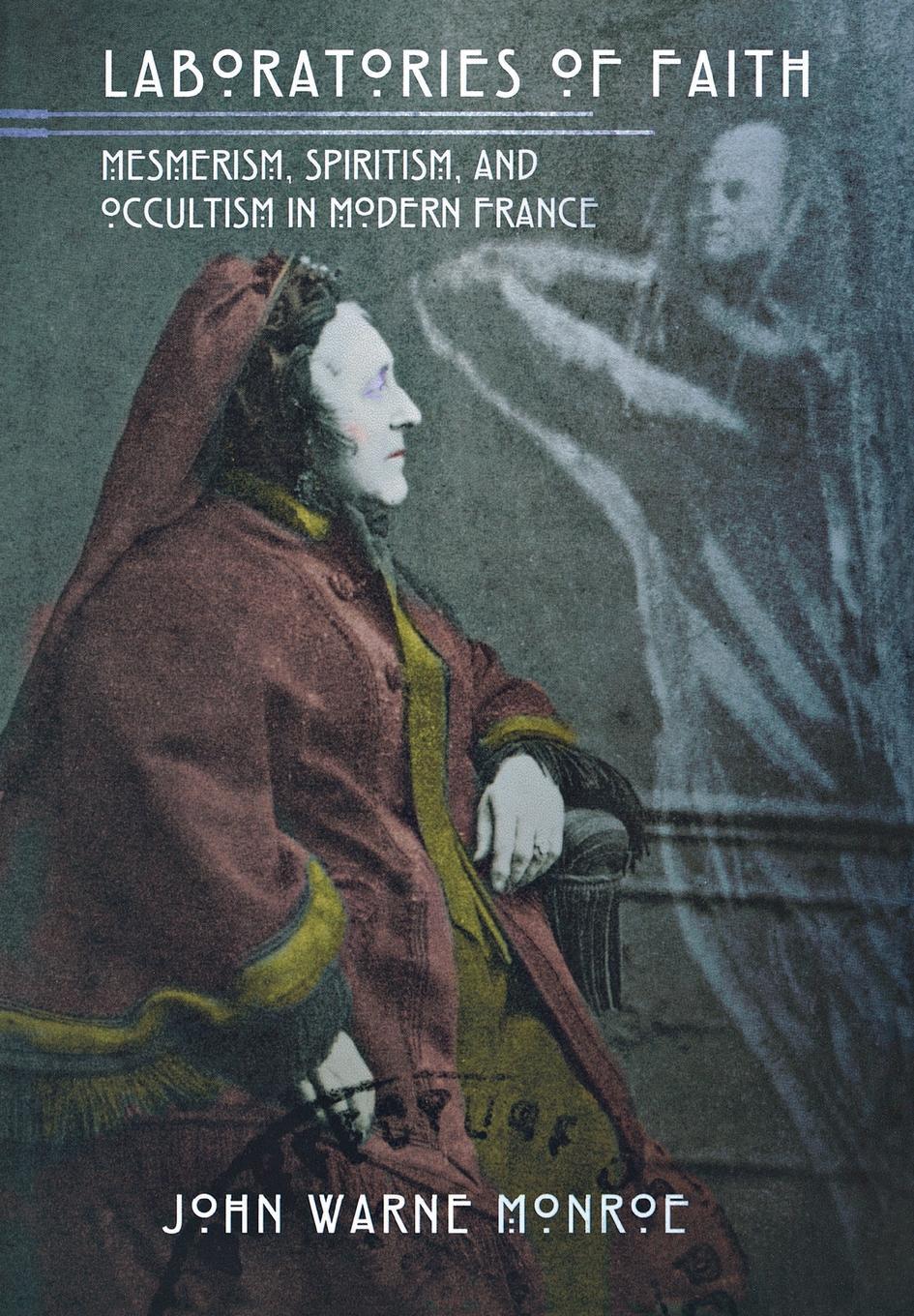
At a fascinating moment in French intellectual history, an interest in matters occult was not equivalent to a rejection of scientific thought; participants in séances and magic rituals were seekers after experimental data as well as spiritual truth. A young astronomy student wrote of his quest: "I am not in the presence or under the influence of any evil spirit: I study Spiritism as I study mathematics." He did not see himself as an ecstatic visionary but rather as a sober observer. For him, the darkened room of occult practice was as much laboratory as church.
In an evocative history of alternative religious practices in France in the second half of the nineteenth and beginning of the twentieth centuries, John Warne Monroe tells the interconnected stories of three movements—Mesmerism, Spiritism, and Occultism. Adherents of these groups, Monroe reveals, attempted to "modernize" faith by providing empirical support for metaphysical concepts. Instead of trusting theological speculation about the nature of the soul, these believers attempted to gather tangible evidence through Mesmeric experiments, séances, and ceremonial magic.
While few French people were active Mesmerists, Spiritists, or Occultists, large segments of the educated general public were familiar with these movements and often regarded them as fascinating expressions of the "modern condition," a notable contrast to the Catholicism and secular materialism that prevailed in their culture. Featuring eerie spirit photographs, amusing Daumier lithographs, and a posthumous autograph from Voltaire, as well as extensive documentary evidence, Laboratories of Faith gives readers a sense of what being in a séance or a secret-society ritual might actually have felt like and why these feelings attracted participants. While they never achieved the transformation of human consciousness for which they strove, these thinkers and believers nevertheless pioneered a way of "being religious" that has become an enduring part of the Western cultural vocabulary.
Before Memmo my notes were scattered across PDFs. Now a workspace pulls everything into one place — I see exactly what's still left to study.
Memmo's summaries are gold before exams. I don't have to re-read 800 pages two weeks before — just the important parts.
The AI chat has saved me the night before an exam more than once. I just keep asking until I get it — no waiting on a study group to reply.
The quizzes hit exactly what I need to know. Memmo tracks what I get stuck on — so I only practice what's worth it.
Flashcards with spaced repetition are magic. Memmo knows when I'm about to forget something and brings it back.
The AI podcasts are my favorite. I listen on my way to school and get a recap without sitting at a computer.

Handbok i kvalitativa metoder
281 kr

Hållbar utveckling: en introduktion för ingenjörer och andra problemlösare
334 kr

Brymans Samhällsvetenskapliga metoder
390 kr

Projektledning
491 kr

Den orättvisa hälsan: om socioekonomiska skillnader i hälsa och livslängd
326 kr

Vetenskapsteori för nybörjare
196 kr

Organizational Leadership
429 kr

På väg mot läraryrket
172 kr

Det sociala livet i skolan: Socialpsykologiska perspektiv
253 kr

Betygsättningens didaktik
151 kr

Personality
402 kr

Studying Leadership
404 kr

Managing Innovation
477 kr

Introduktion till samhällsvetenskaplig metod
347 kr

The Psychology of Sex and Gender
698 kr

Evidens och kunskap för socialt arbete
207 kr

Introduction to Leadership
605 kr