
Before Memmo my notes were scattered across PDFs. Now a workspace pulls everything into one place — I see exactly what's still left to study.
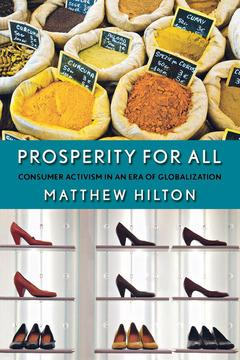
The history of consumerism is about much more than just shopping. Ever since the eighteenth century, citizen-consumers have protested against the abuses of the market by boycotting products and promoting fair instead of free trade. In recent decades, consumer activism has responded to the challenges of affluence by helping to guide consumers through an increasingly complex and alien marketplace. In doing so, it has challenged the very meaning of consumer society and tackled some of the key economic, social, and political issues associated with the era of globalization.
In Prosperity for All, the first international history of consumer activism, Matthew Hilton shows that modern consumer advocacy reached the peak of its influence in the decades after World War II. Growing out of the product-testing activities of Consumer Reports and its international counterparts (including Which? in the United Kingdom, Que Choisir in France, and Test in Germany), consumerism evolved into a truly global social movement. Consumer unions, NGOs, and individual activists like Ralph Nader emerged in countries around the world—including developing countries in Southeast Asia and Latin America—concerned with creating a more equitable marketplace and articulating a politics of consumption that addressed the needs of both individuals and society as a whole. Consumer activists achieved many victories, from making cars safer to highlighting the dangers of using baby formula instead of breast milk in countries with no access to clean water.
The 1980s saw a reversal in the consumer movement's fortunes, thanks in large part to the rise of an antiregulatory agenda both in the United States and internationally. In the process, the definition of consumerism changed, focusing more on choice than on access. As Hilton shows, this change reflects more broadly on the dilemmas we all face as consumers: Do we want more stuff and more prosperity for ourselves, or do we want others less fortunate to be able to enjoy the same opportunities and standard of living that we do? Prosperity for All makes clear that by abandoning a more idealistic vision for consumer society we reduce consumers to little more than shoppers, and we deny the vast majority of the world's population the fruits of affluence.
Before Memmo my notes were scattered across PDFs. Now a workspace pulls everything into one place — I see exactly what's still left to study.
Memmo's summaries are gold before exams. I don't have to re-read 800 pages two weeks before — just the important parts.
The AI chat has saved me the night before an exam more than once. I just keep asking until I get it — no waiting on a study group to reply.
The quizzes hit exactly what I need to know. Memmo tracks what I get stuck on — so I only practice what's worth it.
Flashcards with spaced repetition are magic. Memmo knows when I'm about to forget something and brings it back.
The AI podcasts are my favorite. I listen on my way to school and get a recap without sitting at a computer.

Handbok i kvalitativa metoder
281 kr

Hållbar utveckling: en introduktion för ingenjörer och andra problemlösare
334 kr

Brymans Samhällsvetenskapliga metoder
390 kr

Projektledning
491 kr

Den orättvisa hälsan: om socioekonomiska skillnader i hälsa och livslängd
326 kr

Organizational Leadership
429 kr

Vetenskapsteori för nybörjare
196 kr

På väg mot läraryrket
172 kr

Det sociala livet i skolan: Socialpsykologiska perspektiv
253 kr

Betygsättningens didaktik
151 kr

Personality
402 kr

Studying Leadership
404 kr

Managing Innovation
477 kr

Introduktion till samhällsvetenskaplig metod
347 kr

The Psychology of Sex and Gender
698 kr

Evidens och kunskap för socialt arbete
207 kr

Introduction to Leadership
605 kr