
Before Memmo my notes were scattered across PDFs. Now a workspace pulls everything into one place — I see exactly what's still left to study.
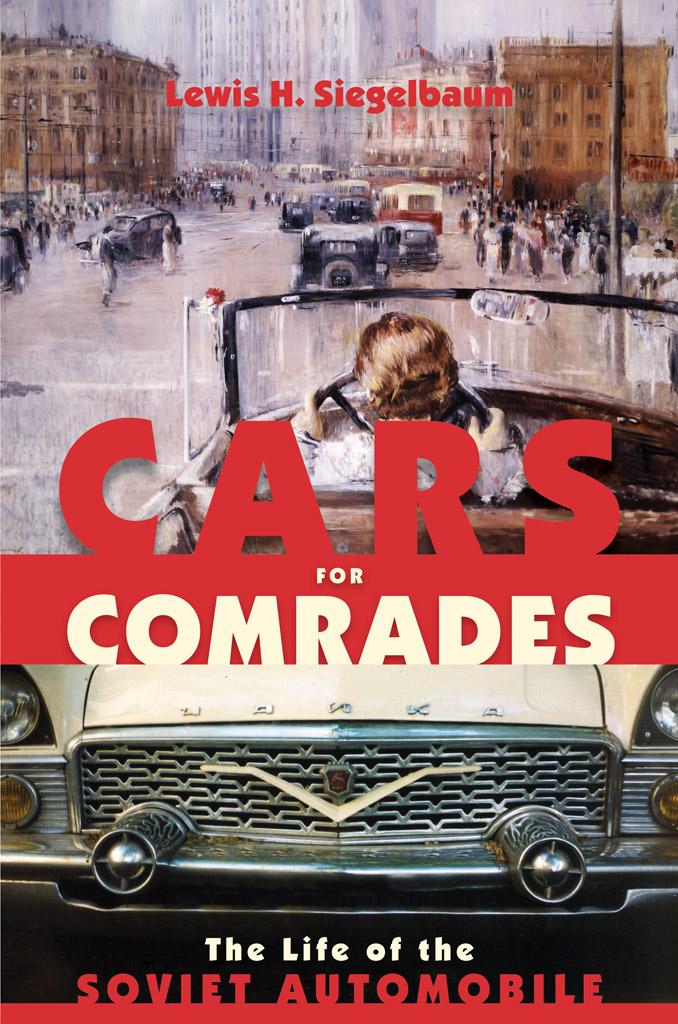
The automobile and Soviet communism made an odd couple. The quintessential symbol of American economic might and consumerism never achieved iconic status as an engine of Communist progress, in part because it posed an awkward challenge to some basic assumptions of Soviet ideology and practice. In this rich and often witty book, Lewis H. Siegelbaum recounts the life of the Soviet automobile and in the process gives us a fresh perspective on the history and fate of the USSR itself.
Based on sources ranging from official state archives to cartoons, car-enthusiast magazines, and popular films, Cars for Comrades takes us from the construction of the huge "Soviet Detroits," emblems of the utopian phase of Soviet planning, to present-day Togliatti, where the fate of Russia's last auto plant hangs in the balance. The large role played by American businessmen and engineers in the checkered history of Soviet automobile manufacture is one of the book's surprises, and the author points up the ironic parallels between the Soviet story and the decline of the American Detroit. In the interwar years, automobile clubs, car magazines, and the popularity of rally races were signs of a nascent Soviet car culture, its growth slowed by the policies of the Stalinist state and by Russia's intractable "roadlessness." In the postwar years cars appeared with greater frequency in songs, movies, novels, and in propaganda that promised to do better than car-crazy America.
Ultimately, Siegelbaum shows, the automobile epitomized and exacerbated the contradictions between what Soviet communism encouraged and what it provided. To need a car was a mark of support for industrial goals; to want a car for its own sake was something else entirely.
Because Soviet cars were both hard to get and chronically unreliable, and such items as gasoline and spare parts so scarce, owning and maintaining them enmeshed citizens in networks of private, semi-illegal, and ideologically heterodox practices that the state was helpless to combat. Deeply researched and engagingly told, this masterful and entertaining biography of the Soviet automobile provides a new perspective on one of the twentieth century's most iconic—and important—technologies and a novel approach to understanding the history of the Soviet Union itself.
Before Memmo my notes were scattered across PDFs. Now a workspace pulls everything into one place — I see exactly what's still left to study.
Memmo's summaries are gold before exams. I don't have to re-read 800 pages two weeks before — just the important parts.
The AI chat has saved me the night before an exam more than once. I just keep asking until I get it — no waiting on a study group to reply.
The quizzes hit exactly what I need to know. Memmo tracks what I get stuck on — so I only practice what's worth it.
Flashcards with spaced repetition are magic. Memmo knows when I'm about to forget something and brings it back.
The AI podcasts are my favorite. I listen on my way to school and get a recap without sitting at a computer.

Handbok i kvalitativa metoder
281 kr

Hållbar utveckling: en introduktion för ingenjörer och andra problemlösare
334 kr

Brymans Samhällsvetenskapliga metoder
390 kr

Projektledning
491 kr

Den orättvisa hälsan: om socioekonomiska skillnader i hälsa och livslängd
326 kr

Vetenskapsteori för nybörjare
196 kr

Organizational Leadership
429 kr

På väg mot läraryrket
172 kr

Det sociala livet i skolan: Socialpsykologiska perspektiv
253 kr

Betygsättningens didaktik
151 kr

Personality
402 kr

Studying Leadership
404 kr

Managing Innovation
477 kr

Introduktion till samhällsvetenskaplig metod
347 kr

The Psychology of Sex and Gender
698 kr

Evidens och kunskap för socialt arbete
207 kr

Introduction to Leadership
605 kr