
Before Memmo my notes were scattered across PDFs. Now a workspace pulls everything into one place — I see exactly what's still left to study.
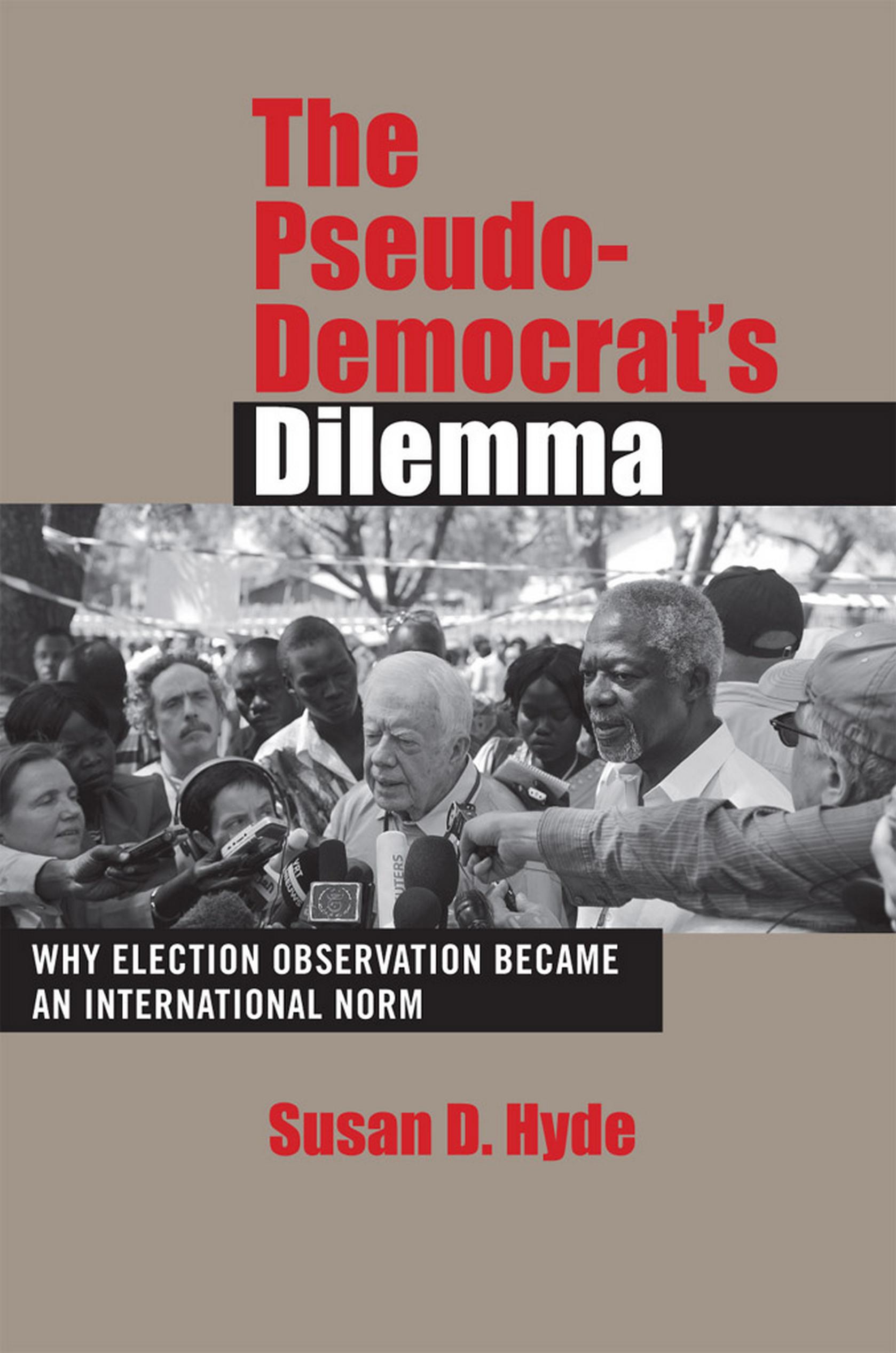
Why did election monitoring become an international norm? Why do pseudo-democrats—undemocratic leaders who present themselves as democratic—invite international observers, even when they are likely to be caught manipulating elections? Is election observation an effective tool of democracy promotion, or is it simply a way to legitimize electoral autocracies? In The Pseudo-Democrat's Dilemma, Susan D. Hyde explains international election monitoring with a new theory of international norm formation. Hyde argues that election observation was initiated by states seeking international support. International benefits tied to democracy give some governments an incentive to signal their commitment to democratization without having to give up power. Invitations to nonpartisan foreigners to monitor elections, and avoiding their criticism, became a widely recognized and imitated signal of a government's purported commitment to democratic elections.
Hyde draws on cross-national data on the global spread of election observation between 1960 and 2006, detailed descriptions of the characteristics of countries that do and do not invite observers, and evidence of three ways that election monitoring is costly to pseudo-democrats: micro-level experimental tests from elections in Armenia and Indonesia showing that observers can deter election-day fraud and otherwise improve the quality of elections; illustrative cases demonstrating that international benefits are contingent on democracy in countries like Haiti, Peru, Togo, and Zimbabwe; and qualitative evidence documenting the escalating game of strategic manipulation among pseudo-democrats, international monitors, and pro-democracy forces.
Before Memmo my notes were scattered across PDFs. Now a workspace pulls everything into one place — I see exactly what's still left to study.
Memmo's summaries are gold before exams. I don't have to re-read 800 pages two weeks before — just the important parts.
The AI chat has saved me the night before an exam more than once. I just keep asking until I get it — no waiting on a study group to reply.
The quizzes hit exactly what I need to know. Memmo tracks what I get stuck on — so I only practice what's worth it.
Flashcards with spaced repetition are magic. Memmo knows when I'm about to forget something and brings it back.
The AI podcasts are my favorite. I listen on my way to school and get a recap without sitting at a computer.

Handbok i kvalitativa metoder
281 kr

Hållbar utveckling: en introduktion för ingenjörer och andra problemlösare
334 kr

Brymans Samhällsvetenskapliga metoder
390 kr

Projektledning
491 kr

Den orättvisa hälsan: om socioekonomiska skillnader i hälsa och livslängd
326 kr

Vetenskapsteori för nybörjare
196 kr

Organizational Leadership
429 kr

På väg mot läraryrket
172 kr

Det sociala livet i skolan: Socialpsykologiska perspektiv
253 kr

Betygsättningens didaktik
151 kr

Personality
402 kr

Studying Leadership
404 kr

Managing Innovation
477 kr

Introduktion till samhällsvetenskaplig metod
347 kr

The Psychology of Sex and Gender
698 kr

Evidens och kunskap för socialt arbete
207 kr

Introduction to Leadership
605 kr