
Before Memmo my notes were scattered across PDFs. Now a workspace pulls everything into one place — I see exactly what's still left to study.
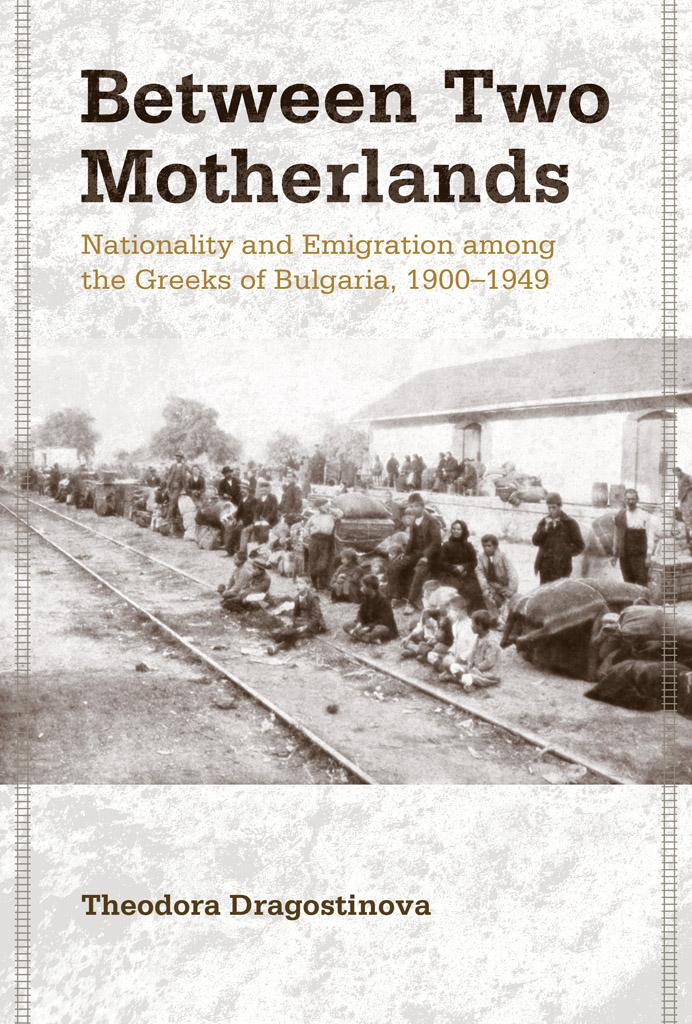
In 1900, some 100,000 people living in Bulgaria—2 percent of the country's population—could be described as Greek, whether by nationality, language, or religion. The complex identities of the population—proud heirs of ancient Hellenic colonists, loyal citizens of their Bulgarian homeland, members of a wider Greek diasporic community, devout followers of the Orthodox Patriarchate in Istanbul, and reluctant supporters of the Greek government in Athens—became entangled in the growing national tensions between Bulgaria and Greece during the first half of the twentieth century.
In Between Two Motherlands, Theodora Dragostinova explores the shifting allegiances of this Greek minority in Bulgaria. Diverse social groups contested the meaning of the nation, shaping and reshaping what it meant to be Greek and Bulgarian during the slow and painful transition from empire to nation-states in the Balkans. In these decades, the region was racked by a series of upheavals (the Balkan Wars, World War I, interwar population exchanges, World War II, and Communist revolutions). The Bulgarian Greeks were caught between the competing agendas of two states increasingly bent on establishing national homogeneity.
Based on extensive research in the archives of Bulgaria and Greece, as well as fieldwork in the two countries, Dragostinova shows that the Greek population did not blindly follow Greek nationalist leaders but was torn between identification with the land of their birth and loyalty to the Greek cause. Many emigrated to Greece in response to nationalist pressures; others sought to maintain their Greek identity and traditions within Bulgaria; some even switched sides when it suited their personal interests. National loyalties remained fluid despite state efforts to fix ethnic and political borders by such means as population movements, minority treaties, and stringent citizenship rules. The lessons of a case such as this continue to reverberate wherever and whenever states try to adjust national borders in regions long inhabited by mixed populations.
Before Memmo my notes were scattered across PDFs. Now a workspace pulls everything into one place — I see exactly what's still left to study.
Memmo's summaries are gold before exams. I don't have to re-read 800 pages two weeks before — just the important parts.
The AI chat has saved me the night before an exam more than once. I just keep asking until I get it — no waiting on a study group to reply.
The quizzes hit exactly what I need to know. Memmo tracks what I get stuck on — so I only practice what's worth it.
Flashcards with spaced repetition are magic. Memmo knows when I'm about to forget something and brings it back.
The AI podcasts are my favorite. I listen on my way to school and get a recap without sitting at a computer.

Handbok i kvalitativa metoder
281 kr

Hållbar utveckling: en introduktion för ingenjörer och andra problemlösare
334 kr

Brymans Samhällsvetenskapliga metoder
390 kr

Projektledning
491 kr

Den orättvisa hälsan: om socioekonomiska skillnader i hälsa och livslängd
326 kr

Organizational Leadership
429 kr

Vetenskapsteori för nybörjare
196 kr

På väg mot läraryrket
172 kr

Det sociala livet i skolan: Socialpsykologiska perspektiv
253 kr

Betygsättningens didaktik
151 kr

Personality
402 kr

Studying Leadership
404 kr

Managing Innovation
477 kr

Introduktion till samhällsvetenskaplig metod
347 kr

The Psychology of Sex and Gender
698 kr

Evidens och kunskap för socialt arbete
207 kr

Introduction to Leadership
605 kr