
Before Memmo my notes were scattered across PDFs. Now a workspace pulls everything into one place — I see exactly what's still left to study.
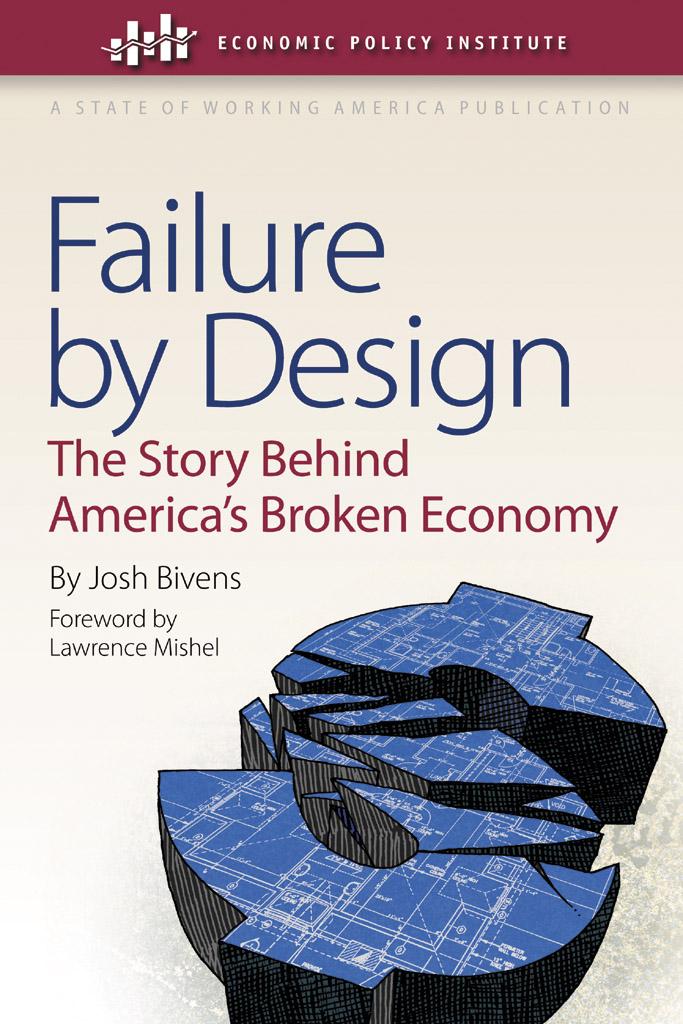
In Failure by Design, the Economic Policy Institute's Josh Bivens takes a step back from the acclaimed State of Working America series, building on its wealth of data to relate a compelling narrative of the U.S. economy's struggle to emerge from the Great Recession of 2008. Bivens explains the causes and impact on working Americans of the most catastrophic economic policy failure since the 1920s.
As outlined clearly here, economic growth since the late 1970s has been slow and inequitably distributed, largely as a result of poor policy choices. These choices only got worse in the 2000s, leading to an anemic economic expansion. What growth we did see in the economy was fueled by staggering increases in private-sector debt and a housing bubble that artificially inflated wealth by trillions of dollars. As had been predicted, the bursting of the housing bubble had disastrous consequences for the broader economy, spurring a financial crisis and a rise in joblessness that dwarfed those resulting from any recession since the Great Depression. The fallout from the Great Recession makes it near certain that there will be yet another lost decade of income growth for typical families, whose incomes had not been boosted by the previous decade's sluggish and localized economic expansion.
In its broad narrative of how the economy has failed to deliver for most Americans over much of the past three decades, Failure by Design also offers compelling graphic evidence on jobs, incomes, wages, and other measures of economic well-being most relevant to low- and middle-income workers. Josh Bivens tracks these trends carefully, giving a lesson in economic history that is readable yet rigorous in its analysis. Intended as both a stand-alone volume and a companion to the new State of Working America website that presents all of the data underlying this cogent analysis, Failure by Design will become required reading as a road map to the economic problems that confront working Americans.
Before Memmo my notes were scattered across PDFs. Now a workspace pulls everything into one place — I see exactly what's still left to study.
Memmo's summaries are gold before exams. I don't have to re-read 800 pages two weeks before — just the important parts.
The AI chat has saved me the night before an exam more than once. I just keep asking until I get it — no waiting on a study group to reply.
The quizzes hit exactly what I need to know. Memmo tracks what I get stuck on — so I only practice what's worth it.
Flashcards with spaced repetition are magic. Memmo knows when I'm about to forget something and brings it back.
The AI podcasts are my favorite. I listen on my way to school and get a recap without sitting at a computer.

Handbok i kvalitativa metoder
281 kr

Hållbar utveckling: en introduktion för ingenjörer och andra problemlösare
334 kr

Brymans Samhällsvetenskapliga metoder
390 kr

Projektledning
491 kr

Den orättvisa hälsan: om socioekonomiska skillnader i hälsa och livslängd
326 kr

Organizational Leadership
429 kr

Vetenskapsteori för nybörjare
196 kr

På väg mot läraryrket
172 kr

Det sociala livet i skolan: Socialpsykologiska perspektiv
253 kr

Betygsättningens didaktik
151 kr

Personality
402 kr

Studying Leadership
404 kr

Managing Innovation
477 kr

Introduktion till samhällsvetenskaplig metod
347 kr

The Psychology of Sex and Gender
698 kr

Evidens och kunskap för socialt arbete
207 kr

Introduction to Leadership
605 kr