
Before Memmo my notes were scattered across PDFs. Now a workspace pulls everything into one place — I see exactly what's still left to study.
"Michael E. Latham has provided a very interesting and useful synthesis of the rise and decline (and eventual reappearance) of modernization theory in the United States, exploring both its intellectual roots and its deep connections to the country's foreign policy."— Michele Alacevich ― Technology and Culture
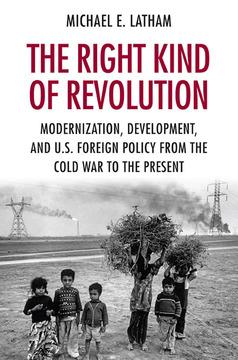
After World War II, a powerful conviction took hold among American intellectuals and policymakers: that the United States could profoundly accelerate and ultimately direct the development of the decolonizing world, serving as a modernizing force around the globe. By accelerating economic growth, promoting agricultural expansion, and encouraging the rise of enlightened elites, they hoped to link development with security, preventing revolutions and rapidly creating liberal, capitalist states. In The Right Kind of Revolution, Michael E. Latham explores the role of modernization and development in U.S. foreign policy from the early Cold War through the present.
The modernization project rarely went as its architects anticipated. Nationalist leaders in postcolonial states such as India, Ghana, and Egypt pursued their own independent visions of development. Attempts to promote technological solutions to development problems also created unintended consequences by increasing inequality, damaging the environment, and supporting coercive social policies. In countries such as Guatemala, South Vietnam, and Iran, U.S. officials and policymakers turned to modernization as a means of counterinsurgency and control, ultimately shoring up dictatorial regimes and exacerbating the very revolutionary dangers they wished to resolve. Those failures contributed to a growing challenge to modernization theory in the late 1960s and 1970s.
Since the end of the Cold War the faith in modernization as a panacea has reemerged. The idea of a global New Deal, however, has been replaced by a neoliberal emphasis on the power of markets to shape developing nations in benevolent ways. U.S. policymakers have continued to insist that history has a clear, universal direction, but events in Iraq and Afghanistan give the lie to modernization's false hopes and appealing promises.
Before Memmo my notes were scattered across PDFs. Now a workspace pulls everything into one place — I see exactly what's still left to study.
Memmo's summaries are gold before exams. I don't have to re-read 800 pages two weeks before — just the important parts.
The AI chat has saved me the night before an exam more than once. I just keep asking until I get it — no waiting on a study group to reply.
The quizzes hit exactly what I need to know. Memmo tracks what I get stuck on — so I only practice what's worth it.
Flashcards with spaced repetition are magic. Memmo knows when I'm about to forget something and brings it back.
The AI podcasts are my favorite. I listen on my way to school and get a recap without sitting at a computer.

Handbok i kvalitativa metoder
281 kr

Hållbar utveckling: en introduktion för ingenjörer och andra problemlösare
334 kr

Brymans Samhällsvetenskapliga metoder
390 kr

Projektledning
491 kr

Den orättvisa hälsan: om socioekonomiska skillnader i hälsa och livslängd
326 kr

Vetenskapsteori för nybörjare
196 kr

Organizational Leadership
429 kr

På väg mot läraryrket
172 kr

Det sociala livet i skolan: Socialpsykologiska perspektiv
253 kr

Betygsättningens didaktik
151 kr

Personality
402 kr

Studying Leadership
404 kr

Managing Innovation
477 kr

Introduktion till samhällsvetenskaplig metod
347 kr

The Psychology of Sex and Gender
698 kr

Evidens och kunskap för socialt arbete
207 kr

Introduction to Leadership
605 kr