
Before Memmo my notes were scattered across PDFs. Now a workspace pulls everything into one place — I see exactly what's still left to study.
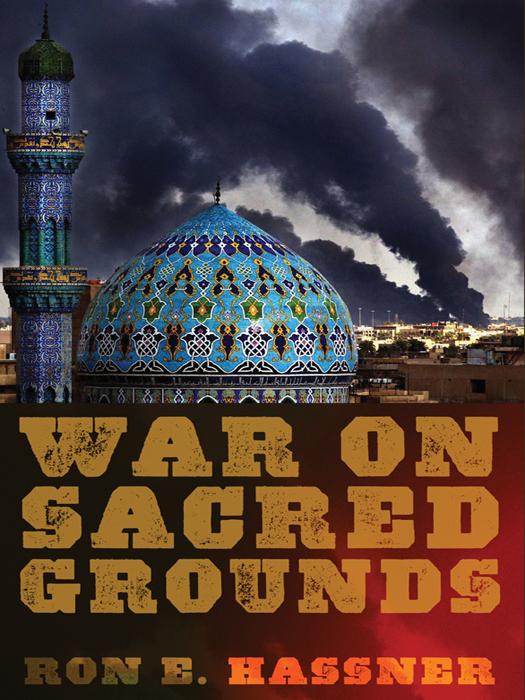
Sacred sites offer believers the possibility of communing with the divine and achieving deeper insight into their faith. Yet their spiritual and cultural importance can lead to competition as religious groups seek to exclude rivals from practicing potentially sacrilegious rituals in the hallowed space and wish to assert their own claims. Holy places thus create the potential for military, theological, or political clashes, not only between competing religious groups but also between religious groups and secular actors.
In War on Sacred Grounds, Ron E. Hassner investigates the causes and properties of conflicts over sites that are both venerated and contested; he also proposes potential means for managing these disputes. Hassner illustrates a complex and poorly understood political dilemma with accounts of the failures to reach settlement at Temple Mount/Haram el-Sharif, leading to the clashes of 2000, and the competing claims of Hindus and Muslims at Ayodhya, which resulted in the destruction of the mosque there in 1992. He also addresses more successful compromises in Jerusalem in 1967 and Mecca in 1979. Sacred sites, he contends, are particularly prone to conflict because they provide valuable resources for both religious and political actors yet cannot be divided.
The management of conflicts over sacred sites requires cooperation, Hassner suggests, between political leaders interested in promoting conflict resolution and religious leaders who can shape the meaning and value that sacred places hold for believers. Because a reconfiguration of sacred space requires a confluence of political will, religious authority, and a window of opportunity, it is relatively rare. Drawing on the study of religion and the study of politics in equal measure, Hassner's account offers insight into the often-violent dynamics that come into play at the places where religion and politics collide.
Before Memmo my notes were scattered across PDFs. Now a workspace pulls everything into one place — I see exactly what's still left to study.
Memmo's summaries are gold before exams. I don't have to re-read 800 pages two weeks before — just the important parts.
The AI chat has saved me the night before an exam more than once. I just keep asking until I get it — no waiting on a study group to reply.
The quizzes hit exactly what I need to know. Memmo tracks what I get stuck on — so I only practice what's worth it.
Flashcards with spaced repetition are magic. Memmo knows when I'm about to forget something and brings it back.
The AI podcasts are my favorite. I listen on my way to school and get a recap without sitting at a computer.

Handbok i kvalitativa metoder
281 kr

Hållbar utveckling: en introduktion för ingenjörer och andra problemlösare
334 kr

Brymans Samhällsvetenskapliga metoder
390 kr

Projektledning
491 kr

Den orättvisa hälsan: om socioekonomiska skillnader i hälsa och livslängd
326 kr

Organizational Leadership
429 kr

Vetenskapsteori för nybörjare
196 kr

På väg mot läraryrket
172 kr

Det sociala livet i skolan: Socialpsykologiska perspektiv
253 kr

Betygsättningens didaktik
151 kr

Personality
402 kr

Studying Leadership
404 kr

Managing Innovation
477 kr

Introduktion till samhällsvetenskaplig metod
347 kr

The Psychology of Sex and Gender
698 kr

Evidens och kunskap för socialt arbete
207 kr

Introduction to Leadership
605 kr